Introduction
The modern search for the latest in leadership intangibles is a search linked to the latest fad or newest modern thinkers’ understanding of how to motivate people to accomplish an organization’s goals. This search enamors the modern and leads to many uninspiring paths fraught with misuse. Leadership based on this amorphous data leads to a lack of clarity and surety. For the Christ-follower, leadership is about so much more than the latest fad; it is rooted in ancient Scripture and provides a solid foundation for growth. To be sure the Holy Scriptures is not a leadership manual per se, but there are clear directives from the Creator God for effective leadership today. The wise modern leader mines the Scriptures to understand and apply the godly themes of leadership found within this diverse ancient collection.
The New Testament, at its heart, is a collection of inspired writings focused on the dawning of a new day in the revelation of God to humankind. It is about Jesus, His followers, and the church He commissioned them to build. The “Great Commission” requires of these Jesus-followers a renewed empowerment of the Holy Spirit for effective leading (Matt. 28:19). In studying the Greek, according to Robert Wayne Stacy, we come to the overarching idea that, “In the New Testament, leadership as guiding is normative. A leader is a “guide,” a “shepherd,” a “helper,” a “coach,” to use a more contemporary metaphor.[1] This nuanced understanding contrasts with the modern, more controlling understanding of leadership. The modern, secular leader seeks to dominate, manipulate, and utilize power plays to move people and produce organizational change. With the foundational understanding of leadership in the New Testament as guidance, the following three major themes emerge: leadership begins with followership, leadership bases from a place of service, and leadership flows best through teamwork.
Leadership is Followership
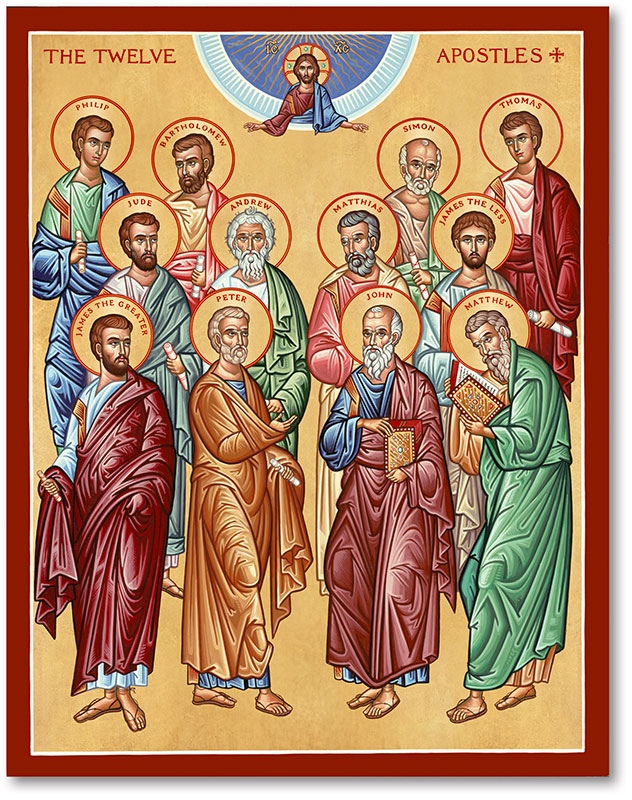
In the Synoptic Gospels, a clear distinction emerges of Jesus calling and empowering followers. The initial twelve apostles each received a call from their respective places in life to “follow” Jesus and implement His mission. Matthew details in his gospel this call first-hand, “‘And He said to them, “Follow Me, and I will make you fishers of men.” Immediately they left their nets and followed Him (Matt. 4:19-20, NASB).[2] Notice the directional nature of the call; it requires something and then produces results. In other words, God does not call people to occupy places of leadership immediately, but He first asks them to learn to be followers; then, he produces His purpose. Stacy states concerning the twelve, “They are Jesus’ followers, his surrogates, his representatives, his proxies if you will. They are not “leaders” in their own right or by their own power. Indeed, they are followers, not “leaders.”[3] In order for the modern to lead effectively, he must first learn to follow consistently.
Following Jesus requires a call and impartation, as exampled by the calling of the original twelve apostles. The person seeking leadership desires something good, but they must wait for the call in order to move appropriately within the timing and purpose of their Creator. Paul, in his letter to his prodigy Timothy, explains that “It is a trustworthy statement: if any man aspires to the office of overseer, it is a fine work he desires to do” (1 Tim. 3:1). The importance of timing and learning to follow provides the leader the skillset necessary for the understanding of the emotional state of those he leads. If a person never follows, the possibility of pride and arrogance to intrude exists.
Leadership Based in Service
A second critical theme of Biblical leadership coursing through New Testament thought is leadership based in service. Paul in his letter to the Philippian church details a beautiful picture of high Christology and servant leadership,
Make your own attitude that of Christ Jesus, who, existing in the form of God, did not consider equality with God as something to be used for His own advantage. Instead He emptied Himself by assuming the form of a slave, taking on the likeness of men. And when He had come as a man in His external form, He humbled Himself by becoming obedient to the point of death — even to death on a cross. For this reason God highly exalted Him and gave Him the name that is above every name, so that at the name of Jesus every knee will bow — of those who are in heaven and on earth and under the earth — and every tongue should confess that Jesus Christ is Lord, to the glory of God the Father (Phil. 2:5-11, HCSB).
The importance of this text for servant leadership at first seems obscure, but with careful exegesis, the reader understands the call for Jesus-followers to imitate Christ as leaders. Joseph H. Hellerman writes of the recognized leadership element, “The reason is that scholars are increasingly recognizing that Paul is concerned in the passage not with the nature of Christ’s “equality with God” but, rather, with what Christ chose to do with it the privileges associated with his divinity.”[4]
The leader surmises the same way Christ chose to subject His divinity to His humanity in service at the cross, so also he submits his talents and abilities in service to those he leads. Another intimate portrait of Christ as servant illustrates with the washing of the disciples’ feet in the upper room. If Christ willingly chose the position of a slave concerning those he led, then how much more the modern Biblically inspired leader. Servant leadership is a deliberate act and never coerced; however, this positional directive from our model Christ allows the leader to minister to those under his care correctly.
Teamwork Leadership Creates Flow
The idea of teamwork-oriented leadership also flows through the pages of the New Testament. From the sending out of the disciples by Jesus in pairs to minister throughout Judea to the evidentiary team basis for Paul’s three missionary journeys, the Scripture examples teamwork as the most effective form of leadership. Paul’s letters confirm his relational approach to ministry and detail the status of those relationships and how crucial community happened within them. Hellerman writes, “Paul’s letters confirm the historical accuracy of the relational approach to ministry portrayed in Acts. Here, moreover, we get a sense of the nature of Paul’s relationships with his companions, as well as some idea of the teammates’ roles and responsibilities.”[5] Sacrificial love and mutual respect permeated the Pauline ministry model that he exampled to the churches he planted. Paul did not institute a hierarchical model of leadership but followed a mutually submissive model. As Hellerman concludes, this created an affective bond, “the time Paul spent traveling and ministering together with his coworkers, often in harsh and challenging settings, generated close affective ties among team members.”[6]
The flow created from this model of teamwork spread the gospel across the known first-century Roman world, reaching the very center of power Rome. This flow resulted from the bonds created with the Pauline ministry team because it impassioned and empowered the early church leaders to fulfill their mutually distinct callings. Paul writes to the Ephesians of this diversity of ministry, “And He gave some as apostles, and some as prophets, and some as evangelists, and some as pastors and teachers” (Eph. 4:11). In Christian leadership, diversity elicits strength within the context of the church.
Conclusion
The church today faces unprecedented challenges and opportunities. As leaders move to operate in a post-modern culture that opposes the solidity of truth, instead opting for the fluidity of relativity. It is paramount for the leader following Jesus to implement ancient, proven God-honoring principles in their leadership contexts. The past paradigms of leading from positions of power and authority no longer adequately produce results in the modern climate. Today’s leader leading from a service-oriented, teamwork-based position fully committed to following Christ will see the same impact that infused the early first-century church.
These principles undergirded the expansion of the gospel in the earliest days and continue to work today, regardless of the cultural context. Leadership firmly planted in these timeless themes guard against harm to the body of Christ and faulty established church foundations. The temptation persists for church leaders to find more accessible paths to facilitate quicker and more impressive growth. The leader, however, must resist this challenge to the Biblical model. Jesus warned in the gospel of Matthew, “the way is broad that leads to destruction, and there are many who enter through it” (Matt. 7:13). This text is not only applicable to salvific issues, but also to how a leader appropriates the call placed on his life. If they seek the easy path or trendiest way, the possibility exists to lead them and their followers to a place of destruction. The carnage of destructive leadership litters the path of the Christian landscape because of the easy way. Leaders can find comfort and hope in the never-changing principles found in the Scriptures for their ministries. The church waits for a new wave of leaders committed to the end in the face of the waves of post-modern thought established in truth.
Bibliography
Forrest, Benjamin K., and Chet Roden. Biblical Leadership: Theology for the Everyday Leader. Grand Rapids, MI: Kregel Publications, 2017.
[1] Benjamin K. Forrest and Chet Roden, Biblical Leadership: Theology for the Everyday Leader (Grand Rapids, MI: Kregel Publications, 2017), 305.
[2] Unless otherwise noted, all biblical passages referenced employ the New American Standard Bible.
[3] Forrest and Roden, Biblical Leadership, 320.
[4] Ibid, 414.
[5] Ibid, 425.
[6] Ibid, 426.

 Restored