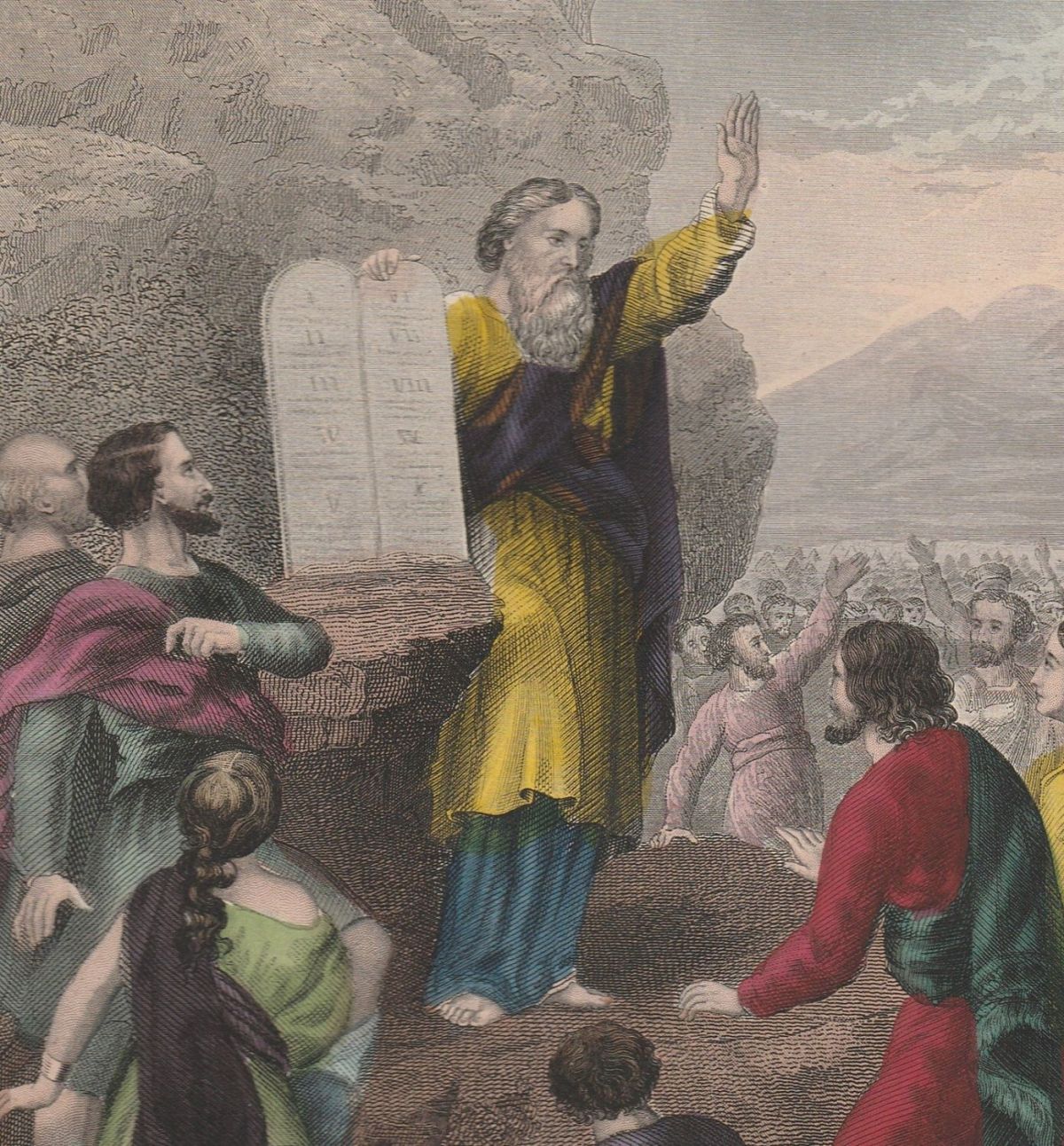
The function of the Old Testament law acted as a covenantal agreement between Yahweh and the Abrahamic descendants, His covenant people. Victor Hamilton writes concerning the purpose of covenant and Law, “The purpose of covenant is to create a new relationship. The purpose of Law is to regulate or perpetuate an existing relationship by orderly means.”[1] The tenets of the Law impacted various dimensions of the lives of these nomadic, ancient people. It provided a moral framework for approaching God through a Decalogue written by God’s hand on tablets of stone transmitted to the people through His servant Moses. Hamilton quotes Brevard Childs to explain the impact, “The Law defines the holiness demanded of the covenant people. … The measurement of holiness in terms of God’s own nature prevents the covenant claim from being given a moralistic interpretation.”[2] In addition to the moral precepts of the Decalogue, the Law contained elements of ceremonial and civil regulations in what is called the “Book of the Covenant.”[3] The ceremonial accouterments taught the Israelites the proper way to approach God in worship and the importance and seriousness of preparation for these encounters with Yahweh. By comparison, civil laws imparted the legal and civil means in which individuals interacted within the covenantal community.
Theologically the Law functioned as a teacher for the Israelites and mirrored to humankind the holiness of God and humanity’s reflective depravity. These laws are not unique to Israelite culture in their literary dynamics, yet they exhibit uniqueness in how they relate the Law’s completion as a requirement. Lawrence Boadt, in his work Reading the Old Testament, writes, “Although these laws are not found only in Israelite tradition, they do reflect the special character of covenant obedience. They are not open to compromise or discussion as is case law, but must be solemnly accepted.”[4] This moral gulf between Yahweh and the Israelites required a bridge of atonement to move the depraved to a state of reconciliation with this Holy Divine Creator. The Law provided a consistent pattern of sacrifice necessary for this atoning bridge’s functioning and, if followed precisely, the individual and communal sins, the intentional and unintentional remit for the participants. In salvation history, the Law foreshadowed the need for a perfect atoning sacrifice. Paul states in Romans that the laws illuminated the weakness of the flesh. He writes, “For God has done what the law, weakened by the flesh, could not do: by sending his own Son in the likeness of sinful flesh, and to deal with sin, he condemned sin in the flesh” (Rom. 8:3, NRSV).[5] This weakness illustrated the need for a perfect sacrifice to eradicate the exorbitant penalty for humanity’s rebellion against their Creator. As the perfect expression of God incarnate, Jesus became the foreshadowed “scapegoat” for the sins of humankind for all time. John the Baptizer declares this prophetically in the Gospel of John, “The next day he saw Jesus coming toward him and declared, “Here is the Lamb of God who takes away the sin of the world” (John 1:29)! Jesus fulfilled the Law’s requirement on the Cross, allowing for the remediation of humanity’s relationship with the Father. Matthew records the words of Christ, “Do not think that I have come to abolish the law or the prophets; I have come not to abolish but to fulfill” (Matt. 5:17). In his essay “Paul on Christ and the Law,” Brice L. Martin posits correctly, “It is through Christ’s death and resurrection that the life of man in the flesh, the life of man under the law, his bondage to sin, and his destiny of death are all broken and reversed.”[6]
For the Christian living in a post-modern 21st-century context, the Law provides a “north star” of truth in an ever-increasing pluralistic culture. This truth reflects in the criterion for relational engagement within the modern community and reflects the horizontal engagement with the Divine. When society predicates varying mores based upon the individuals’ perception and predilection of truth, the Law stands in contrast as a beacon for the Creator’s timeless standards. Expiating the moral laws from the civil and ceremonial rooted in the Israelite community’s cultural significance, the modern believer moves confidently through this tumultuous sea of amorphous beliefs about truth, reflecting a proper view of God for the skeptics and seekers.
Bibliography
Boadt, Lawrence. Reading the Old Testament: An Introduction. New York, N.Y.: Paulist Press, 1984.
Martin, Brice L. 1983. “Paul on Christ and the Law.” Journal of the Evangelical Theological Society 26 (3): 271–82. http://search.ebscohost.com/login.aspx?direct=true&db=a6h&AN=ATLA0000939417&site=ehost-live.
Efird, James M. The Old Testament Writings: History, Literature, and Interpretation. Atlanta: John Knox Press, 1982.
Hamilton, Victor P. Handbook On the Pentateuch: Genesis, Exodus, Leviticus, Numbers, Deuteronomy. 2nd ed. Grand Rapids, Mich.: Baker Academic, 2005.
[1] Victor P. Hamilton, Handbook On the Pentateuch: Genesis, Exodus, Leviticus, Numbers, Deuteronomy, 2nd ed. (Grand Rapids, Mich.: Baker Academic, 2005), 189.
[2] Ibid.
[3] James M. Efird, The Old Testament Writings: History, Literature, and Interpretation (Atlanta: John Knox Press, 1982), 61.
[4] Lawrence Boadt, Reading the Old Testament: An Introduction (New York, N.Y.: Paulist Press, 1984), 185-186.
[5] Unless otherwise noted, all Biblical passages referenced are in the New Revised Standard Version.
[6] Brice L. Martin, “Paul On Christ and the Law,” Journal of the Evangelical Theological Society 26, no. 3 (1983): 274, http://search.ebscohost.com/login.aspx?direct=true&db=a6h&AN=ATLA0000939417&site=ehost-live..

 Restored