Introduction
A particular sacrificial motif threads its way through the pages of Scripture, culminating in the atoning work of Christ and the presentation of the results of His sacrifice before the Creator of the cosmos, God as Father enthroned in the Heavenly realm. From the beginning narrative of Creation in Genesis, the ancient text portends a focus on the need for sacrifice in the covering of humanity’s sinful rebellion. A rebellion born of their desire to be like God, the first humans chose the path of rebellion and faced the consequence of distance from their Creator. However, from the foundations of the world, the Creator planned for a sacrificial bridge crossing the divide that separated a holy God from humankind in response to this sin disruption. Genesis points to a needed sacrifice for covering and restoring Divine closeness through a shadow or implied reference. The Scriptures inform, “’And the Lord God made garments of skins for the man and for his wife, and clothed them” (Gen. 3:21 NRSV).[1] The concept of sacrifice is the bridge upon which hope for restoration rests. A pathway of return for the Creator’s prized creation, humankind.
With the idea of sacrifice permeating the ancient text, the reader of Scripture understands and acclimates this work of restorative proximity to the Divine. From the Levitical covenantal texts detailing ritual cultic steps in the purification processes for the priest and temple culminating in the atoning sacrifice and presentation before God in the Holy of Holies to the processional exaltation of Christ’s atoning work on the Cross and in the Heavenlies, the text delineates a processional view of the atonement sacrifice. Against this holistic background, this paper will argue that the Scriptures establish a supersessionist idea of Christ’s sacrifice concerning the Second Temple Judaic cultic ritual sacrifices and a holistic understanding of sacrifice involving the cross, ascension, and enthronement of Christ.
Overview of the Historical Context of Sacrifice
Sacrifice in the Ancient Near East and Mediterranean cultures played an integral part in the people’s religious customs signifying the appeasement of the gods and a plea for divine favor. The nuances of belief concerning the gods and the need for sacrifice varied among the peoples throughout the region and varying time periods; however, several critical elements remained consistent. Daniel C. Ullucci defined the practice concerning the context of this work as the “ritualized slaughter of an animal and the distribution of its parts among humans and imagined superhuman beings.”[2] This practice of animal sacrifice dates as far back in ancient Mediterranean culture as the Neolithic period (ca. 8000 BCE). It is perhaps the most pervasive religious ritual in the history of humanity. The plethora of interpretive understanding of the meaning of these sacrificial rites varied across cultures and times, with a common strand of appeasement of the deities permeating ancient thought.[3]
Though disparate in their beliefs concerning sacrifice and cultic rituals, certain elements appear consistent across the ancient Mediterranean cultural landscape. First, these ancient cultures viewed the deities as residing in temples or structures where human interaction and approach happened through a mitigating or appeasing process involving cultic ritual and animal sacrifice. This commonality existed in Canaanite and Judaic practices and later Greek and Roman mythological traditions. These structures provided a tangible place for the participant in the cultic rituals to engage with the deities in worship. Not only pagan religions but also the monotheistic Judaic cult practice their cultic rituals in the confines of a defined structure, a tabernacle or temple. Liane M. Feldman, in her monograph The Story of Sacrifice: Ritual and Narrative in the Priestly Source, describes the two elements of the Judaic construction of the tabernacle, with the first phase being public and the completion being private between Moses and YHWH. She writes of this final Mosiac phase, “Moses’s work is to assemble the pieces into a functional tent of meeting so that Yahweh can take up residence among the Israelites.”[4] The critical point is that the practice equivocates a methodological purification process and holy preparation for the divine encounter.
Second and critical to these Ancient Near Eastern cultures was the importance of the cultic ritual process. Within each cultural expression, existed a series of functions or formulas by which the worshipper or priest engaged in proximity closure with the diety. These practices involved purification rites that prepared the person for engaging intimately with the particular diety. In the Judaic cult, these procedures are presented in a public forum in Leviticus. Feldman writes, “Their [Israelites] presence at the start of the ritual activities serves to emphasize the public nature of the cult and the essential role of the community is not only it’s beginning but also its ongoing existence.”[5] The Levitical author narrates, “Take Aaron and his sons with him, the vestments, the anointing oil, the bull of sin offering, the two rams, and the basket of unleavened bread; and assemble the whole congregation at the entrance of the tent of meeting” (Lev. 8:2-3). The public nature of these ritual pronouncements served as a reminder to the people of their importance and the communal nature of these cultic ritual practices. According to Simon J. Joseph in his article, “The Sacrifice of Jesus in the Letter to the Hebrews,” writes “Sacrificial ritual comprised a ‘set of cultural norms’ understood as the ‘normal and natural way to express piety towards the gods’ and so functioned as a common vocabulary that could unite different ethnic groups and communities throughout the empire.”[6]
The concept of ritual purification dominates the landscape in the initiation of the Judaic cultic rituals in the Torah. Feldman writes concerning the purification ritual described in Exodus 29, “While the function of this purification offering was not given in this initial description of the ordination offerings, it is given in vv. 36– 37: this offering will decontaminate the altar from whatever impurities have accrued to it.”[7] The people need purification from contamination and the objects used in the cultic rituals; it is an all-encompassing purification required to make the worshipper and the dwelling acceptable to be in proximity to the Divine. David M. Moffit posits that “early Christian reflection on Hebrews, Jesus sacrifice, and atonement could approach these interrelated concerns more holistically – that is oriented towards the full, creedal narrative of the incarnation, then do some accounts of the atonement that reduce Jesus’ sacrifice to his death on the cross.”[8]
The Sacrificial Death of Christ
The idea of sacrifice and cultic rituals that permeated these Mediterranean cultures provided the contextual understanding of the first century Christians as to the purpose and efficacy of Jesus’ death on the cross. For the modern theologian to apprehend the effectiveness and meaning of the atoning sacrificial offering of Christ, it is critical to understand the cultic purification rituals and the impact these cultural understandings had upon the interpretation and application for early Christianity as they developed their view of the meaning of Christ’s passion vital elements, including the idea that ritual purification and sacrifice involved location and process, allowing for a holistic approach to the atoning work of Christ. Of import is an apprehension of a Yom Kippur motif within the early formulation of atonement theology.
Daniel Stökl Ben Ezra writes of this early Second Temple Judaic influence on the formation of a High Christological Atonement Theology, “The basic setting, however, is apocalyptic: the heavenly temple, the eschatological concept of time and the motif of the high-priestly redeemer who destroys the Lord of the evil powers, liberates his good prisoners and ascends to God.”[9] Developing this theme further, David Moffitt writes in his article “Jesus’ Heavenly Sacrifice In Early Christian Reception of Hebrews: A Survey” of the significance of place and process, “the author [of Hebrews] identifies the centre of the offering of Jesus’ atoning sacrifice as Jesus’ act of presenting himself to the Father after His resurrection.”[10] This allusion to process not a particular act of sacrifice provides a theological foundation from the New Testament writings. He goes on to posit, “As the great high priest, Jesus offered Himself to the father as a sacrifice when he ascended into the heavens and entered the holy of holies in the heavenly sanctuary,”[11] symbolizing a place where this sacrificial offering took place to mediate the distance between humanity and God.
Through the eyes of these early Christians, Jesus’ death on the cross did not represent the end of the sacrificial event, but the beginning of the purification rite and part of the holistic expression of His mediatorial High Priestly role. In Hebrews chapters 4 and 5, the writer crafts this “High Priestly” view of Christ’s passion, “’Since, then, we have a great high priest who has passed through the heavens, Jesus, the Son of God, let us hold fast to our confession” (Heb. 4:14 NRSV). Christopher Richardson posits that “Rather than evoking Jesus’ Angst in Gethsemane, or conflating images of Gethsemane and Golgotha, the author [of Hebrews] has fixed his comments into a larger discussion of priesthood and sacrifice (4.14– 5.10) that enables the audience to compare Jesus’ priesthood, actions, and status with those of Aaron and Melchizedek.”[12] The author of Hebrews intimately connects the sacrifice of Christ with the practices of Jewish temple worship. Christian A. Eberhart and Donald Schweitzer postulate that the “original interpretation of the nature and significance of Jesus’ death that uses themes and practices of Jewish temple worship metaphorically to argue for the uniqueness of Jesus’ saving significance.”[13] As well David Moffitt posits that Jesus’ sacrifice is metaphorically understood as cleansing ones internal person and showing “further how the concrete physical locales and external rituals that constituted sacred space in the Mosaic economy on earth can serve as metaphors that point to the abstract immaterial realities of being in God’s presence.”[14]
The cross as the initiatory rite comparable to the killing of the sacrifices in the Levitical tradition provided the offering or blood necessary for the purification of the altar and the covering of the people’s sins. Jesus, in his high priestly role, offered himself up to death on the cross because He did not require purification being the sinless sacrifice fully capable of propitiating the sins of humankind. Christ became sin so that humanity might be made free from its destructive consequence. The writer of Hebrews states, “Therefore he had to become like his brothers and sisters in every respect, so that he might be a merciful and faithful high priest in the service of God, to make a sacrifice of atonement for the sins of the people. Because he himself was tested by what he suffered, he is able to help those who are being tested” (Heb. 2:17-18). Jesus performs the role of High Priest in offering Himself as the perfect sacrificial lamb. John beautifully describes this self-sacrifice, “We know love by this, that he laid down his life for us—and we ought to lay down our lives for one another” (1 Jn. 3:16). Jesus’ sacrificial death is superior to the Levitical rites because He fulfills the totality of the step, the High Priestly role, and the role of the sacrificial lamb. William L. Lane describes this qualification of Christ, “The “perfection” of Jesus in this context (cf. 5:8-9; 7:28) has functional implications. The emphasis falls on the notion that he was fully equipped for his office.”[15] Lane goes on to state the qualitative reasoning, “God qualified Jesus to come before him in priestly action. He perfected him as a priest of his people through his sufferings, which permitted him to accomplish his redemptive mission.”[16] By being qualified by the Father, Jesus initiates the sacrificial ritual by offering Himself as sacrifice and becoming the scapegoat by assimilating the sins of humankind. Paul writes to the Corinthian church concerning this assimilation of sin, “For our sake he made him to be sin who knew no sin, so that in him we might become the righteousness of God” (2 Cor. 5:21).
When seen as one step in the holistic process of sacrifice, the killing of Jesus is removed from just an egregious act of gratuitous violence perpetrated on the Son of God to a meaningful symbol of victory over sin and death. Eberhart and Schweitzer posit that “Christians can speak of the sacrifice of Christ and not put killing and violence at the center of their faith, if an understanding of Jesus’ resurrection accompanies their understanding of Jesus’ sacrifice as overcoming his death and promising an eschatological future in which death and violence and no more.”[17] This understanding of a processional, progressive atoning sacrificial work leads the theologian to the next logical step in the Resurrection process. According to Simon J. Joseph in his article “The Sacrifice of Jesus in the Letter of the Hebrews,” there is an extension and expansion of the semantic range of sacrifice and an affirmation by the New Testament authors of the value of sacrifice all the while debating the kind of sacrifice most “efficacious and pleasing” to the diety. They posited that Christ met the criteria for the most efficacious and pleasing offering to the Creator.[18] Michael Kibbe writes concerning this idea that the sacrifice is not the endpoint but the start of the process, “death is not the sum total of sacrifice, nor even the most important part of sacrifice. While Christ’s suffering is undeniably a necessary precursor to Christ’s priestly work, it is not itself a priestly act.”[19]
The Ascension of Christ into the Heavenly Realm
The second act in this three-part purification ritual involves the priest carrying the recently sacrificed offering through the various apertures of the temple or tabernacle into the inner sanctum, the holy of holies. This offering movement proceeds through different stages until it is brought to appease the deity and atone for the people’s sins in the Judaic cultic practice. In Christianity, a new rite initiates in the person of Christ and His High Priestly role as both sacrifice and offering priest. Simon J. Joseph posits two varying views of Jesus’ purpose and work, traditionalist and revisionist.[20] He writes, “In the traditionalist model, Jesus predicts the destruction of the temple cult with his sacrificial death. In the revisionist model, Jesus participates in the temple cult, and his followers follow in his footsteps.”[21] The revisionist view leads to the idea of the author of Hebrews that the entirety of the atoning work of Christ includes the element of His passing through the Heavenlies and arriving at the Holiest place, the throne room of His Father. The author(s) of Hebrews narrates this passage, writing, “Since, then, we have a great high priest who has passed through the heavens, Jesus, the Son of God, let us hold fast to our confession” (Heb. 4:14).
The ascension and procession of Christ through the Heavenlies project a symbolic gesture of bridging the expansive distance separating humankind. Moffit ties this Christological journey to the lingering, systematic journey of the Levitical priesthood from the outer court through the inner court and into the holy of holies. He writes of the atoning benefits being accrued as the high priest performs his priestly duties and draws near “to God and conveyed the sacrificial materials into His presence.[22] Luke in his gospel and Acts narrative “does identify Jesus’ elevation to God’s right hand as the primary mechanism that accomplishes forgiveness of sins, purification and the outpouring of the Holy Spirit, which suggests that a sacrificial logic informs his understanding of the significance of exaltation.”[23]
In his seminal work “He Offered Himself: Sacrifice in Hebrews,” Richard D. Nelson describes the rights attributed to the priestly class, “Priest enjoyed an exclusive right of access to the holy space of the sanctuary and the holy altar. Entering the sacred realm, they effected the transfer of the sacrificial gift to God or applied the blood to cleanse the holy things from pollution (Lev. 15:31; 16:19).”[24] On the Day of Atonement, the High Priest entered on behalf of the entire nation offering the sacrificial gift, making atonement for the nation. More persuasively, Jesus entered the Heavenly Holy of Holies and offered Himself as the sacrifice, making atonement once for all. Hebrews describes this perfect offering and its superior status to the Levitical cultic ritual performed by the Aaronic priesthood, “Unlike the other high priests, he has no need to offer sacrifices day after day, first for his own sins, and then for those of the people; this he did once for all when he offered himself” (Heb. 7:27). Gareth Lee Cockerill explains the functionality of Christ’s offering, “The description of “our” High Priest in v. 14a suggests the comprehensive scope of that high priesthood: this High Priest is the Son of God who became the human Jesus and has entered God’s presence on behalf of God’s people through the offering of himself for sin.”[25]
Christ’s resurrection and exaltation merge to provide an indispensable component for His priestly offering, a transit of sorts “through the created heavens (4:14; 7:26) to reach heaven itself (9:24).[26] The superiority of Christ functions from an analogous place as one of pioneer, a going before to prepare the way for the “created ones” to follow His path to Glorification. This pioneering journey is not the goal, but the transition to the presentation by entrance into the throne room of Heaven of his blood provided for purification.[27] In Hebrews, Christ offers His blood for us, “But when Christ came as a high priest of the good things that have come, then through the greater and perfect tent (not made with hands, that is, not of this creation), he entered once for all into the Holy Place, not with the blood of goats and calves, but with his own blood, thus obtaining eternal redemption” (Heb. 9:11-12). Luke Timothy Johnson explains three subtle elements involved in Hebrews chapter 9 the location denoted as Heavenly throne room, the physical arrangement of elements the ark, mercy seat, and cherubim indicating the throne of God, and the role of the high priesthood. He states, “The combination of these three elements helps us understand how, for the author of Hebrews, the resurrection/exaltation of Jesus was simultaneously an entry into God’s glory/presence, a royal enthronement, and an act of high priestly sacrifice.”[28] To illustrate the transition that takes place as Christ transitions and presents to the Father taking His rightful seat at the Father’s right hand, Felix Cortez posits,
the annual transition in the ministry of the Mosaic sanctuary illustrates the transition from the present to the coming age, which is also a transition from the cleansing of the body to the cleansing of the conscience. It involves a transition from the ministry of several priests to the ministry of one, from several sacrifices to one sacrifice, and from unrestricted access to the outer tent to access only “through blood” into the inner tent.[29]
Cortez posits that the author(s) of Hebrews utilizes this transitional chapter to illustrate a shift from the former Levitical age to the new era of Christological mediation.[30] Jesus takes His position of High Priest and mediator in the Holy Sanctuary, standing before the Father to make intercession for the saints.
The Mediatorial Priestly Role of Christ
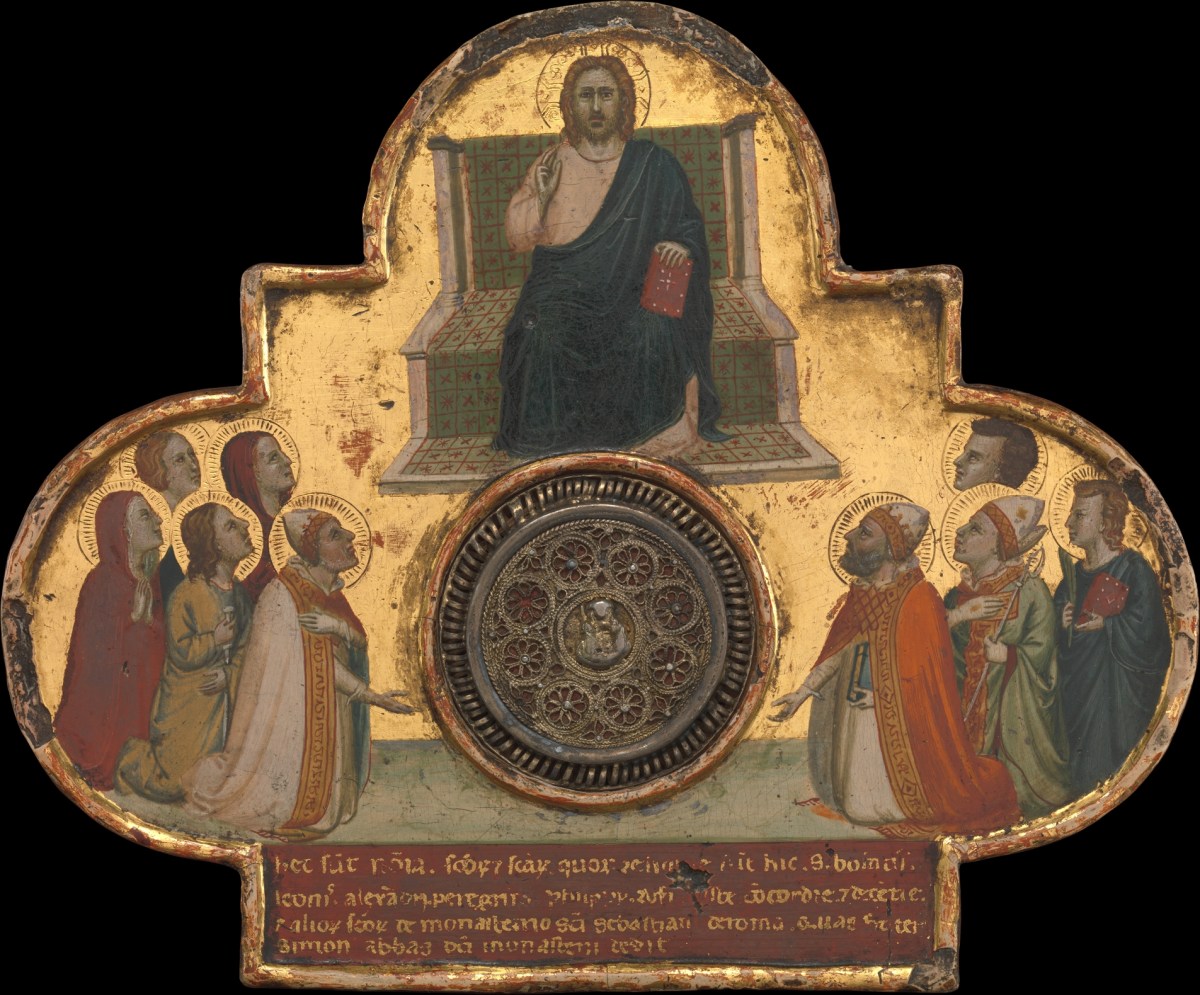
The scene of Christ’s ascendence to the throne seated with the Father expresses the culmination of the cultic ritual of atonement. As Jody A. Barnard posits, this ascendence represents the fact that “the Son shares the very throne of God as the king-priest and divine Name-bearing anthropomorphic Glory of God. Heb 1:13 adds to this in two ways. First, it refers to the moment of the Son’s enthronement and unequivocally demonstrates that this was a divine appointment.”[31] She goes on to state, “Secondly, since it is part of 1:5– 13, and given the way it is introduced, the image is specifically contrasted with angels in 1:13. The author is probably presupposing the recurring theme throughout apocalyptic and mystical traditions that angels do not sit.”[32] As Christ superior to all others, including the angelic hosts, now elevated to the Father’s right hand, takes His fore-ordained role as High Priest, the culmination of the cultic ritual imagery comes to finality. Yet, the continuity of His purpose flows from this sacred moment. Walter Edward Brooks writes of this perpetuity initiating at Christ exaltation, “the priesthood of Jesus’ earthly life but that priesthood into which he entered at the moment of the resurrection when he triumphed over death and entered into an “indestructible,” hence endless, life.”[33] Hebrews presents this mediatorial role in perpetuity, “’but he holds his priesthood permanently, because he continues forever. Consequently he is able for all time to save those who approach God through him, since he always lives to make intercession for them” (Heb. 7:24-25). The superiority of Christ allows the purification of the believer and access to the presence of the Holy Spirit. Paul theologically adds weight to this high Christology in his letter to the Roman believers, “Who is to condemn? It is Christ Jesus, who died, yes, who was raised, who is at the right hand of God, who indeed intercedes for us” (Rom. 8:34).
Jesus’ priestly intercessory ministry continues perpetually for the faithful, providing ongoing sanctification, purification, and presence. Nicolas J. Moore writes of this ongoing work, “Jesus’ ongoing work comes to the fore: he is the cult-minister (λειτουργός, 8.2) who has a priestly ministry (λειτουργία, 8.6), just as he is also a covenant mediator (μεσίτης διαθήκης, 8.6).”[34] The final stage in Christ’s work provides security for the believer that His atonement works continuously on their behalf. The apostle John in his Gospel alludes to this continuing interaction; he writes, “The glory that you have given me I have given them, so that they may be one, as we are one” (Jn. 17:22). It is clear that the theological impetus of the concept of sacrifice centers on the process and the continuity of the atonement. The two directives found in Hebrews, due to this confidence in the high priestly role of Christ, are for the believer to “draw near” and “hold fast.” James W. Thompson writes of Hebrews chapters 4 and 10, “Both passages begin with “having therefore” (echontes oun) to point to the community’s possession of a “great priest” (“great high priest” in 4:14) as the basis for the exhortations, “let us draw near” (4:16; 10:22) and “let us hold fast the confession” (4:14; 10:23).”[35]
Conclusion
In conclusion, this paper draws a clear picture of the process by which Christ accomplished his atoning work through sacrifice in a holistic view informed by the Yom Kippur consisting of His death, resurrection, exaltation, and mediatorial role as High Priest in the Heavens. This view is superior to all other attempts to bridge the distance between a Holy Creator and His rebellious creation. Jesus accomplishes this as both the High Priest and the sacrificial offering standing in intercession for the faithful until the end of the eschaton. Ben Witherington, III writes of Christ’s superior atoning work, “Christ’s sacrifice was an equal substitution of one human for the sins of humans; it was more than equal, for it was one truly perfect human for various flawed, weak and sinful ones; and the Yom Kippur sacrifice could bring only one person, the high priest, directly into the presence of God, whereas Christ’s sacrifice opened the door so all might go in to the inner sanctum.”[36] The Christian may find comfort in this ongoing intercessor work and know that its completion is guaranteed through Christ. Paul sums it up well in his letter to the church in Philippi “I am confident of this, that the one who began a good work among you will bring it to completion by the day of Jesus Christ” (Phil. 1:6).
Bibliography
Barnard, Jody A.. The Mysticism of Hebrews: Exploring the Role of Jewish Apocalyptic Mysticism in the Epistle to the Hebrews. Tübingen, DE: Mohr Siebeck, 2012. Accessed February 4, 2022. ProQuest Ebook Central.
Bauckham, Richard, Driver, Daniel, Hart, Trevor, and MacDonald, Nathan, eds. A Cloud of Witnesses: The Theology of Hebrews in Its Ancient Contexts. London: Bloomsbury Publishing Plc, 2008. Accessed February 5, 2022. ProQuest Ebook Central.
Brooks, Walter Edward. “The Perpetuity of Christ’s Sacrifice in the Epistle to the Hebrews.” Journal of Biblical Literature 89, no. 2 (1970): 205–14. https://doi.org/10.2307/3263051.
Cockerill, Gareth Lee. The Epistle to the Hebrews. New International Commentary on the New Testament. Grand Rapids, MI: William B. Eerdmans Publishing Company, 2012. Accessed February 4, 2022. ProQuest Ebook Central.
Cortez, Felix H. “From the Holy to the Most Holy Place: The Period of Hebrews 9:6-10 and the Day of Atonement as a Metaphor of Transition.” Journal of Biblical Literature 125, no. 3 (2006): 527–47. https://doi.org/10.2307/27638378.
Eberhart, Christian A. and Donald Schweitzer. “The Unique Sacrifice of Christ According to Hebrews 9: A Study in Theological Creativity.” Religions 10, no. 1 (2019): 47, http://ezproxy.liberty.edu/login?qurl=https%3A%2F%2Fwww.proquest.com%2Fscholarly-journals%2Funique-sacrifice-christ-according-hebrews-9-study%2Fdocview%2F2326927948%2Fse-2.
Ezra, Daniel Stökl Ben. The Impact of Yom Kippur on Early Christianity: The Day of Atonement from Second Temple Judaism to the Fifth Century. Tübingen, DE: Mohr Siebeck, 2019. Accessed February 4, 2022. ProQuest Ebook Central.
Feldman, Liane M.. The Story of Sacrifice: Ritual and Narrative in the Priestly Source. Tübingen, DE: Mohr Siebeck, 2020. Accessed February 28, 2022. ProQuest Ebook Central.
Gelardini, Gabriella, and Attridge, Harold, eds. Hebrews in Contexts. Lieden, NL: BRILL, 2016. Accessed February 4, 2022. ProQuest Ebook Central.
Johnson, Luke Timothy. Hebrews: A Commentary. The New Testament Library. Louisville, KY: Presbyterian Publishing Corporation, 2006. Accessed February 4, 2022. ProQuest Ebook Central.
Joseph, Simon J. “”In the Days of His Flesh, He Offered Up Prayers”: Reimagining the Sacrifice(s) of Jesus in the Letter to the Hebrews.” Journal of Biblical Literature 140, no. 1 (2021): 207-27, http://ezproxy.liberty.edu/login?qurl=https%3A%2F%2Fwww.proquest.com%2Fscholarly-journals%2Fdays-his-flesh-he-offered-up-prayers-reimagining%2Fdocview%2F2509033966%2Fse-2%3Faccountid%3D12085.
Kibbe, Michael. “Is It Finished? When Did It Start? Hebrews, Priesthood, and Atonement in Biblical, Systematic, and Historical Perspective.” The Journal of Theological Studies 65, no. 1 (2014): 25–61. http://www.jstor.org/stable/23970736.
Lane, William L.. Hebrews 1-8, Volume 47A. Word Biblical Commentary. Grand Rapids, MI: HarperCollins Christian Publishing, 2015. Accessed February 4, 2022. ProQuest Ebook Central.
Moffitt, David M. “Atonement at the Right Hand: The Sacrificial Significance of Jesus’ Exaltation in Acts.” New Testament Studies 62 (2016): 549-68. doi:10.1017/S0028688516000217.
Moffitt, David M. “Jesus’ Heavenly Sacrifice in Early Christian Reception of Hebrews: A Survey.” Journal of Theological Studies 68, no. 1 (April 2017): 46–71. doi:10.1093/jts/flx085.
Moore, Nicholas J. “Sacrifice, Session and Intercession: The End of Christ’s Offering in Hebrews.” Journal for the Study of the New Testament 42, no. 4 (June 2020): 521–41. https://doi.org/10.1177/0142064X20914527.
Nelson, Richard D. “”He Offered Himself” Sacrifice in Hebrews: A Journal of Bible and Theology.” Interpretation 57, no. 3 (Jul 2003): 251, http://ezproxy.liberty.edu/login?qurl=https%3A%2F%2Fwww.proquest.com%2Fscholarly-journals%2Fhe-offered-himself-sacrifice-hebrews%2Fdocview%2F202739810%2Fse-2%3Faccountid%3D12085.
Thompson, James W.. Hebrews. Paideia: Commentaries on the New Testament. Grand Rapids: Baker Academic, 2008. Accessed February 5, 2022. ProQuest Ebook Central.
Ullucci, Daniel C.. The Christian Rejection of Animal Sacrifice. New York, NY: Oxford University Press USA – OSO, 2011. Accessed February 4, 2022. ProQuest Ebook Central.
Witherington III, Ben. Letters and Homilies for Jewish Christians: A Socio-Rhetorical Commentary on Hebrews, James and Jude. Downers Grove, IL: InterVarsity Press, 2007. Accessed February 4, 2022. ProQuest Ebook Central.
[1] Unless otherwise noted, all Biblical passages referenced are in the New Revised Standard Version.
[2] Daniel C. Ullucci, The Christian Rejection of Animal Sacrifice (New York, NY: Oxford University Press USA – OSO, 2011), 15, ProQuest Ebook Central.
[3] Ibid., 1.
[4] Liane M. Feldman, The Story of Sacrifice: Ritual and Narrative in the Priestly Source (Tübingen, DE: Mohr Siebeck, 2020), 31, ProQuest Ebook Central.
[5] Ibid., 67.
[6] Simon J. Joseph, “’In the Days of His Flesh, He Offered Up Prayers’: Reimagining the Sacrifice(s) of Jesus in the Letter to the Hebrews,” Journal of Biblical Literature 140, no. 1 (2021): 213, http://ezproxy.liberty.edu/login?qurl=https%3A%2F%2Fwww.proquest.com%2Fscholarly-journals%2Fdays-his-flesh-he-offered-up-prayers-reimagining%2Fdocview%2F2509033966%2Fse-2%3Faccountid%3D12085.
[7] Feldman, The Story of Sacrifice, 72.
[8] David M. Moffitt, “Jesus’ Heavenly Sacrifice in Early Christian Reception of Hebrews: A Survey,” Journal of Theological Studies 68, no. 1 (April 2017): 46, doi:10.1093/jts/flx085.
[9] Daniel Stökl Ben Ezra, The Impact of Yom Kippur On Early Christianity: The Day of Atonement from Second Temple Judaism to the Fifth Century (Tübingen, DE: Mohr Siebeck, 2019), 180, ProQuest Ebook Central.
[10] Moffitt, “Jesus’ Heavenly,” 47.
[11] Ibid., 47.
[12] Richard Bauckham et al., eds., A Cloud of Witnesses: The Theology of Hebrews in Its Ancient Contexts (London, UK: Bloomsbury Publishing Plc, 2008), 52, ProQuest Ebook Central.
[13] Christian A. Eberhart and Donald Schweitzer, “The Unique Sacrifice of Christ According to Hebrews 9: A Study in Theological Creativity,” Religions 10, no. 1 (2019): 1, http://ezproxy.liberty.edu/login?qurl=https%3A%2F%2Fwww.proquest.com%2Fscholarly-journals%2Funique-sacrifice-christ-according-hebrews-9-study%2Fdocview%2F2326927948%2Fse-2.
[14] Gabriella Gelardini and Harold Attridge, eds., Hebrews in Contexts (Leiden, NL: BRILL, 2016), 259, ProQuest Ebook Central.
[15] William L. Lane, Hebrews 1-8, Volume 47A, Word Biblical Commentary (Grand Rapids, MI: HarperCollins Christian Publishing, 2015), 216, ProQuest Ebook Central.
[16] Ibid., 217.
[17] Eberhart and Schweitzer, “The Unique Sacrifice of Christ,” 12.
[18] Simon J. Joseph, “’In the Days of His Flesh, He Offered Up Prayers’: Reimagining the Sacrifice(s) of Jesus in the Letter to the Hebrews,” Journal of Biblical Literature 140, no. 1 (2021): 217, http://ezproxy.liberty.edu/login?qurl=https%3A%2F%2Fwww.proquest.com%2Fscholarly-journals%2Fdays-his-flesh-he-offered-up-prayers-reimagining%2Fdocview%2F2509033966%2Fse-2%3Faccountid%3D12085.
[19] Michael Kibbe, “Is It Finished? When Did It Start? Hebrews, Priesthood, and Atonement in Biblical, Systematic, and Historical Perspective,” The Journal of Theological Studies 65, no. 1 (2014): 44, http://www.jstor.org/stable/23970736.
[20] Joseph, “’In the Days of His Flesh,” 215.
[21] Ibid.
[22] David M. Moffitt, “Atonement at the Right Hand: The Sacrificial Significance of Jesus’ Exaltation in Acts,” New Testament Studies 62 (2016): 558, doi:10.1017/S0028688516000217.
[23] Moffitt, “Atonement at the Right Hand,” 558.
[24] Richard D. Nelson, “He Offered Himself Sacrifice in Hebrews: A Journal of Bible and Theology,” Interpretation 57, no. 3 (Jul 2003): 255, http://ezproxy.liberty.edu/login?qurl=https%3A%2F%2Fwww.proquest.com%2Fscholarly-journals%2Fhe-offered-himself-sacrifice-hebrews%2Fdocview%2F202739810%2Fse-2%3Faccountid%3D12085.
[25] Gareth Lee Cockerill, The Epistle to the Hebrews, New International Commentary on the New Testament (Grand Rapids, MI: William B. Eerdmans Publishing Company, 2012), 167, ProQuest Ebook Central.
[26] Nelson, “He Offered Himself,” 255.
[27] Ibid., 256.
[28] Luke Timothy Johnson, Hebrews: A Commentary, The New Testament Library (Louisville, KY: Presbyterian Publishing Company, 2006), 221, ProQuest Ebook Central.
[29] Felix H. Cortez, “From the Holy to the Most Holy Place6-10 and the Day of Atonement as a Metaphor of Transition: The Period of Hebrews 9,” Journal of Biblical Literature 125, no. 3 (2006): 537, https://doi.org/10.2307/27638378.
[30] Ibid.
[31] Jody A. Barnard, The Mysticism of Hebrews: Exploring the Role of Jewish Apocalyptic Mysticism Int He Epistle of Hebrews (Tübingen, DE: Mohr Siebeck, 2012), 269-70, ProQuest Ebook Central.
[32] Ibid., 270.
[33] Walter Edward Brooks, “The Perpetuity of Christ’s Sacrifice in the Epistle to the Hebrews,” Journal of Biblical Literature 89, no. 2 (1970): 206, https://doi.org/10.2307/3263051.
[34] Nicholas J. Moore, “Sacrifice, Session and Intercession: The End of Christ’s Offering in Hebrews,” Journal for the Study of the New Testament 42, no. 4 (June 2020): 529, https://doi.org/10.1177/0142064X20914527.
[35] James W. Thompson, Hebrews, Paideia: Commentaries on the New Testament (Grand Rapids, MI: Baker Academic, 2008), 201, ProQuest Ebook Central.
[36] Ben Witherington III, Letters and Homilies for Jewish Christians: A Socio-Rhetorical Commentary On Hebrews, James and Jude (Downers Grove, IL: InterVarsity Press, 2007), 280-81, ProQuest Ebook Central.

 Restored