Introduction
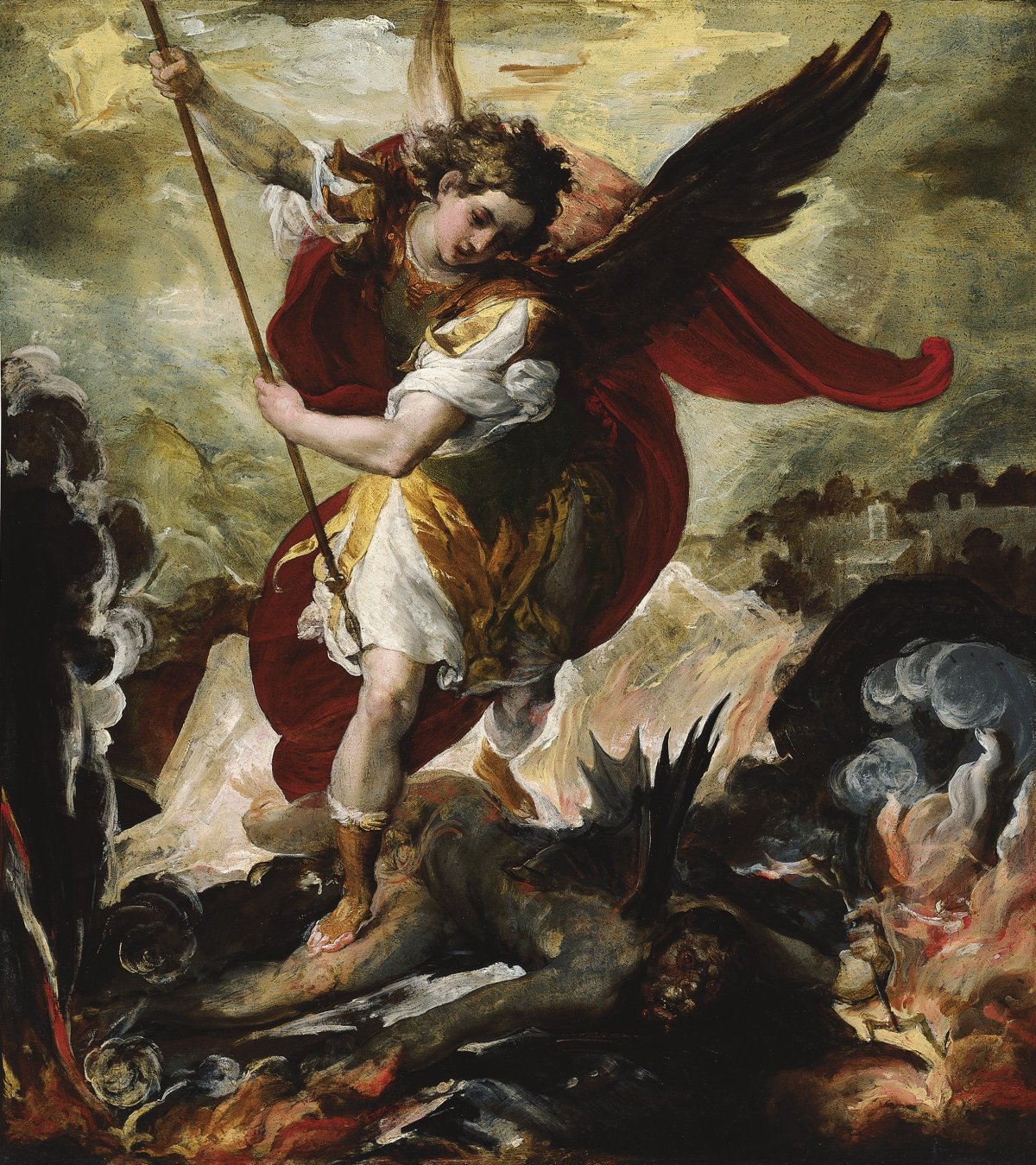
From the moment of their birth, humankind faces a world fraught with evil and suffering. The lessons of humanity’s collective history reframe a person’s innocence when viewed through the lens of suffering. Events shape the mind from the recollection of the Jewish Holocaust to the modern-day repression of women in a Taliban-ruled Afghanistan. The many faces of evil confront the emotional state of the contemporary, who then hides in the momentary distraction of sensory pleasure to escape reality. The answer to the emotional problem of evil and suffering rests in a person, the incarnational Christ, who walked among the created and died a horrific death immersed in the suffering of humanity.
The Evil that Men Do
The first step to a proper emotional response to evil and suffering begins with recognizing the evil that men commit and experience in this life. Perhaps the most poignant example in modern history is exampled by the atrocities committed by the National Socialist during the Jewish extermination program during World War II. Elie Wiesel details the horrifying and personal loss he experienced during his time at the Auschwitz and Buchenwald death camps in 1944 in his ethereal work Night. Wiesel writes, “Deep down, the witness knew then, as he does now, that his testimony would not be received. After all, it deals with an event that sprang from the darkest zone of man. Only those who experienced Auschwitz know what it was. Others will never know.”[1] The Jewish Holocaust, the epitome of evil perpetrated by a regime intent on exterminating millions of innocent people, expresses the unimaginable and seemingly unanswerable questions concerning evil. The question persists where is God? Evil and suffering exist at a systemic corporeal level, but the impact is personal, creating emotional dissonance in individuals. According to Van Inwagen, experiential evil results in a position of questioning, “What shall I believe about God, can I continue to love and trust God, how shall I act in relation to God, in the face of this thing that has happened?”[2] At times, people choose to look away because looking requires eyes that see and a willingness to confront the evil within us.
Personal suffering creates a void and leaves the person groping in the night to answer questions that find expression in tears. Why does evil exist in this world? Why does God allow such to exist? This tumultuous existence cannot be solved with temporal, meaningless endeavors, no matter how exhilarating at the moment. No amount of hedonism or nihilism can provide meaning and answers to these questions that haunt humanity. The teacher in the ancient text describes it well, “I saw all the deeds that are done under the sun; and see, all is vanity and a chasing after wind” (Eccl. 1:14, NRSV).[3] Evil and suffering exist, and the philosophies of humankind provide no meaningful answers and leave the individual emotions distraught or deadened without purpose. Gould posits only two responses to evil and suffering, “rest and trust in God or revolt and reject God; a turning toward or a turning away; an opening of self or a closing of self.”[4] Whatever choice a person makes determines the implications of that choice realized within the context of that one life. To open oneself up to the Creator allows the answer to materialize in the Person and work of the incarnational, suffering Christ reconciling humanity to God.
The Crucified God
The incarnation of Christ immersed in the mundane of life and the intensity of human suffering provides a hope that rises to fill the hearts of hurting humanity. The prophetic voice of Isaiah declares of the suffering servant to come, “Yet it was the will of the Lord to crush him with pain. When you make his life an offering for sin, he shall see his offspring, and shall prolong his days; through him the will of the Lord shall prosper. Out of his anguish he shall see light” (Isa. 53:10-11). The prophetic revealed itself through the life of Christ lived out from His humble beginnings in a stable in Bethlehem until His death by crucifixion on a Roman cross.
Jesus came close so that humanity would know His heart. Luke, in his gospel, writes, “Jerusalem, Jerusalem, the city that kills the prophets and stones those who are sent to it! How often have I desired to gather your children together as a hen gathers her brood under her wings, and you were not willing” (Lk. 13:34)! The compassionate heart of God revealed through Christ provides a hope that the incarnate God draws close to humankind in suffering. Moltmann writes concerning the plight of African slaves in North America and their identification with the Crucified God, “Jesus was their identity with God in the world a world which had taken all hope from them and destroyed their human identity until it was unrecognizable.”[5] The incarnate Christ identifies with human suffering to provide identity for those who suffer. The suffering Christ reflects empathic reality for those who identify with Him in their suffering, whether from systemic oppression or personal tragedy. The analogy of Christ as the empathic Shepherd resonates with those in pain. Matthew shares insight into the Shepherd’s heart in his gospel, “When he saw the crowds, he had compassion for them, because they were harassed and helpless, like sheep without a shepherd” (Matt. 9:36). This incarnational reality walked out in everyday life relational with Christ as in the caring Shepherd role as David eloquently described in his psalm, “The Lord is my shepherd, I shall not want. He makes me lie down in green pastures; he leads me beside still waters; he restores my soul. He leads me in right paths for his name’s sake” (Ps. 23:1-3).
Resonating through the halls of history stands a wooden cross of Roman torture, delineating the essence of time into two epochs, a before and after singularity. The Crucifixion of Christ reflects the pinnacle of restorative suffering. Through His suffering, humankind finds meaning in their reflective moments of suffering and felt-evil.
How can a person answer the questions that resist trite answers? How can relief rush into a heart regarding questions that hurt so profoundly? Moltmann posits that the resulting answers are mysterious, a “mysticism of the cross on the part of the oppressed is in fact an ‘expression of misery’, and is already implicitly a ‘protest against misery.’”[6] As Christ raised the final protest to His Father, “And about three o’clock Jesus cried with a loud voice, “Eli, Eli, lema sabachthani?” that is, “My God, my God, why have you forsaken me” (Matt. 27:46) Jesus’ cry is the same cry of all those oppressed and facing evil, the question on the lips of those staring into the face of destruction.
The answer to this complicated question finds relevance in the crucified God. In John’s gospel, Jesus expresses the answer in words, “When Jesus had received the wine, he said, “It is finished.” Then he bowed his head and gave up his spirit” (Jn. 19:30). The question for humanity remains what did Jesus finish? He finished the diabolical suffering and evil perpetrated on the cosmos by sin and human depravity.
It is a finishing that plays out in the coming eschaton when all tears cease. The apocalyptic writing of John states, “See, the home of God is among mortals. He will dwell with them as their God; they will be his peoples, and God himself will be with them; he will wipe every tear from their eyes. Death will be no more; mourning and crying and pain will be no more, for the first things have passed away” (Rev. 21:3-4). The “first things” denoting the painful ethereal experiences that humankind suffered under the curse of evil removed forever by their Creator.
Conclusion
The questions faced in the moments of unspeakable suffering at the insistence of evil remain the most difficult to answer. Many chose to reject the Divine and cast their lots with the hedonism or nihilism that engulfs the godless cosmos. Nevertheless, the ancient Scriptures provide a pathway to find answers to these diabolical questions resonating in the heart of humankind. The answer does not elucidate from a philosophical understanding but faith in the work of a Person. The suffering of an incarnational God-man at the hands of evil men accomplishes that final reconciliation by His death on the cross by humanity finds hope. A hope that resonates in the hearts of individuals as they face the forces of evil.
Bibliography
Gould, Paul M., Travis Dickinson, and R Keith Loftin. Stand Firm: Apologetics and the Brilliance of the Gospel. Nashville, TN: B&H Academic, 2018.
Moltmann, Jürgen. The Crucified God: The Cross of Christ as the Foundation and Criticism of Christian Theology. U.S. ed. New York, NY: Harper & Row, 1974.
Van Inwagen, Peter. The Problem of Evil. Oxford, UK: Oxford University Press, 2008. Accessed October 5, 2021. ProQuest Ebook Central.
Wiesel, Elie. Night. New York, NY: Hill and Wang, 2006.
[1] Elie Wiesel, Night (New York, NY: Hill and Want, 2006), ix.
[2] Peter Van Inwagen, The Problem of Evil (Oxford, UK: Oxford University Press, 2008), 5, ProQuest Ebook Central.
[3] Unless otherwise noted, all Biblical passages referenced are in the New Revised Standard Version.
[4] Paul M. Gould, Travis Dickinson, and R Keith Loftin, Stand Firm: Apologetics and the Brilliance of the Gospel (Nashville, TN.: B&H Academic, 2018), 159.
[5] Jürgen Moltmann, The Crucified God: The Cross of Christ as the Foundation and Criticism of Christian Theology, U.S. ed. (New York: Harper & Row, 1974), 48.
[6] Ibid, 49-50.
 Restored