Categories
Biblical Studies Theology

The Death and Enthronement of Jesus – A Theological Discourse on Sacrifice

Introduction

A particular sacrificial motif threads its way through the pages of Scripture, culminating in the atoning work of Christ and the presentation of the results of His sacrifice before the Creator of the cosmos, God as Father enthroned in the Heavenly realm. From the beginning narrative of Creation in Genesis, the ancient text portends a focus on the need for sacrifice in the covering of humanity’s sinful rebellion. A rebellion born of their desire to be like God, the first humans chose the path of rebellion and faced the consequence of distance from their Creator. However, from the foundations of the world, the Creator planned for a sacrificial bridge crossing the divide that separated a holy God from humankind in response to this sin disruption. Genesis points to a needed sacrifice for covering and restoring Divine closeness through a shadow or implied reference. The Scriptures inform, “’And the Lord God made garments of skins for the man and for his wife, and clothed them” (Gen. 3:21 NRSV).[1] The concept of sacrifice is the bridge upon which hope for restoration rests. A pathway of return for the Creator’s prized creation, humankind.

With the idea of sacrifice permeating the ancient text, the reader of Scripture understands and acclimates this work of restorative proximity to the Divine. From the Levitical covenantal texts detailing ritual cultic steps in the purification processes for the priest and temple culminating in the atoning sacrifice and presentation before God in the Holy of Holies to the processional exaltation of Christ’s atoning work on the Cross and in the Heavenlies, the text delineates a processional view of the atonement sacrifice. Against this holistic background, this paper will argue that the Scriptures establish a supersessionist idea of Christ’s sacrifice concerning the Second Temple Judaic cultic ritual sacrifices and a holistic understanding of sacrifice involving the cross, ascension, and enthronement of Christ.

Overview of the Historical Context of Sacrifice

Sacrifice in the Ancient Near East and Mediterranean cultures played an integral part in the people’s religious customs signifying the appeasement of the gods and a plea for divine favor. The nuances of belief concerning the gods and the need for sacrifice varied among the peoples throughout the region and varying time periods; however, several critical elements remained consistent. Daniel C. Ullucci defined the practice concerning the context of this work as the “ritualized slaughter of an animal and the distribution of its parts among humans and imagined superhuman beings.”[2] This practice of animal sacrifice dates as far back in ancient Mediterranean culture as the Neolithic period (ca. 8000 BCE). It is perhaps the most pervasive religious ritual in the history of humanity. The plethora of interpretive understanding of the meaning of these sacrificial rites varied across cultures and times, with a common strand of appeasement of the deities permeating ancient thought.[3]

Though disparate in their beliefs concerning sacrifice and cultic rituals, certain elements appear consistent across the ancient Mediterranean cultural landscape. First, these ancient cultures viewed the deities as residing in temples or structures where human interaction and approach happened through a mitigating or appeasing process involving cultic ritual and animal sacrifice. This commonality existed in Canaanite and Judaic practices and later Greek and Roman mythological traditions. These structures provided a tangible place for the participant in the cultic rituals to engage with the deities in worship. Not only pagan religions but also the monotheistic Judaic cult practice their cultic rituals in the confines of a defined structure, a tabernacle or temple. Liane M. Feldman, in her monograph The Story of Sacrifice: Ritual and Narrative in the Priestly Source, describes the two elements of the Judaic construction of the tabernacle, with the first phase being public and the completion being private between Moses and YHWH. She writes of this final Mosiac phase, “Moses’s work is to assemble the pieces into a functional tent of meeting so that Yahweh can take up residence among the Israelites.”[4] The critical point is that the practice equivocates a methodological purification process and holy preparation for the divine encounter.

Second and critical to these Ancient Near Eastern cultures was the importance of the cultic ritual process. Within each cultural expression, existed a series of functions or formulas by which the worshipper or priest engaged in proximity closure with the diety. These practices involved purification rites that prepared the person for engaging intimately with the particular diety. In the Judaic cult, these procedures are presented in a public forum in Leviticus. Feldman writes, “Their [Israelites] presence at the start of the ritual activities serves to emphasize the public nature of the cult and the essential role of the community is not only it’s beginning but also its ongoing existence.”[5] The Levitical author narrates, “Take Aaron and his sons with him, the vestments, the anointing oil, the bull of sin offering, the two rams, and the basket of unleavened bread; and assemble the whole congregation at the entrance of the tent of meeting” (Lev. 8:2-3). The public nature of these ritual pronouncements served as a reminder to the people of their importance and the communal nature of these cultic ritual practices. According to Simon J. Joseph in his article, “The Sacrifice of Jesus in the Letter to the Hebrews,” writes “Sacrificial ritual comprised a ‘set of cultural norms’ understood as the ‘normal and natural way to express piety towards the gods’ and so functioned as a common vocabulary that could unite different ethnic groups and communities throughout the empire.”[6]

The concept of ritual purification dominates the landscape in the initiation of the Judaic cultic rituals in the Torah. Feldman writes concerning the purification ritual described in Exodus 29, “While the function of this purification offering was not given in this initial description of the ordination offerings, it is given in vv. 36– 37: this offering will decontaminate the altar from whatever impurities have accrued to it.”[7] The people need purification from contamination and the objects used in the cultic rituals; it is an all-encompassing purification required to make the worshipper and the dwelling acceptable to be in proximity to the Divine. David M. Moffit posits that “early Christian reflection on Hebrews, Jesus sacrifice, and atonement could approach these interrelated concerns more holistically – that is oriented towards the full, creedal narrative of the incarnation, then do some accounts of the atonement that reduce Jesus’ sacrifice to his death on the cross.”[8]

The Sacrificial Death of Christ

The idea of sacrifice and cultic rituals that permeated these Mediterranean cultures provided the contextual understanding of the first century Christians as to the purpose and efficacy of Jesus’ death on the cross. For the modern theologian to apprehend the effectiveness and meaning of the atoning sacrificial offering of Christ, it is critical to understand the cultic purification rituals and the impact these cultural understandings had upon the interpretation and application for early Christianity as they developed their view of the meaning of Christ’s passion vital elements, including the idea that ritual purification and sacrifice involved location and process, allowing for a holistic approach to the atoning work of Christ. Of import is an apprehension of a Yom Kippur motif within the early formulation of atonement theology.

Daniel Stökl Ben Ezra writes of this early Second Temple Judaic influence on the formation of a High Christological Atonement Theology, “The basic setting, however, is apocalyptic: the heavenly temple, the eschatological concept of time and the motif of the high-priestly redeemer who destroys the Lord of the evil powers, liberates his good prisoners and ascends to God.”[9] Developing this theme further, David Moffitt writes in his article “Jesus’ Heavenly Sacrifice In Early Christian Reception of Hebrews: A Survey” of the significance of place and process, “the author [of Hebrews] identifies the centre of the offering of Jesus’ atoning sacrifice as Jesus’ act of presenting himself to the Father after His resurrection.”[10] This allusion to process not a particular act of sacrifice provides a theological foundation from the New Testament writings. He goes on to posit, “As the great high priest, Jesus offered Himself to the father as a sacrifice when he ascended into the heavens and entered the holy of holies in the heavenly sanctuary,”[11] symbolizing a place where this sacrificial offering took place to mediate the distance between humanity and God.

Through the eyes of these early Christians, Jesus’ death on the cross did not represent the end of the sacrificial event, but the beginning of the purification rite and part of the holistic expression of His mediatorial High Priestly role. In Hebrews chapters 4 and 5, the writer crafts this “High Priestly” view of Christ’s passion, “’Since, then, we have a great high priest who has passed through the heavens, Jesus, the Son of God, let us hold fast to our confession” (Heb. 4:14 NRSV). Christopher Richardson posits that “Rather than evoking Jesus’ Angst in Gethsemane, or conflating images of Gethsemane and Golgotha, the author [of Hebrews] has fixed his comments into a larger discussion of priesthood and sacrifice (4.14– 5.10) that enables the audience to compare Jesus’ priesthood, actions, and status with those of Aaron and Melchizedek.”[12] The author of Hebrews intimately connects the sacrifice of Christ with the practices of Jewish temple worship. Christian A. Eberhart and Donald Schweitzer postulate that the “original interpretation of the nature and significance of Jesus’ death that uses themes and practices of Jewish temple worship metaphorically to argue for the uniqueness of Jesus’ saving significance.”[13] As well David Moffitt posits that Jesus’ sacrifice is metaphorically understood as cleansing ones internal person and showing “further how the concrete physical locales and external rituals that constituted sacred space in the Mosaic economy on earth can serve as metaphors that point to the abstract immaterial realities of being in God’s presence.”[14]

The cross as the initiatory rite comparable to the killing of the sacrifices in the Levitical tradition provided the offering or blood necessary for the purification of the altar and the covering of the people’s sins. Jesus, in his high priestly role, offered himself up to death on the cross because He did not require purification being the sinless sacrifice fully capable of propitiating the sins of humankind. Christ became sin so that humanity might be made free from its destructive consequence. The writer of Hebrews states, “Therefore he had to become like his brothers and sisters in every respect, so that he might be a merciful and faithful high priest in the service of God, to make a sacrifice of atonement for the sins of the people. Because he himself was tested by what he suffered, he is able to help those who are being tested” (Heb. 2:17-18). Jesus performs the role of High Priest in offering Himself as the perfect sacrificial lamb. John beautifully describes this self-sacrifice, “We know love by this, that he laid down his life for us—and we ought to lay down our lives for one another” (1 Jn. 3:16). Jesus’ sacrificial death is superior to the Levitical rites because He fulfills the totality of the step, the High Priestly role, and the role of the sacrificial lamb. William L. Lane describes this qualification of Christ, “The “perfection” of Jesus in this context (cf. 5:8-9; 7:28) has functional implications. The emphasis falls on the notion that he was fully equipped for his office.”[15] Lane goes on to state the qualitative reasoning, “God qualified Jesus to come before him in priestly action. He perfected him as a priest of his people through his sufferings, which permitted him to accomplish his redemptive mission.”[16] By being qualified by the Father, Jesus initiates the sacrificial ritual by offering Himself as sacrifice and becoming the scapegoat by assimilating the sins of humankind. Paul writes to the Corinthian church concerning this assimilation of sin, “For our sake he made him to be sin who knew no sin, so that in him we might become the righteousness of God” (2 Cor. 5:21).

When seen as one step in the holistic process of sacrifice, the killing of Jesus is removed from just an egregious act of gratuitous violence perpetrated on the Son of God to a meaningful symbol of victory over sin and death. Eberhart and Schweitzer posit that “Christians can speak of the sacrifice of Christ and not put killing and violence at the center of their faith, if an understanding of Jesus’ resurrection accompanies their understanding of Jesus’ sacrifice as overcoming his death and promising an eschatological future in which death and violence and no more.”[17] This understanding of a processional, progressive atoning sacrificial work leads the theologian to the next logical step in the Resurrection process. According to Simon J. Joseph in his article “The Sacrifice of Jesus in the Letter of the Hebrews,” there is an extension and expansion of the semantic range of sacrifice and an affirmation by the New Testament authors of the value of sacrifice all the while debating the kind of sacrifice most “efficacious and pleasing” to the diety. They posited that Christ met the criteria for the most efficacious and pleasing offering to the Creator.[18] Michael Kibbe writes concerning this idea that the sacrifice is not the endpoint but the start of the process, “death is not the sum total of sacrifice, nor even the most important part of sacrifice. While Christ’s suffering is undeniably a necessary precursor to Christ’s priestly work, it is not itself a priestly act.”[19]

The Ascension of Christ into the Heavenly Realm

The second act in this three-part purification ritual involves the priest carrying the recently sacrificed offering through the various apertures of the temple or tabernacle into the inner sanctum, the holy of holies. This offering movement proceeds through different stages until it is brought to appease the deity and atone for the people’s sins in the Judaic cultic practice. In Christianity, a new rite initiates in the person of Christ and His High Priestly role as both sacrifice and offering priest. Simon J. Joseph posits two varying views of Jesus’ purpose and work, traditionalist and revisionist.[20] He writes, “In the traditionalist model, Jesus predicts the destruction of the temple cult with his sacrificial death. In the revisionist model, Jesus participates in the temple cult, and his followers follow in his footsteps.”[21] The revisionist view leads to the idea of the author of Hebrews that the entirety of the atoning work of Christ includes the element of His passing through the Heavenlies and arriving at the Holiest place, the throne room of His Father. The author(s) of Hebrews narrates this passage, writing, “Since, then, we have a great high priest who has passed through the heavens, Jesus, the Son of God, let us hold fast to our confession” (Heb. 4:14).

The ascension and procession of Christ through the Heavenlies project a symbolic gesture of bridging the expansive distance separating humankind. Moffit ties this Christological journey to the lingering, systematic journey of the Levitical priesthood from the outer court through the inner court and into the holy of holies. He writes of the atoning benefits being accrued as the high priest performs his priestly duties and draws near “to God and conveyed the sacrificial materials into His presence.[22] Luke in his gospel and Acts narrative “does identify Jesus’ elevation to God’s right hand as the primary mechanism that accomplishes forgiveness of sins, purification and the outpouring of the Holy Spirit, which suggests that a sacrificial logic informs his understanding of the significance of exaltation.”[23]

In his seminal work “He Offered Himself: Sacrifice in Hebrews,” Richard D. Nelson describes the rights attributed to the priestly class, “Priest enjoyed an exclusive right of access to the holy space of the sanctuary and the holy altar. Entering the sacred realm, they effected the transfer of the sacrificial gift to God or applied the blood to cleanse the holy things from pollution (Lev. 15:31; 16:19).”[24] On the Day of Atonement, the High Priest entered on behalf of the entire nation offering the sacrificial gift, making atonement for the nation. More persuasively, Jesus entered the Heavenly Holy of Holies and offered Himself as the sacrifice, making atonement once for all. Hebrews describes this perfect offering and its superior status to the Levitical cultic ritual performed by the Aaronic priesthood, “Unlike the other high priests, he has no need to offer sacrifices day after day, first for his own sins, and then for those of the people; this he did once for all when he offered himself” (Heb. 7:27). Gareth Lee Cockerill explains the functionality of Christ’s offering, “The description of “our” High Priest in v. 14a suggests the comprehensive scope of that high priesthood: this High Priest is the Son of God who became the human Jesus and has entered God’s presence on behalf of God’s people through the offering of himself for sin.”[25]

Christ’s resurrection and exaltation merge to provide an indispensable component for His priestly offering, a transit of sorts “through the created heavens (4:14; 7:26) to reach heaven itself (9:24).[26] The superiority of Christ functions from an analogous place as one of pioneer, a going before to prepare the way for the “created ones” to follow His path to Glorification. This pioneering journey is not the goal, but the transition to the presentation by entrance into the throne room of Heaven of his blood provided for purification.[27] In Hebrews, Christ offers His blood for us, “But when Christ came as a high priest of the good things that have come, then through the greater and perfect tent (not made with hands, that is, not of this creation), he entered once for all into the Holy Place, not with the blood of goats and calves, but with his own blood, thus obtaining eternal redemption” (Heb. 9:11-12). Luke Timothy Johnson explains three subtle elements involved in Hebrews chapter 9 the location denoted as Heavenly throne room, the physical arrangement of elements the ark, mercy seat, and cherubim indicating the throne of God, and the role of the high priesthood. He states, “The combination of these three elements helps us understand how, for the author of Hebrews, the resurrection/exaltation of Jesus was simultaneously an entry into God’s glory/presence, a royal enthronement, and an act of high priestly sacrifice.”[28] To illustrate the transition that takes place as Christ transitions and presents to the Father taking His rightful seat at the Father’s right hand, Felix Cortez posits,

the annual transition in the ministry of the Mosaic sanctuary illustrates the transition from the present to the coming age, which is also a transition from the cleansing of the body to the cleansing of the conscience. It involves a transition from the ministry of several priests to the ministry of one, from several sacrifices to one sacrifice, and from unrestricted access to the outer tent to access only “through blood” into the inner tent.[29]

Cortez posits that the author(s) of Hebrews utilizes this transitional chapter to illustrate a shift from the former Levitical age to the new era of Christological mediation.[30] Jesus takes His position of High Priest and mediator in the Holy Sanctuary, standing before the Father to make intercession for the saints.

The Mediatorial Priestly Role of Christ

The scene of Christ’s ascendence to the throne seated with the Father expresses the culmination of the cultic ritual of atonement. As Jody A. Barnard posits, this ascendence represents the fact that “the Son shares the very throne of God as the king-priest and divine Name-bearing anthropomorphic Glory of God. Heb 1:13 adds to this in two ways. First, it refers to the moment of the Son’s enthronement and unequivocally demonstrates that this was a divine appointment.”[31] She goes on to state, “Secondly, since it is part of 1:5– 13, and given the way it is introduced, the image is specifically contrasted with angels in 1:13. The author is probably presupposing the recurring theme throughout apocalyptic and mystical traditions that angels do not sit.”[32] As Christ superior to all others, including the angelic hosts, now elevated to the Father’s right hand, takes His fore-ordained role as High Priest, the culmination of the cultic ritual imagery comes to finality. Yet, the continuity of His purpose flows from this sacred moment. Walter Edward Brooks writes of this perpetuity initiating at Christ exaltation, “the priesthood of Jesus’ earthly life but that priesthood into which he entered at the moment of the resurrection when he triumphed over death and entered into an “indestructible,” hence endless, life.”[33] Hebrews presents this mediatorial role in perpetuity, “’but he holds his priesthood permanently, because he continues forever. Consequently he is able for all time to save those who approach God through him, since he always lives to make intercession for them” (Heb. 7:24-25). The superiority of Christ allows the purification of the believer and access to the presence of the Holy Spirit. Paul theologically adds weight to this high Christology in his letter to the Roman believers, “Who is to condemn? It is Christ Jesus, who died, yes, who was raised, who is at the right hand of God, who indeed intercedes for us” (Rom. 8:34).

Jesus’ priestly intercessory ministry continues perpetually for the faithful, providing ongoing sanctification, purification, and presence. Nicolas J. Moore writes of this ongoing work, “Jesus’ ongoing work comes to the fore: he is the cult-minister (λειτουργός, 8.2) who has a priestly ministry (λειτουργία, 8.6), just as he is also a covenant mediator (μεσίτης διαθήκης, 8.6).”[34] The final stage in Christ’s work provides security for the believer that His atonement works continuously on their behalf. The apostle John in his Gospel alludes to this continuing interaction; he writes, “The glory that you have given me I have given them, so that they may be one, as we are one” (Jn. 17:22). It is clear that the theological impetus of the concept of sacrifice centers on the process and the continuity of the atonement. The two directives found in Hebrews, due to this confidence in the high priestly role of Christ, are for the believer to “draw near” and “hold fast.” James W. Thompson writes of Hebrews chapters 4 and 10, “Both passages begin with “having therefore” (echontes oun) to point to the community’s possession of a “great priest” (“great high priest” in 4:14) as the basis for the exhortations, “let us draw near” (4:16; 10:22) and “let us hold fast the confession” (4:14; 10:23).”[35]

Conclusion

In conclusion, this paper draws a clear picture of the process by which Christ accomplished his atoning work through sacrifice in a holistic view informed by the Yom Kippur consisting of His death, resurrection, exaltation, and mediatorial role as High Priest in the Heavens. This view is superior to all other attempts to bridge the distance between a Holy Creator and His rebellious creation. Jesus accomplishes this as both the High Priest and the sacrificial offering standing in intercession for the faithful until the end of the eschaton. Ben Witherington, III writes of Christ’s superior atoning work, “Christ’s sacrifice was an equal substitution of one human for the sins of humans; it was more than equal, for it was one truly perfect human for various flawed, weak and sinful ones; and the Yom Kippur sacrifice could bring only one person, the high priest, directly into the presence of God, whereas Christ’s sacrifice opened the door so all might go in to the inner sanctum.”[36] The Christian may find comfort in this ongoing intercessor work and know that its completion is guaranteed through Christ. Paul sums it up well in his letter to the church in Philippi “I am confident of this, that the one who began a good work among you will bring it to completion by the day of Jesus Christ” (Phil. 1:6).

Bibliography

Barnard, Jody A.. The Mysticism of Hebrews: Exploring the Role of Jewish Apocalyptic Mysticism in the Epistle to the Hebrews. Tübingen, DE: Mohr Siebeck, 2012. Accessed February 4, 2022. ProQuest Ebook Central.

Bauckham, Richard, Driver, Daniel, Hart, Trevor, and MacDonald, Nathan, eds. A Cloud of Witnesses: The Theology of Hebrews in Its Ancient Contexts. London: Bloomsbury Publishing Plc, 2008. Accessed February 5, 2022. ProQuest Ebook Central.

Brooks, Walter Edward. “The Perpetuity of Christ’s Sacrifice in the Epistle to the Hebrews.” Journal of Biblical Literature 89, no. 2 (1970): 205–14. https://doi.org/10.2307/3263051.

Cockerill, Gareth Lee. The Epistle to the Hebrews. New International Commentary on the New Testament. Grand Rapids, MI: William B. Eerdmans Publishing Company, 2012. Accessed February 4, 2022. ProQuest Ebook Central.

Cortez, Felix H. “From the Holy to the Most Holy Place: The Period of Hebrews 9:6-10 and the Day of Atonement as a Metaphor of Transition.” Journal of Biblical Literature 125, no. 3 (2006): 527–47. https://doi.org/10.2307/27638378.

Eberhart, Christian A. and Donald Schweitzer. “The Unique Sacrifice of Christ According to Hebrews 9: A Study in Theological Creativity.” Religions 10, no. 1 (2019): 47, http://ezproxy.liberty.edu/login?qurl=https%3A%2F%2Fwww.proquest.com%2Fscholarly-journals%2Funique-sacrifice-christ-according-hebrews-9-study%2Fdocview%2F2326927948%2Fse-2.

Ezra, Daniel Stökl Ben. The Impact of Yom Kippur on Early Christianity: The Day of Atonement from Second Temple Judaism to the Fifth Century. Tübingen, DE: Mohr Siebeck, 2019. Accessed February 4, 2022. ProQuest Ebook Central.

Feldman, Liane M.. The Story of Sacrifice: Ritual and Narrative in the Priestly Source. Tübingen, DE: Mohr Siebeck, 2020. Accessed February 28, 2022. ProQuest Ebook Central.

Gelardini, Gabriella, and Attridge, Harold, eds. Hebrews in Contexts. Lieden, NL: BRILL, 2016. Accessed February 4, 2022. ProQuest Ebook Central.

Johnson, Luke Timothy. Hebrews: A Commentary. The New Testament Library. Louisville, KY: Presbyterian Publishing Corporation, 2006. Accessed February 4, 2022. ProQuest Ebook Central.

Joseph, Simon J. “”In the Days of His Flesh, He Offered Up Prayers”: Reimagining the Sacrifice(s) of Jesus in the Letter to the Hebrews.” Journal of Biblical Literature 140, no. 1 (2021): 207-27, http://ezproxy.liberty.edu/login?qurl=https%3A%2F%2Fwww.proquest.com%2Fscholarly-journals%2Fdays-his-flesh-he-offered-up-prayers-reimagining%2Fdocview%2F2509033966%2Fse-2%3Faccountid%3D12085.

Kibbe, Michael. “Is It Finished? When Did It Start? Hebrews, Priesthood, and Atonement in Biblical, Systematic, and Historical Perspective.” The Journal of Theological Studies 65, no. 1 (2014): 25–61. http://www.jstor.org/stable/23970736.

Lane, William L.. Hebrews 1-8, Volume 47A. Word Biblical Commentary. Grand Rapids, MI: HarperCollins Christian Publishing, 2015. Accessed February 4, 2022. ProQuest Ebook Central.

Moffitt, David M. “Atonement at the Right Hand: The Sacrificial Significance of Jesus’ Exaltation in Acts.” New Testament Studies 62 (2016): 549-68. doi:10.1017/S0028688516000217.

Moffitt, David M. “Jesus’ Heavenly Sacrifice in Early Christian Reception of Hebrews: A Survey.” Journal of Theological Studies 68, no. 1 (April 2017): 46–71. doi:10.1093/jts/flx085.

Moore, Nicholas J. “Sacrifice, Session and Intercession: The End of Christ’s Offering in Hebrews.” Journal for the Study of the New Testament 42, no. 4 (June 2020): 521–41. https://doi.org/10.1177/0142064X20914527.

Nelson, Richard D. “”He Offered Himself” Sacrifice in Hebrews: A Journal of Bible and Theology.” Interpretation 57, no. 3 (Jul 2003): 251, http://ezproxy.liberty.edu/login?qurl=https%3A%2F%2Fwww.proquest.com%2Fscholarly-journals%2Fhe-offered-himself-sacrifice-hebrews%2Fdocview%2F202739810%2Fse-2%3Faccountid%3D12085.

Thompson, James W.. Hebrews. Paideia: Commentaries on the New Testament. Grand Rapids: Baker Academic, 2008. Accessed February 5, 2022. ProQuest Ebook Central.

Ullucci, Daniel C.. The Christian Rejection of Animal Sacrifice. New York, NY: Oxford University Press USA – OSO, 2011. Accessed February 4, 2022. ProQuest Ebook Central.

Witherington III, Ben. Letters and Homilies for Jewish Christians: A Socio-Rhetorical Commentary on Hebrews, James and Jude. Downers Grove, IL: InterVarsity Press, 2007. Accessed February 4, 2022. ProQuest Ebook Central.


[1] Unless otherwise noted, all Biblical passages referenced are in the New Revised Standard Version.

[2] Daniel C. Ullucci, The Christian Rejection of Animal Sacrifice (New York, NY: Oxford University Press USA – OSO, 2011), 15, ProQuest Ebook Central.

[3] Ibid., 1.

[4] Liane M. Feldman, The Story of Sacrifice: Ritual and Narrative in the Priestly Source (Tübingen, DE: Mohr Siebeck, 2020), 31, ProQuest Ebook Central.

[5] Ibid., 67.

[6] Simon J. Joseph, “’In the Days of His Flesh, He Offered Up Prayers’: Reimagining the Sacrifice(s) of Jesus in the Letter to the Hebrews,” Journal of Biblical Literature 140, no. 1 (2021): 213, http://ezproxy.liberty.edu/login?qurl=https%3A%2F%2Fwww.proquest.com%2Fscholarly-journals%2Fdays-his-flesh-he-offered-up-prayers-reimagining%2Fdocview%2F2509033966%2Fse-2%3Faccountid%3D12085.

[7] Feldman, The Story of Sacrifice, 72.

[8] David M. Moffitt, “Jesus’ Heavenly Sacrifice in Early Christian Reception of Hebrews: A Survey,” Journal of Theological Studies 68, no. 1 (April 2017): 46, doi:10.1093/jts/flx085.

[9] Daniel Stökl Ben Ezra, The Impact of Yom Kippur On Early Christianity: The Day of Atonement from Second Temple Judaism to the Fifth Century (Tübingen, DE: Mohr Siebeck, 2019), 180, ProQuest Ebook Central.

[10] Moffitt, “Jesus’ Heavenly,” 47.

[11] Ibid., 47.

[12] Richard Bauckham et al., eds., A Cloud of Witnesses: The Theology of Hebrews in Its Ancient Contexts (London, UK: Bloomsbury Publishing Plc, 2008), 52, ProQuest Ebook Central.

[13] Christian A. Eberhart and Donald Schweitzer, “The Unique Sacrifice of Christ According to Hebrews 9: A Study in Theological Creativity,” Religions 10, no. 1 (2019): 1, http://ezproxy.liberty.edu/login?qurl=https%3A%2F%2Fwww.proquest.com%2Fscholarly-journals%2Funique-sacrifice-christ-according-hebrews-9-study%2Fdocview%2F2326927948%2Fse-2.

[14] Gabriella Gelardini and Harold Attridge, eds., Hebrews in Contexts (Leiden, NL: BRILL, 2016), 259, ProQuest Ebook Central.

[15] William L. Lane, Hebrews 1-8, Volume 47A, Word Biblical Commentary (Grand Rapids, MI: HarperCollins Christian Publishing, 2015), 216, ProQuest Ebook Central.

[16] Ibid., 217.

[17] Eberhart and Schweitzer, “The Unique Sacrifice of Christ,” 12.

[18] Simon J. Joseph, “’In the Days of His Flesh, He Offered Up Prayers’: Reimagining the Sacrifice(s) of Jesus in the Letter to the Hebrews,” Journal of Biblical Literature 140, no. 1 (2021): 217, http://ezproxy.liberty.edu/login?qurl=https%3A%2F%2Fwww.proquest.com%2Fscholarly-journals%2Fdays-his-flesh-he-offered-up-prayers-reimagining%2Fdocview%2F2509033966%2Fse-2%3Faccountid%3D12085.

[19] Michael Kibbe, “Is It Finished? When Did It Start? Hebrews, Priesthood, and Atonement in Biblical, Systematic, and Historical Perspective,” The Journal of Theological Studies 65, no. 1 (2014): 44, http://www.jstor.org/stable/23970736.

[20] Joseph, “’In the Days of His Flesh,” 215.

[21] Ibid.

[22] David M. Moffitt, “Atonement at the Right Hand: The Sacrificial Significance of Jesus’ Exaltation in Acts,” New Testament Studies 62 (2016): 558, doi:10.1017/S0028688516000217.

[23] Moffitt, “Atonement at the Right Hand,”  558.

[24] Richard D. Nelson, “He Offered Himself Sacrifice in Hebrews: A Journal of Bible and Theology,” Interpretation 57, no. 3 (Jul 2003): 255, http://ezproxy.liberty.edu/login?qurl=https%3A%2F%2Fwww.proquest.com%2Fscholarly-journals%2Fhe-offered-himself-sacrifice-hebrews%2Fdocview%2F202739810%2Fse-2%3Faccountid%3D12085.

[25] Gareth Lee Cockerill, The Epistle to the Hebrews, New International Commentary on the New Testament (Grand Rapids, MI: William B. Eerdmans Publishing Company, 2012), 167, ProQuest Ebook Central.

[26] Nelson, “He Offered Himself,”  255.

[27] Ibid., 256.

[28] Luke Timothy Johnson, Hebrews: A Commentary, The New Testament Library (Louisville, KY: Presbyterian Publishing Company, 2006), 221, ProQuest Ebook Central.

[29] Felix H. Cortez, “From the Holy to the Most Holy Place6-10 and the Day of Atonement as a Metaphor of Transition: The Period of Hebrews 9,” Journal of Biblical Literature 125, no. 3 (2006): 537, https://doi.org/10.2307/27638378.

[30] Ibid.

[31] Jody A. Barnard, The Mysticism of Hebrews: Exploring the Role of Jewish Apocalyptic Mysticism Int He Epistle of Hebrews (Tübingen, DE: Mohr Siebeck, 2012), 269-70, ProQuest Ebook Central.

[32] Ibid., 270.

[33] Walter Edward Brooks, “The Perpetuity of Christ’s Sacrifice in the Epistle to the Hebrews,” Journal of Biblical Literature 89, no. 2 (1970): 206, https://doi.org/10.2307/3263051.

[34] Nicholas J. Moore, “Sacrifice, Session and Intercession: The End of Christ’s Offering in Hebrews,” Journal for the Study of the New Testament 42, no. 4 (June 2020): 529, https://doi.org/10.1177/0142064X20914527.

[35] James W. Thompson, Hebrews, Paideia: Commentaries on the New Testament (Grand Rapids, MI: Baker Academic, 2008), 201, ProQuest Ebook Central.

[36] Ben Witherington III, Letters and Homilies for Jewish Christians: A Socio-Rhetorical Commentary On Hebrews, James and Jude (Downers Grove, IL: InterVarsity Press, 2007), 280-81, ProQuest Ebook Central.
Categories
Biblical Studies Theology

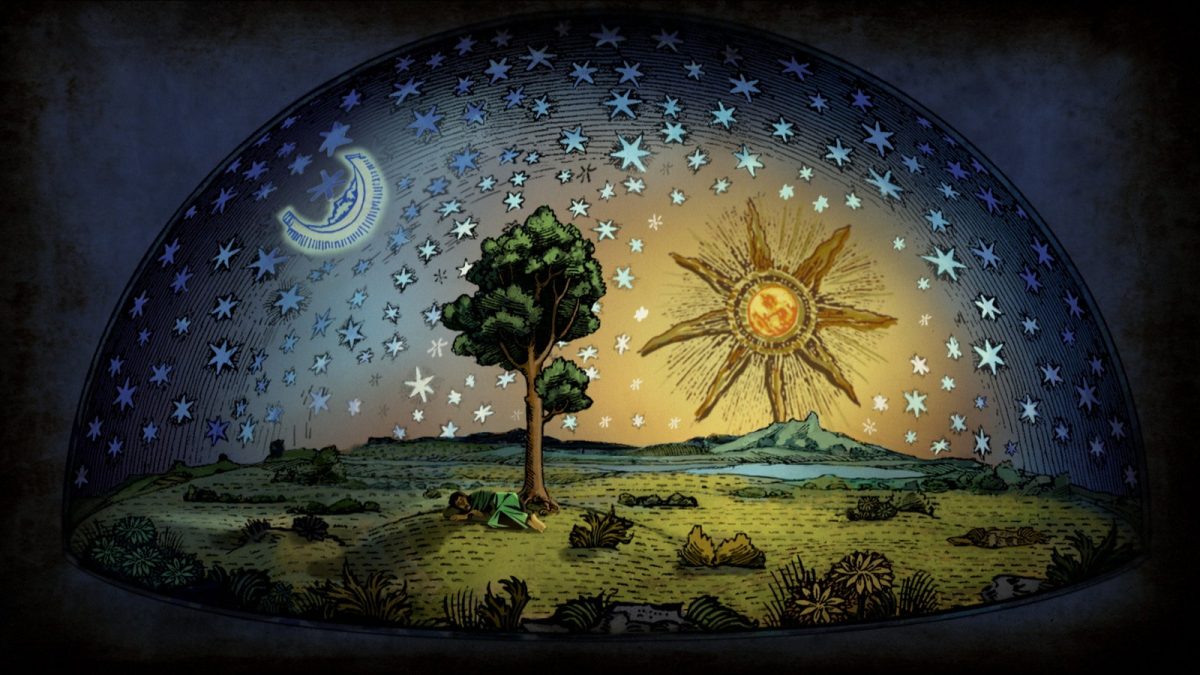
The Cosmic Temple View of the Creation Story

Introduction

The writer of Genesis begins with an iconic statement, “In the beginning when God created the heavens and the earth, the earth was a formless void and darkness covered the face of the deep, while a wind from God swept over the face of the waters” (Gen. 1:1-2 NRSV).[1] The central character in this story of origins is not the creation itself but the engagement and involvement of the Creator in emanating His creation. The Creation Story and a proper creation theology are critical in preparing the modern theologian for dialogue across multiple academic disciplines, including science, philosophy, human psychology, and religious studies. With the increase in scientific consensus concerning the age of the earth and the function of evolutionary processes in nature, a consistent and biblically-based understanding of the first two chapters of Genesis allows the theologian to engage with confidence. Effective engagement from a position of strength occurs when the theologian provides a consistent, cogent argument aligned with the biblical narrative. In contrast, naïve approaches such as strict young-earth Creationism lead the scientific community to dismiss the theological import of Christians’ views. The Cosmic Temple view of Creation reflected in this paper centers itself within the biblical text and purports to fit appropriately with current scientific knowledge.

In presenting the data for analysis, the basic structure of this study includes research into the divergent views counterproposed and the historical development of Creation Theologies, including the Cosmic Temple view of the Creation Story, setting the stage for the remainder of the paper. The following sections discuss the theory in general, its biblical context, and its importance in engaging with modern philosophy, science, and psychology. The research methodology entails a full spectrum of ideological voices from conservative to liberal to provide a balanced perspective and to guard against presuppositional bias. The divergent views engaged provide a proper foundational analysis commensurate considering the theological significance of the Creation Story. This paper posits that the Cosmic Temple view of the Creation story provides a holistically accurate interpretation allowing for constructive engagement with modern scientific understanding.

Divergent Views of the Creation Story

When approaching the study of the Creation Story, the theologian engages with a variety of views, arising within a postmodern pluralistic environment with little regard for foundationalism and truth propositions. This postmodern environment arose out of the skepticism of the Enlightenment with its focus on reason and the backdrop of modern Science’s Darwinian understanding of the Origins of Humankind. These converging factors exacted pressure on Theistic Creationists, placing them in a defensive position causing a redactional approach to long-held confidence in the Genesis 1 account. In his article “Creation and Interpretation. Hermeneutics and the Theology of Creation,” Jonathan Marvin notes a quote from Terence Fretheim “To speak of creation is to state that the cosmos does not simply exist: it was created by God.”[2] John H. Walton, in his seminal work Genesis 1 as Ancient Cosmology, posits “the confidence of the Western world in Genesis 1 as a foundation for cosmology has eroded, even among individuals who embrace a biblical faith.”[3] To either remove God or reduce God’s involvement in the Creation Story as a foundational element in response to postmodern thought invalidates the efficacy of the text.

In evaluating the Genesis account, Biblical scholars presented diverse theoretical Creation theologies utilizing concentrated morphology and anthropological analysis of Ancient Near Eastern cultures to counter this erosion of faith and redaction of a Creator. One approach detailed by Walton “attempt[s] to transform Genesis 1 into a veiled cosmology, accessible only to the trained modern eye that is able to detect an uncanny correspondence with contemporary scientific knowledge.”[4] This concordist approach attempts to read cosmic geography from the modernist context onto the ancient text.

A second view validates the Creation story as merely theological significance, thereby reducing the ancient text to esoteric themes without literal meaning.[5] In their work Creation, Jeff Astley, Ann Loades, and David Brown exemplify this esoteric, theological view, positing that “Creation is one long preparation, and therefore the being and existence of the creature one long readiness, for what God will intend and do with it in the history of the covenant.”[6] The nebulousness of their assertion connecting creation to process and covenant instead of rooted in creedal confession and historicity is redactional and dilutes the Biblical author’s intention.

A final view reduces the story even further to another analogous mythological rendition of an Ancient Near Eastern people’s attempt to explain their origin story, thus leaving the modern reader of Genesis 1 without a proper anchor of authenticity to validate its origin claims. James Cutsinger, in his article, “On Earth as It Is in Heaven,” argues for this analogous, pluralistic perspective combing metaphysical emanation, theistic creation, and scientific evolution  “each intended to account for the world as an organic whole and as possessing determinate form, since it is the cosmos, and not simply the bare facts of existence, that requires explanation.”[7] As Marvin asserts, “The consequences of our understanding of the origin and character of the world are far-reaching. If we fail to articulate and rely on a particular view of creation, we may in effect prioritise a rival conception, an alternative cosmology and ontology which grow from different roots.”[8]

Historical Development of Creation Theology

From the beginning of the Jewish and Christian faiths, theologians proposed various understandings of the Origin Story in Genesis chapter one. Central to these faith reflections of Creation is God’s direct involvement. Veli-Matti Karkkainen, in his book Creation and Humanity: A Constructive Christian Theology for the Pluralistic World, Volume 3, writes, “All three traditions believe in God, loving and Almighty, who has brought about the cosmos and sustains and guides its life from the beginning to the end. The ultimate meaning of the confession of God as Creator is that the whole universe is ontologically dependent on God.”[9] The view of early church theologians grappled with the interaction of the Genesis account and its intersection with their understanding of science. Adam Rassmussen writes concerning this didactic intersection in his book, Genesis and Cosmos: Basil and Origen on Genesis 1 and Cosmology, “In the hexaemeral sermons Basil encountered three specific cosmological problems that Origen also encountered, namely, the nature of matter (Gen 1:2), the water above the sky (Gen 1:6– 7), and astrology (Gen 1:14).”[10] These early church fathers understood science and its relationship as one of servitude, “Origen’s metaphor of secular knowledge as Christianity’s servant is a lens through which we may interpret the various ways in which he and Basil used that knowledge when interpreting Genesis 1.”[11] 

A critical, foundational concept in Creation Theology involves understanding the role of God concerning origins. Janet M. Soskice writes concerning a central tenet of creatio ex nihilo, “It affirms that God, from no compulsion or necessity, created the world out of nothing – really nothing – no pre-existent matter, space or time.”[12] Soskice reflects on the impact of this understanding on the theology of Thomas Aquinas “that God could have created, ex nihilo, an everlasting world – that is, a world without beginning or end – although Aquinas believed, on the basis of Scripture, that the world in fact had a beginning.” What is clear is that the early Christian church developed a diversity of thought incorporating various metaphysical interpretations. She goes on to posit that the fact that Aquinas could consider the doctrine to be logically compatible with two different accounts of world origins demonstrates not a cosmological or scientific hypothesis but a metaphysical position and its subject matter, so to speak, is God, although in the hands of exponents such as Thomas Aquinas creatio ex nihilo also has much to tell us about creatures in relation to God.[13] According to Ashford and Bartholomew, “Among the church fathers there was some disagreement about this, so that Justin Martyr, for example, believed that God created from formless matter.”[14] The Cappadocian fathers elaborated on the fact that the “arche [in Genesis 1:1] could include a temporal sense, the ‘beginning’ that immediately precedes actualized time, but for Basil it additionally identifies the ‘skillful Logos’ (τεχνικὀς λόγος) who originally superintended the orderly arrangement of the cosmos, such that it became ‘an academy (διδασκαλεΐον) for rational beings and a school (παιδεντήριον) for acquiring knowledge of God.”[15]

Maren R. Neihoff describes early first-century Judaic thought concerning Origins, “In the first century CE a philosophical formulation of religious dogma, based on the creation of the world, emerged in Judaism. This dogma, which I have termed “monotheistic creation theology,” is particularly concerned with the notion of the Creator’s existence as the only true deity.”[16] The evolution of Judaic thought among Jewish intellectuals after extensive contact with Hellenistic philosophy began to perceive “their religion in more theoretical terms than those who had previously written about the creation.”[17] Lance Jenott and Sarit Katten Gribetz elaborate an artful rendition of the early views of Creation in the context of liturgical expression, “In synagogues and churches throughout the region, the weekly liturgy reenacted the creation story, inserted worshippers into the history of salvation, and reminded them of the fragility of human existence in contrast to the permanence of God’s work.”[18] The praxis of Creation for these early faithful followers of Jesus rooted itself not in theological hierarchy but in the groundedness of faith lived out within the continual creative work of God. Ashford and Bartholomew point out this creedal praxis, “Both the Nicene and the Apostles’ Creeds refer to creation as the first divine action, and both refer to “heaven and earth,” a merism for everything.”[19] Additionally, these early church creeds established a Creational Christology, “The Nicene Creed also includes references to creation in its reference to Christ as the one “by whom all things were made” and to the Holy Spirit as “the Lord and giver of life.”[20]

The Cosmic Temple View of the Creation Story

 A more recent and intriguing development in cosmological and theological interpretation of the Genesis account of creation falls in the category of a functional assessment of the creation with an overarching Cosmic Temple motif integrating from an understanding of the ancient Israelite cosmography. Walton establishes an ontological basis as the prerequisite for understanding a cultural view of cosmology; he writes, “Understanding ancient peoples’ cosmic ontology must precede discussion of their understanding of cosmic origins because ontology determines what aspect of origins will be of interest and ultimate significance.”[21] The western conceptual ontology concerns itself with “material origins,” Walton posits “In the post-Enlightenment Western world, the framework of cosmic ontology has become strictly material— that is, the cosmos is perceived to exist because it has material properties that the senses can detect.”[22] In contrast, the ancient world viewed cosmology from a different perspective than the western mind. Walton suggests that, “cosmic ontology in the ancient world was a functional ontology —that is, everything exists by virtue of its having been assigned a function and given a role in the ordered cosmos.”[23] This functional understanding of cosmography undergirds the Cosmic Temple view of the Creation Story. Walton, in his book, Ancient Near Eastern Thought and the Old Testament: Introducing the Conceptual World of the Hebrew Bible, writes, “A function-oriented ontology/cosmology bypasses the questions that modern scholars often ask of the ancient world: Did they have a concept of “creation out of nothing?” Did they believe in the eternal existence of matter? These questions have significance only in a material ontology.”[24]

A reorientation of the Creation Story from a material origins account to a more reflective functional ontology provides the basis for categorizing functions created in Genesis to sustain life. When the constraints of reading into the text material creation, the reader begins to unravel the mystery of origins based upon the perspective of the ancient Israelite audience. They viewed the world and its relationship to God as integrated without a distinction between natural and supernatural; these were not concepts familiar because all of the creation exhibited the work of the Divine. The use of the Hebrew word bara in the first verse of Genesis 1 is critical to understanding the work of Creation. Walton explains, “the nuanced meaning of bārāʾ that best suits the data is that it means ‘to bring something into (functional) existence.’ It suggests the establishment of order often accomplished by making distinctions as roles, status, and identity are distinguished.”[25]

On the first yom of Creation, the writer informs us that God established light and darkness or functional initiated time into the cosmos, “Then God said, “Let there be light”; and there was light. And God saw that the light was good; and God separated the light from the darkness” (Gen. 1:3-4) when view from a functional ontology, the importance of the element of time to the remaining functions becomes evident. The second yom God separated the “cosmic waters,” pushing them back to the boundaries of the cosmos to allow for the establishment of life on Earth. Walton describes the terminology and understanding of the ancients concerning “cosmic waters,”

Tĕhôm is neither an enemy to be battled nor an adversary to be defeated. It is simply a term for the cosmic waters, applying either to the precreation context or to the waters at the boundaries of the ordered cosmos. That is, tĕhôm is one of the elements of cosmic geography that parallels what is found in the cognitive environment throughout the ancient Near East. In the precreation period, the tĕhôm covered everything. In the process of creation, it was pushed out to the edges of the cosmos, where it was restrained by the power of God.[26]

Therefore during the second yom, the separation of the waters functionally created a restrained environment pushing back the chaotic elements of the cosmos, providing stability for the continued establishment of life-sustaining functions. During the third yom, this life-sustaining functionality continues with the creation of land and water necessary for food cultivation, “’And God said, “Let the waters under the sky be gathered together into one place, and let the dry land appear.” And it was so. God called the dry land Earth, and the waters that were gathered together he called Seas. And God saw that it was good” (Gen. 1:9-10).

With the establishment of the needed elements for agricultural development, during the fourth Yom God created the function of food production, “Then God said, “Let the earth put forth vegetation: plants yielding seed, and fruit trees of every kind on earth that bear fruit with the seed in it.” And it was so” (Gen. 1:11). The functional creation continues during the fifth yom with the Creator establishing the celestial lights providing seasonal and tidal patterns rooted in the sun and moon, “And God said, “Let there be lights in the dome of the sky to separate the day from the night; and let them be for signs and for seasons and for days and years” (Gen. 1:14). The progression of the creative work of Yahweh continues during the fifth yom period, placing in the air and within the seas living creatures now that the functions of life-sustainment exist. The writer of Genesis states, “’And God said, “Let the waters bring forth swarms of living creatures, and let birds fly above the earth across the dome of the sky.” So God created the great sea monsters and every living creature that moves, of every kind, with which the waters swarm, and every winged bird of every kind. And God saw that it was good” (Gen. 1:20-21). During the sixth yom period, the Creator placed upon the land animals within the now life-sustaining cosmos, “And God said, “Let the earth bring forth living creatures of every kind: cattle and creeping things and wild animals of the earth of every kind.” And it was so” (Gen. 1:24). Reaching the apex of His creative work, God creates humankind to occupy and care for this newly created order, “So God created humankind in his image, in the image of God he created them; male and female he created them” (Gen. 1:27). The Genesis account than can be understood functionally per the standard view of the Ancient Near Eastern peoples, “cosmic creation in the ancient world was not viewed primarily as a process by which matter was brought into being but as a process by which functions, roles, order, jurisdiction, organization, and stability were established.”[27]

A final understanding of the “Cosmic Temple” view of Creation centers on God and the centrality of His role in the narrative. Ancient Near Eastern tribes understood the universe in relationship with the gods and believed the cosmos order existed by the gods and for the gods. Walton writes, “creation of the cosmic temple with all of its functions and with God dwelling in its midst. This is what makes day seven so significant, because without God taking up his dwelling in its midst, the (cosmic) temple does not exist.”[28] The Sabbath element in Genesis helps the reader to recognize the “temple-cosmos equation in Genesis,” the contextual significance of the functions (days 1-3) and the functionaries (days 4-6) supply the necessary elements for the “cosmic temple” and the worship of the Creator.[29] The cosmic temple concept is evident throughout Ancient Near Eastern texts, “In Ugaritic mythology the house Baal seeks for himself is a cosmic temple. [42] In Sumerian literature Gudea’s account of building the Eninnu (the temple to Ningirsu), of the completion and confirmation of the architectural plan, is described in cosmological terms.”[30] The idea that creation creates a place intended for the worship of Yahweh provides a comprehensive view of the Genesis account, leading the reader to an accurate understanding of Yahweh as the Creator and Sustainer worthy of humankind’s worship. Paul furthers this concept by clearly placing the role of cosmic sustainer in the person of Jesus Christ. He writes to the Colossians, “’He himself is before all things, and in him all things hold together” (Col. 1:17). Viewing the universe as a “cosmic temple” held together in Christ allows the modern Jesus-follower flexibility in engaging the modern sciences.

The text in Genesis is not concerned with “material origins” and resists the confines of scientific restriction or literal timeframes. Why God created the cosmos is a more appropriate question than the specifics of how He created it. He created the world and its inhabitants to please Him and express His glory within the context of terrestrial existence. Whether He did the act of creation in six literal days or through an iterative process of evolution and time is not expressed in the details of the text. All of life and creation exist because of their Creator and creation functions to honor Divinity. In the Pharisee’s attempts to repressed creative worship, Jesus responded as recorded in Luke’s gospel, “Some of the Pharisees in the crowd said to him, “Teacher, order your disciples to stop.” He answered, “I tell you, if these were silent, the stones would shout out” (Luke 19:39-40).

Conclusion

The “Cosmic Temple” view of the Creation story provides the most biblically accurate rendition and allows the theologian to engage constructively with scientific discovery. Unloosing the restrictive chains of “material origins” and focusing on the overarching “cosmic temple” and humanity’s role in the worship of the Creator God as well as the functional nature of the Creation narrative allows for an acceptance of modern scientific discoveries as to the material methodologies of the created order. The theistic Creationist can affirm the source of Creation as Divine while leaving the specific details of evolutionary development in the realm of science.

Undoubtedly more research and dialogue is needed with the theological community regarding the Doctrine of Creatine and how to engage the postmodern, pluralistic mindset. The importance of distilling truth to its essence removes presuppositions and backward reading of modern concepts, especially regarding such a narrative as Genesis 1 and the view of cosmic origins. Increased engagement from a solid truth proposition allows for forward progress and revelation to occur. Alan H. Batten sums up the human responsibility concerning the doctrinal understandings of Creation, “If we are persuaded by evidence for design in the physical universe, it necessarily follows that we are a part of that design. This places a responsibility on us. How great that responsibility is depends on our estimate of the possibility and frequency of life in the universe.”[31] The responsibility of the modern theologian is to engage in meaningful discussion respectively to carry forward the doctrines of Creation and provide palatable meaning for the postmodern mind.

Bibliography

Ashford, Bruce Riley, and Bartholomew, Craig G.. The Doctrine of Creation: A Constructive Kuyperian Approach. Westmont, IL: InterVarsity Press, 2020. Accessed November 29, 2021. ProQuest Ebook Central.

Astley, Jeff, Loades, Ann, and Brown, David, eds. Creation. Edinburgh, UK: Continuum International Publishing, 2003. Accessed November 23, 2021. ProQuest Ebook Central.

Blowers, Paul M. “Beauty, Tragedy and New Creation: Theology and Contemplation in Cappadocian Cosmology.” International Journal of Systematic Theology 18, no. 1 (January 2016): 7–29. doi:10.1111/ijst.12136.

Burrell, David B., Cogliati, Carlo, Soskice, Janet M., and Stoeger, William R., eds. Creation and the God of Abraham. Cambridge, UK: Cambridge University Press, 2010. Accessed November 23, 2021. ProQuest Ebook Central.

Cutsinger, James S. “On Earth as It Is in Heaven: A Metaphysical Cosmogony.” Dialogue & Alliance 4, no. 4 (Wint 1990): 45–68. https://search.ebscohost.com/login.aspx?direct=true&db=lsdar&AN=ATLA0000838227&site=ehost-live&scope=site.

Jenott, Lance, and Gribetz, Sarit Kattan, eds. Jewish and Christian Cosmogony in Late Antiquity. Tübingen, DE: Mohr Siebeck, 2020. Accessed November 23, 2021. ProQuest Ebook Central.

Karkkainen, Veli-Matti. Creation and Humanity: A Constructive Christian Theology for the Pluralistic World, Volume 3. Grand Rapids, MI: Wm. B. Eerdmans Publishing Co., 2015. Accessed November 23, 2021. ProQuest Ebook Central.

Marvin, Jonathan. “Creation and Interpretation. Hermeneutics and the Theology of Creation.” European Journal of Theology 26, no. 1 (April 2017): 43–54. https://search.ebscohost.com/login.aspx?direct=true&db=asn&AN=122688937&site=ehost-live&scope=site.

Rasmussen, Adam. Genesis and Cosmos: Basil and Origen on Genesis 1 and Cosmology. Boston, MA: BRILL, 2019. Accessed November 23, 2021. ProQuest Ebook Central.

Robson, John. Origin and Evolution of the Universe: Evidence for Design?. Montreal, CA: McGill-Queen’s University Press, 1987. Accessed November 23, 2021. ProQuest Ebook Central.

Walton, John H.. Ancient near Eastern Thought and the Old Testament: Introducing the Conceptual World of the Hebrew Bible. Grand Rapids, MI: Baker Academic, 2006. Accessed November 23, 2021. ProQuest Ebook Central.

Walton, John H.. Genesis 1 as Ancient Cosmology. University Park, PA: Penn State University Press, 2011. Accessed November 23, 2021. ProQuest Ebook Central.

Walton, John H.. The Lost World of Genesis One: Ancient Cosmology and the Origins Debate. Westmont, IL: InterVarsity Press, 2009. Accessed November 23, 2021. ProQuest Ebook Central.


[1] Unless otherwise noted, all Biblical passages referenced are in the New Revised Standard Version.

[2] Jonathan Marvin, “Creation and interpretation. Hermeneutics and the Theology of Creation,” European Journal of Theology 26, no. 1 (April 2017): 45, https://search.ebscohost.com/login.aspx?direct=true&db=asn&AN=122688937&site=ehost-live&scope=site.

[3] John H. Walton, Genesis 1 as Ancient Cosmology (University Park, PA: Penn State University Press, 2011), 2, ProQuest Ebook Central.

[4] Ibid.

[5] Ibid.

[6] Jeff Astley, Ann Loades, and David Brown, eds., Creation (Edinburgh, UK: Continuum International Publishing, 2003), 89, ProQuest Ebook Central.

[7] James S. Cutsinger, “On Earth as It Is in Heaven: A Metaphysical Cosmogony,” Dialogue and Alliance 4, no. 4 (wint 1990): 45, https://search.ebscohost.com/login.aspx?direct=true&db=lsdar&AN=ATLA0000838227&site=ehost-live&scope=site.

[8] Jonathan Marvin, “Creation and Interpretation. Hermeneutics,”  47.

[9] Veli-Matti Karkkainen, Creation and Humanity: A Constructive Christian Theology for the Pluralistic World, Volume 3 (Grand Rapids, MI: Wm. B. Eerdmans Publishing Co., 2015), 84, ProQuest Ebook Central.

[10] Adam Rasmussen, Genesis and Cosmos: Basil and Origen On Genesis 1 and Cosmology (Boston, MA: BRILL, 2019), 2, ProQuest Ebook Central.

[11] Ibid, 186.

[12] David B. Burrell et al., eds., Creation and the God of Abraham (Cambridge, UK: Cambridge University Press, 2010), 24, ProQuest Ebook Central.

[13] Ibid, 25.

[14] Bruce Riley Ashford and Craig G. Bartholomew, eds., The Doctrine of Creation: A Constructive Kuyperian Apporach (Westmont, IL: InterVarsity Press, 2020), 11, ProQuest Ebook Central.

[15] Paul M. Blowers, “Beauty, Tragedy and New Creation Theology and Contemplation in Cappadocian Cosmology,” International Journal of Systematic Theology 18, no. 1 (January 2016): 7-29, doi:10.1111/ijst.12136.

[16] Lance Jenott and Sarit Kattan Gribetz, eds., Jewish and Christian Cosmogony in Late Antiquity (Tübingen, DE: Mohr Siebeck, 2020), 85, ProQuest Ebook Central.

[17] Ibid.

[18] Ibid, 5.

[19] Ashford and Bartholomew, eds., The Doctrine of Creation, 10.

[20] Ibid.

[21] Walton, Genesis 1 as Ancient Cosmology, 23.

[22] Ibid.

[23] Ibid, 24.

[24] John H. Walton, Ancient Near Eastern Thought and the Old Testament: Introducing the Conceptual World of the Hebrew Bible (Grand Rapids, MI: Baker Academic, 2006), 122, ProQuest Ebook Central.

[25] John H. Walton, Genesis 1 as Ancient Cosmology, 133.

[26] Ibid, 145.

[27] Ibid, 34.

[28] John H. Walton, The Lost World of Genesis One: Ancient Cosmology and the Origins Debate (Westmont, IL: InterVarsity Press, 2009), 85, ProQuest Ebook Central.

[29] John H. Walton, Ancient Near Eastern Thought, 131.

[30] Ibid, 130.

[31] John Robson, Origin and Evolution of the Universe: Evidence for Design? (Carlisle, UK: Langham Creative Projects, 2019), xi, ProQuest Ebook Central.

Categories
Apologetics Biblical Studies Philosophy Theology

The Emotional Problem of Evil

Introduction

From the moment of their birth, humankind faces a world fraught with evil and suffering. The lessons of humanity’s collective history reframe a person’s innocence when viewed through the lens of suffering. Events shape the mind from the recollection of the Jewish Holocaust to the modern-day repression of women in a Taliban-ruled Afghanistan. The many faces of evil confront the emotional state of the contemporary, who then hides in the momentary distraction of sensory pleasure to escape reality. The answer to the emotional problem of evil and suffering rests in a person, the incarnational Christ, who walked among the created and died a horrific death immersed in the suffering of humanity.

The Evil that Men Do

The first step to a proper emotional response to evil and suffering begins with recognizing the evil that men commit and experience in this life. Perhaps the most poignant example in modern history is exampled by the atrocities committed by the National Socialist during the Jewish extermination program during World War II. Elie Wiesel details the horrifying and personal loss he experienced during his time at the Auschwitz and Buchenwald death camps in 1944 in his ethereal work Night. Wiesel writes, “Deep down, the witness knew then, as he does now, that his testimony would not be received. After all, it deals with an event that sprang from the darkest zone of man. Only those who experienced Auschwitz know what it was. Others will never know.”[1] The Jewish Holocaust, the epitome of evil perpetrated by a regime intent on exterminating millions of innocent people, expresses the unimaginable and seemingly unanswerable questions concerning evil. The question persists where is God?  Evil and suffering exist at a systemic corporeal level, but the impact is personal, creating emotional dissonance in individuals. According to Van Inwagen, experiential evil results in a position of questioning, “What shall I believe about God, can I continue to love and trust God, how shall I act in relation to God, in the face of this thing that has happened?”[2] At times, people choose to look away because looking requires eyes that see and a willingness to confront the evil within us.

Personal suffering creates a void and leaves the person groping in the night to answer questions that find expression in tears. Why does evil exist in this world? Why does God allow such to exist? This tumultuous existence cannot be solved with temporal, meaningless endeavors, no matter how exhilarating at the moment. No amount of hedonism or nihilism can provide meaning and answers to these questions that haunt humanity. The teacher in the ancient text describes it well, “I saw all the deeds that are done under the sun; and see, all is vanity and a chasing after wind” (Eccl. 1:14, NRSV).[3] Evil and suffering exist, and the philosophies of humankind provide no meaningful answers and leave the individual emotions distraught or deadened without purpose. Gould posits only two responses to evil and suffering, “rest and trust in God or revolt and reject God; a turning toward or a turning away; an opening of self or a closing of self.”[4] Whatever choice a person makes determines the implications of that choice realized within the context of that one life. To open oneself up to the Creator allows the answer to materialize in the Person and work of the incarnational, suffering Christ reconciling humanity to God.

The Crucified God

The incarnation of Christ immersed in the mundane of life and the intensity of human suffering provides a hope that rises to fill the hearts of hurting humanity. The prophetic voice of Isaiah declares of the suffering servant to come, “Yet it was the will of the Lord to crush him with pain. When you make his life an offering for sin, he shall see his offspring, and shall prolong his days; through him the will of the Lord shall prosper. Out of his anguish he shall see light” (Isa. 53:10-11). The prophetic revealed itself through the life of Christ lived out from His humble beginnings in a stable in Bethlehem until His death by crucifixion on a Roman cross.

Jesus came close so that humanity would know His heart. Luke, in his gospel, writes, “Jerusalem, Jerusalem, the city that kills the prophets and stones those who are sent to it! How often have I desired to gather your children together as a hen gathers her brood under her wings, and you were not willing” (Lk. 13:34)! The compassionate heart of God revealed through Christ provides a hope that the incarnate God draws close to humankind in suffering. Moltmann writes concerning the plight of African slaves in North America and their identification with the Crucified God, “Jesus was their identity with God in the world a world which had taken all hope from them and destroyed their human identity until it was unrecognizable.”[5] The incarnate Christ identifies with human suffering to provide identity for those who suffer. The suffering Christ reflects empathic reality for those who identify with Him in their suffering, whether from systemic oppression or personal tragedy. The analogy of Christ as the empathic Shepherd resonates with those in pain. Matthew shares insight into the Shepherd’s heart in his gospel, “When he saw the crowds, he had compassion for them, because they were harassed and helpless, like sheep without a shepherd” (Matt. 9:36). This incarnational reality walked out in everyday life relational with Christ as in the caring Shepherd role as David eloquently described in his psalm, “The Lord is my shepherd, I shall not want. He makes me lie down in green pastures; he leads me beside still waters; he restores my soul. He leads me in right paths for his name’s sake” (Ps. 23:1-3).

Resonating through the halls of history stands a wooden cross of Roman torture, delineating the essence of time into two epochs, a before and after singularity. The Crucifixion of Christ reflects the pinnacle of restorative suffering. Through His suffering, humankind finds meaning in their reflective moments of suffering and felt-evil.

How can a person answer the questions that resist trite answers? How can relief rush into a heart regarding questions that hurt so profoundly? Moltmann posits that the resulting answers are mysterious, a “mysticism of the cross on the part of the oppressed is in fact an ‘expression of misery’, and is already implicitly a ‘protest against misery.’”[6] As Christ raised the final protest to His Father, “And about three o’clock Jesus cried with a loud voice, “Eli, Eli, lema sabachthani?” that is, “My God, my God, why have you forsaken me” (Matt. 27:46) Jesus’ cry is the same cry of all those oppressed and facing evil, the question on the lips of those staring into the face of destruction.

The answer to this complicated question finds relevance in the crucified God. In John’s gospel, Jesus expresses the answer in words, “When Jesus had received the wine, he said, “It is finished.” Then he bowed his head and gave up his spirit” (Jn. 19:30). The question for humanity remains what did Jesus finish? He finished the diabolical suffering and evil perpetrated on the cosmos by sin and human depravity.

It is a finishing that plays out in the coming eschaton when all tears cease. The apocalyptic writing of John states,  “See, the home of God is among mortals. He will dwell with them as their God; they will be his peoples, and God himself will be with them; he will wipe every tear from their eyes. Death will be no more; mourning and crying and pain will be no more, for the first things have passed away” (Rev. 21:3-4). The “first things” denoting the painful ethereal experiences that humankind suffered under the curse of evil removed forever by their Creator.

Conclusion

The questions faced in the moments of unspeakable suffering at the insistence of evil remain the most difficult to answer. Many chose to reject the Divine and cast their lots with the hedonism or nihilism that engulfs the godless cosmos. Nevertheless, the ancient Scriptures provide a pathway to find answers to these diabolical questions resonating in the heart of humankind. The answer does not elucidate from a philosophical understanding but faith in the work of a Person. The suffering of an incarnational God-man at the hands of evil men accomplishes that final reconciliation by His death on the cross by humanity finds hope. A hope that resonates in the hearts of individuals as they face the forces of evil.

Bibliography

Gould, Paul M., Travis Dickinson, and R Keith Loftin. Stand Firm: Apologetics and the Brilliance of the Gospel. Nashville, TN: B&H Academic, 2018.

Moltmann, Jürgen. The Crucified God: The Cross of Christ as the Foundation and Criticism of Christian Theology. U.S. ed. New York, NY: Harper & Row, 1974.

Van Inwagen, Peter. The Problem of Evil. Oxford, UK: Oxford University Press, 2008. Accessed October 5, 2021. ProQuest Ebook Central.

Wiesel, Elie. Night. New York, NY: Hill and Wang, 2006.


[1] Elie Wiesel, Night (New York, NY: Hill and Want, 2006), ix.

[2] Peter Van Inwagen, The Problem of Evil (Oxford, UK: Oxford University Press, 2008), 5, ProQuest Ebook Central.

[3] Unless otherwise noted, all Biblical passages referenced are in the New Revised Standard Version.

[4] Paul M. Gould, Travis Dickinson, and R Keith Loftin, Stand Firm: Apologetics and the Brilliance of the Gospel (Nashville, TN.: B&H Academic, 2018), 159.

[5] Jürgen Moltmann, The Crucified God: The Cross of Christ as the Foundation and Criticism of Christian Theology, U.S. ed. (New York: Harper & Row, 1974), 48.

[6] Ibid, 49-50.

Categories
Biblical Studies Hermeneutics Historical Criticism

The Song of Songs – the Divine Gift of Intimacy

The poetic beauty of the Song of Songs invites the reader into a world of two lovers experiencing the divine gift of human sexuality and intimacy. The author weaves an artistic tapestry that propels the literary imagery to exquisite heights evoking emotional resonance with the characters depicted. In his commentary on Song of Songs, Tremper Longman writes concerning the embedded imagery, “Indeed, the Song presents us with perhaps the largest concentration of imagery anywhere in the Bible, and its images are also among the most suggestive and, at times, enigmatic.”[1] From the opening lines of the Song, the author sets the tone for the expressive artistry to follow, “‘The Song of Songs, which is Solomon’s. Let him kiss me with the kisses of his mouth! For your love is better than wine,” (Song. 1:1-2, NRSV).[2] The Songs imagery evokes an empathic response in the reader intended to immerse them in the sense of the character’s love for each other. Rooted in poetic imagery, a literal understanding emerges of the interplay of male and female love, the author establishes a standard of purity and attainment for those in marital relationships. The wording in chapter four of the Song invites entrance for the lovers into the pleasures of sexual oneness in marriage defined by an undefiled garden of intimate blessing, “‘Awake, O north wind, and come, O south wind! Blow upon my garden that its fragrance may be wafted abroad. Let my beloved come to his garden, and eat its choicest fruits” (Song. 4:16). The ancient Scriptures depicted from the beginning the divine plan for oneness between man and wife. The writer of Genesis details this perfect purity “Therefore a man leaves his father and his mother and clings to his wife, and they become one flesh. And the man and his wife were both naked, and were not ashamed” (Gen. 2:24).

In understanding the literalness of human love as the foundational hermeneutic of Song of Songs, the interpreter extrapolates for the exploratory text evaluation of marital love and the impact on the individual, the couple, and society. When marital love is rooted in mutual respect and affection, as detailed in the Song of Songs, the continuity of the relationship and the impacts on familial continuity bring stability to the surrounding community. We see this societal interaction at several points within the text where relational outsiders react to or engage with the couple to encourage fidelity and continuance. The outsiders’ engagement in the pursuit of Solomon and the endurance of the marriage is detailed in chapter six of the text, “Where has your beloved gone, O fairest among women? Which way has your beloved turned, that we may seek him with you” (Song. 6:1). The inclusion of outsiders in the Song by the author provides an interesting dynamic within a personal love poem. J. Cheryl Exum, in her commentary, posits, “The women of Jerusalem are the audience within the poem whose presence— because it makes the relationship between the lovers less private, less closed— facilitates the reader’s entry into the poem’s world of erotic intimacy.”[3] The inclusion of outsiders permits the reader to peer into the relational dynamics of the couple in their love journey.

The literal, interpretive approach provides a mirror for society to evaluate its interpretation of erotic love compared to the Yahwistic template for humankind. The Song points to a reversal of the curse of sin on the woman concerning her longing for her husband and opens up new dynamics of “mutual longing” and empowerment. The Shullamith demurs, “I am my beloved’s, and his desire is for me.” (Song. 7:10). Estes writes, “This recovery of mutuality in love is, in a sense, a step back toward paradise.”[4] Going even further, Renita J. Weems posits in her essay commentary, “The Song of Songs advocates balance in female and male relationships, urging mutuality not domination, interdependence not enmity, sexual fulfillment not mere procreation, uninhibited love not bigoted emotions.”[5]

To correctly understand the polygamy of Solomon concerning the ideal depicted in the Song of Songs with regards to Shulammith, the reader must appropriate the story as the Divine ideal and the progression described. From the opening, Song 1-3, the reader feels the anticipation of the lovers as their engagement builds and deepens in preparation for the wedding night. The culmination of the wedding establishes a celebratory watermark event in similitude with the modern wedding celebration. After consummation of the lovers, the story delves into the stages of love that provide both exhilaration and despair. Within the chapter five dream sequence, the author peels back the veil to reveal a semblance of sadness that permeates this ideal martial lyric. The poet writes concerning this emotional disconnect, “I opened to my beloved, but my beloved had turned and was gone. My soul failed me when he spoke. I sought him, but did not find him; I called him, but he gave no answer” (Song. 5:6). Daniel Estes writes, “She realizes that she has not communicated to him what she intended to, or what she really feels for him. Her heart goes out to him with a deep emotional surge, but Solomon has departed, and she cannot find him.[6] It is not clear what elicited this disparate dream for Shulammith, but it speaks to the emotional distance that can occur on the journey of marital lovers. Is Solomon’s polygamy in view in this dream sequence as causality for the fears exposed? While not definitive, the fears of emotional distance in this sequence represent the concerns entwined with infidelity and brokenness in marriage. Where is my lover is the common refrain when feelings of distance creep inside. As the woman pursues her lover, a disturbing attack in the night transpires at the hands of the watchmen. (Song. 5:7) Disparate in the context of the “beauty” imagery of the poem, perhaps the author’s intent derives from a place of recognition, a recognition of the perils of love. Exum writes, “Whatever else it may be, the woman’s treatment at the hands of the watchmen is certainly a forceful reminder of the perils of love, if not the willingness of love to suffer…”[7] Shulammith undeterred moves through her emotional valley, returning to what drew her into the depths of love with Solomon and congenial friendship. Estes writes, “Even in their marriage Solomon and Shulammith return to the touchstone of friendship as they endeavor to overcome the painful consequences of insensitivity.”[8]

In view for the reader is the progression of love depicted by the author of the Song of Songs, a passion born in the magical moments of courtship, consummated in the pure sexual oneness of the marriage bed, broken by emotional distance and sin in life, pursued through pain to a lasting endurance until completion. Love overcomes fear and truly conquers all. As the apostle John depicts beautifully, “There is no fear in love, but perfect love casts out fear; for fear has to do with punishment, and whoever fears has not reached perfection in love” (1 John 4:18). In a final depiction of the persistence of Shulammith and Solomon’s love, the author writes, “Many waters cannot quench love, neither can floods drown it. If one offered for love all the wealth of his house, it would be utterly scorned” (Song. 8:7).

Bibliography

Estes, Daniel J. Handbook On the Wisdom Books and Psalms. Grand Rapids, Mich.: Baker Academic, 2005.

Exum, J. Cheryl. Song of Songs (2005): A Commentary. Old Testament Library. Louisville: Presbyterian Publishing Corporation, 2005. Accessed June 4, 2021. ProQuest Ebook Central.

Longman, Tremper. Song of Songs. New International Commentary on the Old Testament. Grand Rapids: Wm. B. Eerdmans Publishing Co., 2001. Accessed June 4, 2021. ProQuest Ebook Central.

Newsom, Carol A., and Sharon H. Ringe. The Women’s Bible Commentary. London: SPCK, 1992.

[1] Tremper Longman, Song of Songs, New International Commentary on the Old Testament (Grand Rapids: Wm. B. Eerdmans Publishing Co, 2001), 22, ProQuest Ebook Central.

[2] Unless otherwise noted, all Biblical passages referenced are in the New Revised Standard Version.

[3] J. Cheryl Exum, Song of Songs (2005): A Commentary, Old Testament Library (Louisville: Presbyterian Publishing Corporation, 2005), 101, ProQuest Ebook Central.

[4] Daniel J. Estes, Handbook On the Wisdom Books and Psalms (Grand Rapids, Mich.: Baker Academic, 2005), 432.

[5] Carol A. Newsom and Sharon H. Ringe, The Women’s Bible Commentary (London: SPCK, 1992), 160.

[6] Estes, Handbook on the Wisdom, 422.

[7] Exum, Song of Songs, 199.

[8] Estes, Handbook on the Wisdom, 424.

Categories
Biblical Studies Historical Criticism Theology

King Solomon – A Mixed Legacy of Yahwistic Devotion

Introduction

Piquing the reader’s interest with elements of irony and paradox, the narrator of the historical narratives of the Kings recounts the reign of King Solomon. The first eleven chapters of 1 Kings, though painting a picture of a monarchial “golden” age for the nation of Israel, contrastingly hints by the narrator reveal an underlying divergence in this glorious Solomonic exterior. The text focuses the reader on the paradoxes within Solomon’s reign and the eventual leading away of his heart from YHWH. Contextually the writer reflecting on the writing’s deuteronomistic foundation holds up a “mirror” against which Solomon and future Israelite and Judaic kings lack consistent integrity to the covenantal code to varying degrees and increasing dissonance. The Deuteronomic writings established transparent expectations for the future Israelite monarchy consisting of temperance in horse accumulation, haram building, and treasury hoarding restrictions (Deut. 17:14-20). King Solomon represents this paradoxical relationship with Deuteronomy by, on the one hand reflecting divine wisdom in his proverbial writings and engaging, thoughtful liturgical expression in his ecclesiastical writings while on the other hand violating all three of the proscribed royal edicts in Deuteronomy 17:14:20.

Historical and Literary Context

Understanding the impact of the Deuteronomist’s theology derived from the “Solomonic Narrative” requires the reader to develop a foundational knowledge of the text’s historicity and the literary presentation of this ancient writing. According to Victor Hamilton, the structure of the books of 1 Kings and 2 Kings presents in the form of a three-act play. The first eleven chapters of 1 Kings reflecting Act 1 and narrating King Solomon’s reign in what scholars refer to as the “Solomonic Narrative.” [1] Although scholars dispute the authorship of the King’s writings, the consensus of thought maintains a strong “Deuteronomistic” influence on the writers of the ancient text. This school of thought derives primarily from the position espoused by Martin Noth. In his Introduction to the Old Testament as Scripture, Brevard Childs posits that “Martin Noth designated the author of the book of Kings with the name ‘Deuteronomistic’ because he felt that the dominant influence upon him derived from the book of Deuteronomy.” [2]

A crucial literary element utilized in the Solomonic Narrative consists of irony and paradox. A precursory reading of the first ten chapters in the text leaves the reader with a sense of a brilliant rendition of Solomon’s glorious reign with elements of irony seeping through the veneer of hyperbole. Daniel J. Hays writes of this irony within the text glorifying the “spectacular” reign of King Solomon, pointing out that much of the detail within the text works explicitly to prop up this surface rendering of the glorification of Solomon’s reign.[3] Hays posits that “However, below the surface another theme lurks, quietly and ironically pointing out some serious inconsistencies and some serious problems that the surface story glosses over.” [4] By introducing the reader to the paradoxes and irony within the narrative, the writer bridges the divide between textual understanding and the theological underpinnings of blessings with Torah adherence and consequences with Torah violation. Walter Brueggemann writes in his An Introduction to the Old Testament, “By the time we finish the narrative of Solomon, it is clear that the Solomonic account of 1 Kings 1-11 is a quite intentionally shaped theological statement about the conditionality of Torah obedience for success in the world.” [5]

Theological Analysis of the Solomonic Narrative

The theological construct of the “Solomonic Narrative” delves into the idea as posited by Brueggemann of the conditionality of Torah obedience concerning the success of the King described. The narrative surrounding King Solomon’s tenure as sovereign provides a clear example of this conditionality in its presentation of Deuteronomic royal covenantal violations and the resulting impact on the lineage of Solomon and the overall political structure of the kingdom and its devolution into idolatry and away from Yahwistic faithfulness. Early on, the narrator reveals volitional cracks in Solomon’s covenantal devotion. This devolution presents three statutory violations established in Deuteronomy 17 for the future monarchial period in Israelite history. ‘When you have come into the land that the Lord your God is giving you, and have taken possession of it and settled in it, and you say, “I will set a king over me, like all the nations that are around me” (Deut. 17:14, NRSV).[6] Hays writes concerning the monarchial institution and the commitment YHWH expects compared to other pagan nations, “Israel is not to be like the other nations. What is ‘laudable’ in other monarchies is ‘detestable’ to Yahweh when it violates the deuteronomistic decrees.” [7]

The first violation of Solomon derived from his accumulation of horses in an ethereal show of strength and confidence in military power structures for security. “Even so, he must not acquire many horses for himself, or return the people to Egypt in order to acquire more horses, since the Lord has said to you, “You must never return that way again” (Deut. 17:16). The establishment of this royal edict in Deuteronomy prevented a trust deficit within the Yahwistic worshipper. The narrator illustrates for the reader the paradox of a King established by YHWH’s divine hand, yet increasingly relying on human power structures to maintain the present system. Solomon’s father, King David, illustrated an opposite dynamic in his songs of worship. He writes in Psalm 20, “‘Some take pride in chariots, and some in horses, but our pride is in the name of the Lord our God” (Ps. 20:7). This early subtle crack in the veneer of the narrator’s rendering of Solomon points to a bleak future for the people under the Covenant.

A second critical violation flowed from Solomon’s establishing of a voluminous harem of foreign women in direct contradiction to the royal edicts in Deuteronomy. ‘And he must not acquire many wives for himself” (Deut. 17:17a). This second deviation from the Deuteronomic Covenant proved to be the most damaging. Claudia V. Camp, in her commentary, posits that “although Duet. 17:17 states simply that ‘many women’ will ‘turn away’ a king’s heart, 1 Kings 11:1 specifies the problem as one of ‘many foreign women.’ Having ‘clung to those in love’ and built temples for their deities, in his old age Solomon’s heart is finally ‘turned away’ by them to follow after their deities.” [8] The narrator writes tragically in chapter 11 of 1 Kings, “‘For when Solomon was old, his wives turned away his heart after other gods; and his heart was not true to the Lord his God, as was the heart of his father David” (1 Kings 11:14). Unfortunately, allowing or accommodating trespass in one area of statutory code violation results in a spiraling effect on the entirety of the King’s heart and eventually the entire nation. The apostle Paul writing to the Galatians illustrates this perpetual concept of corruption from accommodation, “Such persuasion does not come from the one who calls you. A little yeast leavens the whole batch of dough” (Gal. 5:8-9).

Solomon’s third violation resulted from an accumulation of vast wealth into the treasuries from legitimate means through the blessings of YHWH. These great riches bestowed on Solomon derived directly as a divine gift according to the writer of 1 Kings. He states, “I give you also what you have not asked, both riches and honor all your life; no other king shall compare with you. I now do according to your word. Indeed I give you a wise and discerning mind; no one like you has been before you and no one like you shall arise after you” (1 Kings 3:12-13). The critical component of the wealth theological construct is not the wealth itself but the hoarding that results in corruption and injustice. This connection of wealth to corruption illustrates the injustice perpetrated by the inequality of taxation perpetuated by Solomon heavily on the northern non-Judaich tribes while exempting his familial tribe, Judah. (1 Kings 4) Paul implores his protégé Timothy in his first letter concerning humankind’s relationship to money and its pitfalls, “‘For the love of money is a root of all kinds of evil, and in their eagerness to be rich some have wandered away from the faith and pierced themselves with many pains” (1 Tim. 6:10).

Conclusion

What started so promising in the first of the King’s narrative concerning Solomon tragically devolves into a divided kingdom and the loss of Yahwistic devotion within the royal lines of both realms. Furthermore, though there were moments of revival in Yahwistic worship and reformation, the culminating result produced nations in exile longing for salvation. No amount of positive economic prosperity or peace can replace the need for reliance upon YHWH and adherence to the Covenant. Hays writes concerning the position taken by the narrator posited by David Jobling, “[the narrator] tries to connect the positive picture in 1 Kings 3–10 with idealized economics while connecting the ‘fall’ in 1 Kings 11 to foreign, externally related sexuality, which he notes is symbolically absent from the Golden Age.” [9] The reign of Solomon represents both “the best of times” and ultimately “the worst of times,”

Bibliography

Brueggemann, Walter. An Introduction to the Old Testament: The Canon and Christian Imagination. Louisville, Ky.: Westminster John Knox Press, 2003.

Childs, Brevard S. Introduction to the Old Testament as Scripture. Philadelphia: Fortress Press, 1979.

Hamilton, Victor P. Handbook On the Historical Books: Joshua, Judges, Ruth, Samuel, Kings, Chronicles, Ezra-Nehemiah, Esther. Grand Rapids, Mich.: Baker Academic, 2001.

Hays, J. Daniel. 2003. “Has the Narrator Come to Praise Solomon or to Bury Him? Narrative Subtlety in 1 Kings 1–11.” Journal for the Study of the Old Testament 28 (2): 149–74. doi:10.1177/030908920302800202.

Newsom, Carol A., and Sharon H. Ringe. The Women’s Bible Commentary. London: SPCK, 1992.


  [1] Victor P. Hamilton, Handbook On the Historical Books: Joshua, Judges, Ruth, Samuel, Kings, Chronicles, Ezra-Nehemiah, Esther (Grand Rapids, Mich.: Baker Academic, 2001), 379.

[2] Brevard S. Childs, Introduction to the Old Testament as Scripture, (Philadelphia: Fortress Press, 1979), 290.

[3] Daniel J. Hays, “Has the Narrator Come to Praise Solomon or to Bury Him? Narrative Subtlety in 1 Kings 1-11,” Journal for the Study of the Old Testament 28, no. 2 (2003): 154, doi:10.1177/030908920302800202.

[4] Ibid.

[5] Walter Brueggemann, An Introduction to the Old Testament: The Canon and Christian Imagination (Louisville, Ky.: Westminster John Knox Press, 2003), 151.

[6] Unless otherwise noted, all Biblical passages referenced are in the New Revised Standard Version.

[7] Daniel J. Hays, “Has the Narrator Come” 152.

[8] Carol A. Newsom and Sharon H. Ringe, The Women’s Bible Commentary (London: SPCK, 1992), 102.

[9] Daniel J. Hays, “Has the Narrator Come”, 151.

Categories
Biblical Studies Theology

Ruth: A Theology of Resilience Amidst Vulnerability

Introduction

In the Book of Ruth, significant theological formation occurs, presenting a beautifully written story placed distinctively between the chaos of the Book of Judges and the epic struggle between the prophet Samuel and the intractable King Saul in the first book of Samuel. Nestled in between this chaotic downward spiral and the recalcitrance of Saul, Ruth exhibits resilience amidst vulnerability, an outsider grafted into the Davidic lineage and its climactic conclusion in Christ.[1] A theology of hope for those found outside the normative structures of patriarchal, religious, and cultural normative spheres.

When placed in the proper contextual soil, Ruth illuminates a path from famine to fullness. A way replete with bold human initiative and a God sovereignly working in the background to fulfill the overarching story of the redemption of fallen humankind. In essence, this four-chapter literary masterpiece etches a map for the vulnerable to traverse in the particularity of their stories—a line of restoration and redemption leading to completion in the final fulfillment in Christ. This fulfillment illustrated by Ruth’s inclusion in Matthew’s Christological genealogy to open his Gospel. Matthew writes, “An account of the genealogy of Jesus the Messiah, the son of David, the son of Abraham… Salmon the father of Boaz by Rahab, and Boaz the father of Obed by Ruth, and Obed the father of Jesse, and Jesse the father of King David” (Matt. 1:1,5-6a, NRSV).[2]

Historical and Literary Context

To properly adjudicate the Book of Ruth, the modern reader should root themselves in the historical and literary contextualization of the writing. Most modern scholarship places the writing from either the monarchic to the post-exilic period of Israelite history. In his book, Introduction to the Old Testament as Scripture, Brevard Childs posits that the Wellhausen school of thought argues for a “post-exilic date on the evidence of the book’s location in the Hagiographa, its distance from the customs reported, its relation to Deuteronomic formulae (1.1), and alleged Aramaic influence on the language.”[3] In contrast, Childs expounds concerning the alternate view of Hals and Campbell arguing for monarchial dating based on von Rad’s ‘Solomonic Enlightenment theory.[4] Neither dating methodologies produce definitive results leaving the dating of Ruth ambiguous though likely after the Davidic monarchy.

In comparison, there is much scholarly consensus concerning the literary form of Ruth, the novella. As defined by Childs, the novella “consists of a highly artistic story which develops a plot through various scenes before reaching a climax.”[5] The scenes consisting of journeying from Bethlehem to Moab, experiencing disastrous losses in Moab, the definitive returning journey from Moab to Bethlehem, the assertive scheming of Naomi to connect Ruth with Boaz, the blossoming romance between Boaz and Ruth, and climaxing with the birth of Obed and the continuance of the Davidic/Messianic lineage through Ruth.

The Theology of the Book of Ruth

The theological concerns of this ancient “novella” derive primarily from the cultural exclusion and diminished ethnicity of the protagonist Ruth, the Moabitess, the hidden causality of God at work, and the fulfillment of the obligatory Levarite requirements of the kinsman-redeemer concerning property and existentially to the widowed Ruth with its implicative results. This modest book’s density of theological understanding provides the modern reader with a deepened understanding of the Divine at work in ordinary life events.

The overarching theological theme in Ruth derives explicitly from her position as a woman and a foreigner within the context of Israelite society. Alicia Besa Panganiban posits in her article “The Theology of Resilience Amidst Vulnerability in the Book of Ruth” that the most disenfranchised members of the Israelite community consisted of poor women, foreigners, and orphans. She writes, “Ruth is the epitome of the most vulnerable member of Israelite society and of our modern society… a poor foreign widow, without any blood relatives in Israel, and worst a Moabite – one who is hated, looked upon with disdain and contempt due to ethnic and religious prejudice.”[6] The writer of Ruth makes a point to include Ruth’s ethnicity as a point of reference on the return journey to Bethlehem, the “house of Bread.”  The author’s implication exposed that the blessing of the covenant presented as dichotomous to this excluded Moabite woman. The text states, “So Naomi returned together with Ruth the Moabite, her daughter-in-law, who came back with her from the country of Moab. They came to Bethlehem at the beginning of the barley harvest” (Ruth 1:22). The outsider status excluded Ruth from the blessing of the covenant; however, a new theological understanding promulgates a theology of God desiring to redeem all of humanity through YHWH’s revelatory expression within the covenant community of Israel and climactically through His Christ in the New Covenant.

The fact that YHWH chooses to incorporate the outsider status of Ruth into the redemptive story of the Divine radically altered the intransient patriarchal and religious norms of the original Jewish audience. Subtly at work behind the scenes, YHWH orchestrates the ordinary events, both beneficial and challenging, outside the normative societal structures to fulfill His purposes. Robert L. Hubbard, Jr. writes in his commentary concerning Ruth, “Appeals to Ruth’s theology also enter the discussion. Hence, Hals has argued that behind the book of Ruth lies a firm belief in Yahweh’s absolute but hidden causality. He is everywhere in control but totally hidden behind ordinary human coincidences (cf. 2:3) and conspiracies (cf. 3:1– 4).”[7]

A second critical theological position pursued by the writer of Ruth posits the importance of bridging the divide between those outside the covenant and the Davidic lineage resulting in a Messianic promise. The author accomplishes this reflection by including the eventual climactic birth of Obed and his inclusion in the genealogical presentation ending the book definitively with the name of the Jewish nation’s most significant King, David.  The inclusionary involvement of Ruth the Moabitess in this bloodline results in a theological seismic shift from exclusion to inclusion. A foreshadowing of the New Covenantal arrangement introduced through Christ for all humankind. In his book An Introduction to the Old Testament, Walter Brueggemann connects the book of Ruth to the Jewish celebration of the “Festival of Weeks” linked by the fact of the main action occurring on the “threshing floor” (Ruth 3:1-18).[8] He writes concerning the liturgical meaning, “the defining venue for the festival, is understood as a most generative arena in which radical newness is given that opens futures for Israel.”[9] This Israelite understanding of newness and the opening of future blessing points to this opening of new redemptive opportunities for the Gentile nations instituted by the death, burial, and resurrection of Christ.

A final vital theological underpinning within the book of Ruth relates to the Levarite marital commitments and the responsibilities of the kinsman-redeemer (Duet. 25:5-10). Boaz’s voluntary acceptance of Ruth at the threshing floor and commitment to pursue the kinsman-redeemer role in the Levarite tradition illustrates a typological bridge to the kinsman-redeemer of all humankind, Jesus Christ. The salvific bridging of the outsider status caused by sinful rebellion with the holy character of YHWH voluntarily by one not required. John writes of this voluntary giving of Christ in his Gospel, ‘No one takes it from me, but I lay it down of my own accord. I have power to lay it down, and I have power to take it up again. I have received this command from my Father” (John 10:18). Comparatively, Boaz covers Ruth willingly though not required by the Levarite law, and implicitly replaces potential shame with the glory of blessing. This typological covering and exchange perpetrated by Boaz point to a Christological cover and unequal exchange transpiring on the Cross. Paul writes to the Corinthians of this beautiful exchange, “For our sake he made him to be sin who knew no sin, so that in him we might become the righteousness of God” (2 Cor. 5:21).

Conclusion

As the modern reader delves into the nuances of the story of Ruth, as artistically written by the transcriber, a beautiful picture of hope emerges for the outsider and vulnerable of the modern world. The Ruthian text provides a template for engaging the marginalized and helpless in the redemptive story of the Christological thread in the Old Testament, culminating in the person of Jesus. Returning to the genealogical record in Matthew, Daniel I. Block writes, “For as the genealogy of Matthew 1 indicates, one greater than David comes from the loins of Boaz. In the dark days of the judges the foundation is laid for the line that would produce the Savior, the Messiah, the Redeemer of a lost and destitute humanity.”[10] This inclusionary and redemptive history of salvation that extends God’s plan revealed in the story of Ruth and the words of Jesus in the Gospel of Mark, “’When Jesus heard this, he said to them, “Those who are well have no need of a physician, but those who are sick; I have come to call not the righteous but sinners” (Mark 2:17).

Bibliography

Block, Daniel I.. Judges, Ruth: An Exegetical and Theological Exposition of Holy Scripture. Nashville: B&H Publishing Group, 1999. Accessed April 12, 2021. ProQuest Ebook Central.

Brueggemann, Walter. An Introduction to the Old Testament: The Canon and Christian Imagination. Louisville, Ky.: Westminster John Knox Press, 2003.

Childs, Brevard S. Introduction to the Old Testament as Scripture. Philadelphia: Fortress Press, 1979.

Hubbard, Rubert L., Jr.. The Book of Ruth. Grand Rapids: William B. Eerdmans Publishing Company, 1989. Accessed April 12, 2021. ProQuest Ebook Central.

Panganiban, Alicia Besa. 2020. “Theology of Resilience Amidst Vulnerability in the Book of Ruth.” Feminist Theology 28 (2): 182–97. doi:10.1177/0966735019886077.


[1] Alicia Besa Panganiban, “Theology of Resilience Amidst Vulnerability in the Book of Ruth,” Feminist Theology 28, no. 2 (2020): 183, doi:10.1177/0966735019886077.

[2] Unless otherwise noted, all Biblical passages referenced are in the New Revised Standard Version.

[3] Brevard S. Childs, Introduction to the Old Testament as Scripture, (Philadelphia: Fortress Press, 1979), 562.

[4] Ibid, 563.

[5] Ibid, 562.

[6] Panganiban, “Theology of Resilience, 183.

[7] Rubert L. Hubbard Jr., The Book of Ruth (Grand Rapids: William B. Eerdmans Publishing Company, 1989), 27, ProQuest Ebook Central.

[8] Walter Brueggemann, An Introduction to the Old Testament: The Canon and Christian Imagination (Louisville, Ky.: Westminster John Knox Press, 2003), 322.

[9] Ibid.

[10] Daniel I. Block, Judges, Ruth: An Exegetical and Theological Exposition of Holy Scripture (Nashville: B&H Publishing Group, 1999), 696, ProQuest Ebook Central.

Categories
Biblical Studies

The Old Testament Law in Modern Times

The function of the Old Testament law acted as a covenantal agreement between Yahweh and the Abrahamic descendants, His covenant people. Victor Hamilton writes concerning the purpose of covenant and Law, “The purpose of covenant is to create a new relationship. The purpose of Law is to regulate or perpetuate an existing relationship by orderly means.”[1] The tenets of the Law impacted various dimensions of the lives of these nomadic, ancient people. It provided a moral framework for approaching God through a Decalogue written by God’s hand on tablets of stone transmitted to the people through His servant Moses. Hamilton quotes Brevard Childs to explain the impact, “The Law defines the holiness demanded of the covenant people. … The measurement of holiness in terms of God’s own nature prevents the covenant claim from being given a moralistic interpretation.”[2] In addition to the moral precepts of the Decalogue, the Law contained elements of ceremonial and civil regulations in what is called the “Book of the Covenant.”[3] The ceremonial accouterments taught the Israelites the proper way to approach God in worship and the importance and seriousness of preparation for these encounters with Yahweh. By comparison, civil laws imparted the legal and civil means in which individuals interacted within the covenantal community.

Theologically the Law functioned as a teacher for the Israelites and mirrored to humankind the holiness of God and humanity’s reflective depravity. These laws are not unique to Israelite culture in their literary dynamics, yet they exhibit uniqueness in how they relate the Law’s completion as a requirement. Lawrence Boadt, in his work Reading the Old Testament, writes, “Although these laws are not found only in Israelite tradition, they do reflect the special character of covenant obedience. They are not open to compromise or discussion as is case law, but must be solemnly accepted.”[4] This moral gulf between Yahweh and the Israelites required a bridge of atonement to move the depraved to a state of reconciliation with this Holy Divine Creator. The Law provided a consistent pattern of sacrifice necessary for this atoning bridge’s functioning and, if followed precisely, the individual and communal sins, the intentional and unintentional remit for the participants. In salvation history, the Law foreshadowed the need for a perfect atoning sacrifice. Paul states in Romans that the laws illuminated the weakness of the flesh. He writes, “For God has done what the law, weakened by the flesh, could not do: by sending his own Son in the likeness of sinful flesh, and to deal with sin, he condemned sin in the flesh” (Rom. 8:3, NRSV).[5] This weakness illustrated the need for a perfect sacrifice to eradicate the exorbitant penalty for humanity’s rebellion against their Creator. As the perfect expression of God incarnate, Jesus became the foreshadowed “scapegoat” for the sins of humankind for all time. John the Baptizer declares this prophetically in the Gospel of John, “The next day he saw Jesus coming toward him and declared, “Here is the Lamb of God who takes away the sin of the world” (John 1:29)! Jesus fulfilled the Law’s requirement on the Cross, allowing for the remediation of humanity’s relationship with the Father. Matthew records the words of Christ, “Do not think that I have come to abolish the law or the prophets; I have come not to abolish but to fulfill” (Matt. 5:17). In his essay “Paul on Christ and the Law,” Brice L. Martin posits correctly, “It is through Christ’s death and resurrection that the life of man in the flesh, the life of man under the law, his bondage to sin, and his destiny of death are all broken and reversed.”[6]

For the Christian living in a post-modern 21st-century context, the Law provides a “north star” of truth in an ever-increasing pluralistic culture. This truth reflects in the criterion for relational engagement within the modern community and reflects the horizontal engagement with the Divine. When society predicates varying mores based upon the individuals’ perception and predilection of truth, the Law stands in contrast as a beacon for the Creator’s timeless standards. Expiating the moral laws from the civil and ceremonial rooted in the Israelite community’s cultural significance, the modern believer moves confidently through this tumultuous sea of amorphous beliefs about truth, reflecting a proper view of God for the skeptics and seekers.

Bibliography

Boadt, Lawrence. Reading the Old Testament: An Introduction. New York, N.Y.: Paulist Press, 1984.

Martin, Brice L. 1983. “Paul on Christ and the Law.” Journal of the Evangelical Theological Society 26 (3): 271–82. http://search.ebscohost.com/login.aspx?direct=true&db=a6h&AN=ATLA0000939417&site=ehost-live.

Efird, James M. The Old Testament Writings: History, Literature, and Interpretation. Atlanta: John Knox Press, 1982.

Hamilton, Victor P. Handbook On the Pentateuch: Genesis, Exodus, Leviticus, Numbers, Deuteronomy. 2nd ed. Grand Rapids, Mich.: Baker Academic, 2005.


[1] Victor P. Hamilton, Handbook On the Pentateuch: Genesis, Exodus, Leviticus, Numbers, Deuteronomy, 2nd ed. (Grand Rapids, Mich.: Baker Academic, 2005), 189.

[2] Ibid.

[3] James M. Efird, The Old Testament Writings: History, Literature, and Interpretation (Atlanta: John Knox Press, 1982), 61.

[4] Lawrence Boadt, Reading the Old Testament: An Introduction (New York, N.Y.: Paulist Press, 1984), 185-186.

[5] Unless otherwise noted, all Biblical passages referenced are in the New Revised Standard Version.

[6] Brice L. Martin, “Paul On Christ and the Law,” Journal of the Evangelical Theological Society 26, no. 3 (1983): 274, http://search.ebscohost.com/login.aspx?direct=true&db=a6h&AN=ATLA0000939417&site=ehost-live..

Categories
Biblical Studies Historical Criticism

The Creation Story: A Historical Analysis

From the very first verse of the intial disclosure of the Divine’s interaction with the void of nothingness in Genesis, the reader finds an active, engaged Creator speaking and forming a cosmic order for His pleasure and purpose. According to the Genesis editors, his creative sequencing begins from this initial verse and promulgates through the remaining verses culminating in a “very good” result. The Creation story denotes a literal/historical context though the timing as understood by the modern reader incurs intense debate concerning a literal seven-day creation. James M. Efird, in his work The Old Testament Writings: History, Literature, and Interpretation, explains the longevity of this debate and offers a way to engage without losing the power of the story. He writes, “If one remembers that these stories were told against a background and knowledge of their own times basically present religious understandings not scientific data, one is more likely to understand the creation account as it was intended.”[1] A literal seven-day understanding aligns with a “priestly tradition of the story structured around a seven day week centering on a Sabbath as God’s special day.”[2] The symbolism of the seven days aligns theologically with Scripture. As Peter denotes in his second letter, time is relative to God and not constrained to the confines of human time, “Dear friends, don’t overlook this one fact: With the Lord one day is like a thousand years, and a thousand years like one day (2 Pet. 3:8, CSB).[3]

From a hermeneutical framework, the text’s intial translation roots it firmly in literal time and provides evidence of its historicity. In the Septuagint (LXX-G) translation of the Hebrew text, this creative beginning’s temporal nature aligns with a literal process of Creation with God as the artistic divine source. Susan Ann Brayford, in her commentary on the LXX-G translation of Genesis, writes, “The opening verse of LXX-G summarizes God’s beginning act of making the heaven and the earth, and represents, as William Brown maintains, an “initial step of the creative process” (1993, 31) that will be described in detail in vv. 3– 31.”[4]  She goes on to disclose that ancient and modern scholars conclude the initial noun though not articulated in the text άρχη is temporal. She writes, “many ancient and modern interpreters presume the word’s temporal definiteness and translate accordingly, i.e., the beginning.”[5] A contrasting viewpoint posited by a historical criticism of the text and based on the argument that the priestly scribes recorded traditions and their understandings rooted in those traditional stories primarily for religious purposes. Lawrence Boadt asserts in his book Reading the Old Testament: An Introduction that the Genesis writers did not understand the geological or the anthropological history of the earth, nor were they concerned with these facts. He writes, “They wished to sketch instead a few highlights about human origins that had particular religious significance for Israel’s view of life.”[6]

However, to understand the text rooted in time and historically significant and not as an analogous rendition of myth or mere oral traditions provides a theological understanding necessary for the redemptive story of Christ to emerge as the second Adam through the revelation of God to a specific people, the Hebrews. Historically, the interpretor sees humankind’s fall from an Edenic state into rebellion with the need for a Divine plan to rescue them from their sinful condition. In his letter to the Ephesians, Paul explains this theological rooting of Christ’s redemptive work from before the creation of humanity, “For he chose us in him, before the foundation of the world, to be holy and blameless in love before him” (Eph. 1:4).

Also, the necessity of Adam and Eve’s historicity as literally created beings provides the beginning substance for redemptive history to unfold and a foundational primer for Christ’s heroic act of salvation on the Cross. Humankind created in the image and likeness of God effaced by a sinfal fall sets the stage perfectly for this unfolding. Victor Hamilton, in his book, Handbook of the Pentateuch: Genesis, Exodus, Leviticus, Numbers, Deuteronomy, posits the critical role of Adam and Eve within the Creation story, “human beings are unique, set apart from everything else God created. They alone bear God’s image, and they alone subdue.”[7] The Imago Dei of their essence emphasized the redemptive work needed to restore humankind back to proper order within God’s cosmic design. In his Acts narrative, Luke sums up this restorative work in Christ, “that seasons of refreshing may come from the presence of the Lord, and that he may send Jesus, who has been appointed for you as the Messiah. Heaven must receive him until the time of the restoration of all things, which God spoke about through his holy prophets from the beginning” (Acts 3:20-21).

Bibliography

Boadt, Lawrence. Reading the Old Testament: An Introduction. New York, N.Y.: Paulist Press, 1984.

Brayford, Susan Ann. Genesis. Boston: BRILL, 2007. Accessed March 25, 2021. ProQuest Ebook Central.

Efird, James M. The Old Testament Writings: History, Literature, and Interpretation. Atlanta: John Knox Press, 1982.

Hamilton, Victor P. Handbook On the Pentateuch: Genesis, Exodus, Leviticus, Numbers, Deuteronomy. 2nd ed. Grand Rapids, Mich.: Baker Academic, 2005.


[1] James M. Efird, The Old Testament Writings: History, Literature, and Interpretation (Atlanta: John Knox Press, 1982), 43-44.

[2] Ibid.

[3] Unless otherwise noted, all Biblical passages referenced are in the Christian Standard Version.

[4] Susan Ann Brayford, Genesis (Boston: BRILL, 2007), 205, ProQuest Ebook Online.

[5] Ibid.

[6] Lawrence Boadt, Reading the Old Testament: An Introduction (New York, N.Y.: Paulist Press, 1984), 109.

[7] Victor P. Hamilton, Handbook On the Pentateuch: Genesis, Exodus, Leviticus, Numbers, Deuteronomy, 2nd ed. (Grand Rapids, Mich.: Baker Academic, 2005), 29.

Categories
Biblical Studies

The Impact of Christendom and the Modern Church

For the modern believer to understand the present church circumstance and predict the Church’s possible future state, a careful analysis of the Church’s historical context is critical for the correct application. By applying their research, the Church identifies and may find alternate paths in its interaction with the surrounding culture and society. A critical timeframe to study for a better understanding of the American Church’s modern political and societal interaction is an age commonly referred to as “European Christendom.” In that study, the contemporary believer derives strengths and failings from the close ties between the secular and the spiritual guidance vital for effective evangelism in the post-modern cultural context.

As the political power structure of the Roman empire shifted from Rome to Constantinople under Emperor Constantine, the separation between the western and eastern parts of the empire began to deepen under their distinctive differences, including language, theology, and hierarchy. Within the political vacuum left by the shift east, Rome’s papacy began to exact increasing influence over society in all aspects, both spiritually and culturally. With each successive Pope, this influence increased until its apex under Pope Gregory I in 590. Under Gregory, the papacy’s accomplishments were exquisite. He founded monasteries, wrote a biography of Benedict boosting monastic ideals throughout the western Church, elevated hymns to prominence within the liturgy, reformed the Church of the West’s missionary strategies, and rallied the Romans in defense against the invasion of the Lombards.[1]  Mark A. Noll, in his work Turning Points: Decisive Moments in the History of Christianity, states, “The crowning glory of Gregory’s pontificate was that somehow, despite the immense responsibility that poured from every direction into his hands, he seems to have remained a humble, pious Christian.”[2]

In addition to the rise of the papacy, the influence of Islam’s spread further alienated the Western Church from the Eastern empire, leading to an increasing reliance and engagement with the northern kingdoms of Europe. Against the backdrop of these various factors, the compact of power reached its zenith with the crowning of Charlemagne by Pope Leo III on Christmas Day in 800.[3] Thus began the collaboration of Church and State that continued throughout the Middle Ages with its remnants still evidenced in Europe today. The historical analysis of this rise in Christendom resulted in several evidentiary examples of weakness in this arrangement. With humanity’s fault and the propensity toward power and prestige, the modern student surmises the resulting tragic endeavors as a products of the compromise of power: the Crusades, the sale of indulgences, the harsh punishment of heresy through the Inquisition, as examples. Though there were periods of renewal primarily through monastic endeavors during the Middle Ages, the overarching theme is one of distraction from the core mission of the Church as commissioned by Christ in the gospel of Matthew, “Therefore go and make disciples of all nations, baptizing them in the name of the Father and of the Son and of the Holy Spirit, and teaching them to obey everything I have commanded you. And surely I am with you always, to the very end of the age” (Matt. 28:19, NIV).[4]

In the modern American context, the weaknesses of political and cultural collaboration are evident. Whether the engagement with power comes from the political “left” or “right” of the spectrum, the same distractions impinge upon the Church’s core mission and compromise its witness within the culture. The modern believer maintains their influence by living out the example of Christ in a cultural context without compromising for the impact that power may promise. Once the Church is wedded to a political ideology or cultural norm, the negative aspects that arise inevitably from the fallen state of humankind tarnish the Imago Dei visible to the modern culture. Paul, in his letter to the Galatians, alludes to the idea that allowing just a little delusion or compromise into the ecclesia endangers the entirety of the fellowship, “That kind of persuasion does not come from the one who calls you. A little yeast works through the whole batch of dough. I am confident in the Lord that you will take no other view. The one who is throwing you into confusion, whoever that may be, will have to pay the penalty” (Gal. 5:8-10).

Bibliography

Noll, Mark A. Turning Points: Decisive Moments in the History of Christianity. 3rd ed. Grand Rapids, Mich.: Baker Academic, 2012.


[1] Mark A. Noll, Turning Points: Decisive Moments in the History of Christianity, 3rd ed. (Grand Rapids, Mich.: Baker Academic, 2012), 105.

[2] Ibid, 106.

[3] Ibid, 112.

[4] Unless otherwise noted, all biblical passages referenced are in the New International Version.

Categories
Biblical Studies

The Rhetoric of Paul – A Study of Romans 7:7-25

Main Idea

The main idea in Romans 7:7-25 is that the Law provides structure and clarity to what God expects of those who follow its teaching. In Paul’s letter to the Roman believers, he illustrates the Law’s frailty in that though it provides this clarity, it also is ineffective because of humanity’s inability to fulfill the entirety of the Law. As a result, the internal struggle rages between what the individual desires to do according to God’s Law and what he accomplishes. Paul is explicit in that the Law is righteous and sound, yet it failed to bridge God and humanity’s gap. He closes out the passage by alluding to the source of our victory in the work of Jesus Christ, the Son of God.

Exegetical Outline – Romans 7:7-25

  1. Sin’s Advantage through the Law (vs. 7-12)
  2. The Ineffectiveness of the Law (vs. 13-14)
  3. The Internal Conflict of the Believer (vs. 15-23)
  4. The Advantage of Christ (vs. 24-25)

Introduction

From the beginning of human history, the struggle between right and wrong, good and evil existed. Within the Genesis account, Adam and Eve, the first humans, encountered the serpent’s deception and disobeyed their Creator by eating the forbidden fruit. This one act of disobedience created a spiraling chain-reaction of events that plummeted humankind into a state of active rebellion against their Creator God with devastating results. Throughout the ancient Hebrew texts, this cosmic battle raged, and humankind slipped farther away from the state of purity found in the Edenic garden.

The Abrahamic Covenant and Mosaic Law instituted a new way to engage with the Creator and provided relief for sin’s ravages. However, it was ineffective and ultimately led to the Jewish people’s failure to live up to the Law’s requirements. Against this backdrop, the Apostle Paul writes to the believers in Rome to expose the Law’s weakness and explain humankind’s desperate, sinful state and the New Covenant inaugurated by Jesus Christ. The thesis of this paper posits that in practice, the Mosaic Law was weak and ineffective in eradicating sins effect on humanity; this weakness under Law resulted in an internal conflict within the nature of humankind resolved only through the power of the death, burial, and resurrection of Jesus Christ.

Historical-Literary Context

To properly understand the Epistle to the Romans in the New Testament canon, it is vital to extrapolate a correct view of the historical context in which the letter derives. The authenticity of the authorship of Paul is primarily undisputed within modern scholarship. Paul was first a foremost a Jew and precisely one with a Pharisaic background whose conversion on the Damascus Road propelled him to be the foremost missionary to the Gentiles. In his commentary, James D.G. Dunn states, “The basic point for our understanding of the letter, however, is that his Jewish and Pharisaic background became and remained an integral part of Paul.”[1] The importance of the depth of Paul’s background within Judaism helps the reader exegete appropriate meaning from the dualism that Paul represents. Paul is a Jew that grapples with the divergences between the Mosaic law and the new covenant initiated by Christ’s death, burial, and resurrection. The reader sees an almost internal dialogue transpiring in Paul flowing outward into the public discourse with the Roman believers. Dunn goes on to connect Paul’s authorial background to the rhetorical dialogue we see consistently in Romans, “His self-identity as a Jew and his concern with the heritage of his people provide one side of the dialogue which continues throughout the whole letter, the warp which runs back and forward throughout the whole pattern.”[2]

Paul composed Romans between 55-58 BC in the city of Corinth in Asia Minor just before his journey to Jerusalem to deliver the Gentile collection to the Jewish believers. In his commentary work, John Murray states, “The evidence would indicate, therefore, the epistle was written from Corinth or its vicinity towards the end of Paul’s three months’ stay in Greece at the close of his third missionary journey.”[3] The authenticity of the text itself is considered accurate with some disputation concerning the conclusion of chapter sixteen of the letter. Werner George Kümmel states in his work Introduction to the New Testament, “The presupposition of the hypothesis, which is affirmed by a great majority of scholars, is that 16:25-27 is either a fragment of another Pauline letter, or a non-Pauline supplement.”[4] In totality, however, Romans’ textual criticism is that it is the text written by Paul to the church in the Imperial city of Rome.

The Roman church traces its origination most likely to the return of the Jewish diaspora who encountered the Holy Spirits’ initiation of the church at Pentecost in Jerusalem. These early Jewish believers then spread this new εύαγγἐλιον to the Gentile communities in Rome. By the time of writing this letter in the mid-first century, the makeup of the Roman church consisted of a diverse body of Jewish and Gentile Jesus-followers. Regarding this composition, Kümmel states, “Rom manifests a double character: it is essentially a debate between the Pauline gospel and Judaism, so the conclusion seems obvious that the readers were Jewish Christians,” yet Paul makes specific statements in the text to Gentile-Christians, lending credence to the diversity of composition.[5]

The literary context of Romans falls within the standard New Testament letter category with the various elements present. This contextual element elevates the importance of understanding the occasion, authorship, and recipients of the letter. Nevertheless, at a deeper level to understand the contextual meaning of Romans, the reader must consider the use of Greco-Roman rhetoric by Paul in advancing his argument for the ineffectiveness of the law and the superiority of the gospel of Jesus Christ in dealing with the issue of man’s sinfulness. In his book The Rhetoric of Romans: Argumentative Constraint and Strategy and Paul’s Dialogue with Judaism, Neil Elliott posits the contention that “the prevailing explanations of the letter’s double character are too often purchased at the cost of the letter’s rhetorical integrity.”[6] The resolution of the double character issue raised by Kümmel is best addressed by evaluating the epistolary text from a rhetorical-criticism perspective. Specifically, when the reader evaluates Paul’s use of diatribe in chapter seven of Romans, the Pauline contention with the law is revealed accordingly. In his article, “The Apostle Paul and the Introspective Conscience of the West,” Krister Stendahl states, “Paul here is involved in an argument about the Law; he is not primarily concerned about man’s or his own cloven ego or predicament.”[7] Divorcing modern western understanding of the internal conscience and its imposition on the individual as a director of proper action helps in the reading of Pauline texts as an overarching argument between law and the new covenant and not as an interpersonal debate with a flawed conscience.

Paul’s argument between law and this new covenantal relationship through Christ is paramount to understanding Romans’ flow of thought. In essence, chapters 6-8 form a rhetorical unit with an “extensive argumentative progression.”[8] According to Elliott, “the terse Christological formulations of Romans 5 have given way now to a discussion of the ‘theological basis of the Christian’s moral obligation’ in 6.1-23, which requires further explanation in 7.1-6, 7.7-25, and 8.1-13.”[9] Viewing these chapters as a rhetorical unit clarifies the ancient text with chapter six, illustrating the contrast between the old and new life and chapter eight contrasting life according to the flesh and the Spirit. With Romans 7 forming “an argumentive apex with chs. 6-8, reflecting the core of the rhetorical exigence within this argumentative unit.”[10] In regards to the specific arguments of Paul in his rhetorical analysis in Romans 7, Douglas Moo states a two-fold purpose, “to vindicate the law from any suggestion that it is, in itself,  ‘sinful’  or evil; and to show how, despite this, the law has come to be a negative force in the history of salvation.”[11]

Exegesis

From the precipice of the overarching thematic progression of the rhetorical unit of Romans chapters 6-8, the focus narrows to the apex argument in chapter 7.7-25. Paul begins with an emphatic rhetorical question in verse 7, “What then should we say? That the law is sin? By no means! Yet, if it had not been for the law, I would not have known sin. I would not have known what it is to covet if the law had not said, “You shall not covet” (Rom. 7:7, NRSV).[12] From the outset, Paul establishes the idea that though the law was flawed in its effectiveness in eradicating humanity’s sin conundrum, he stakes his rhetorical propositio firmly in this opening verse that the law was vindicated because it clarified the reality and harm caused by sin. He then explains to the believers in Rome that the law’s failure was not in the law itself but in the craftiness of sin in its usage of the law to defile. 

In verse 8, Paul explains, “But sin, seizing an opportunity in the commandment, produced in me all kinds of covetousness. Apart from the law sin lies dead” (Rom. 7:8). The real villain for Paul then is the sin resident within humanity. Moo illustrates this interrelationship between the law and Sin, “Between these, Paul cares for his other main purpose. He admits that, though the law is not “sin,” it does have a close relationship to sin. For the law brings recognition of sin and even stimulates sinning (vv. 7b– 8).”[13] With an element of irony, Paul then explains the interplay of the law, sin, and death by stating that the “commandment that promised life proved to be death to me” (Rom. 7:12) and, in essence, established a “bridgehead” in his life resulting in spiritual death.[14] This first paragraph wraps up by reinforcing the rightness of the law, “So the law is holy, and the commandment is holy and just and good” (Rom. 7-12). Moo posits that “This paragraph has two purposes: to exonerate the law from the charge that it is sinful and to delineate more carefully the true relationship among sin, the law, and death.”[15]

The next paragraph in Paul’s diatribe shakes the foundational precepts of humanity built within religion’s confines. Again, by using the rhetorical question, Paul draws out the desperate situation that precludes from the laws’ goodness. Paul states, “Did what is good, then, bring death to me? By no means! It was sin, working death in me through what is good, in order that sin might be shown to be sin, and through the commandment might become sinful beyond measure” (Rom. 7:13). Paul points the finger of guilt precisely at the feet of “sin.” Karl Barth in The Epistle to the Romans posits, “Do we now at least recognize what sin is and how impossible it is for us to escape from it? So deeply, does it penetrate every human capacity. That the attempt to eluded by taking up with religion entangles us more surely in its guilt and plunges us into the destiny of death.”[16] Paul focuses the Roman believer on the purpose of the law to show the desperate human condition within the context of the deception of sin.

With the foundational vindication of the law in Paul’s rhetorical analysis, the text flows into a debated section Romans 7:15-23 concerning the internal human conflict initiated by the law’s goodness yet its ineffective remedy of the desperate human sin condition. The debate in this section of the text revolves around whether Paul speaks of the regenerated believer’s struggle with sin or the unregenerate human. In his commentary on Romans, Grant R. Osborne posits that the logical conclusion is that Paul is referring to the regenerated believer that relies on the flesh instead of the Holy Spirit in his conflict with the sinful nature. He states, “it is more likely that the contrast between life under the flesh in 7:14-25 and life under the Spirit in 8:1-17 is a comparison not of the unsaved and the saved but of the Christian trusting the flesh and the Christian living in the Spirit.”[17] The opposing viewpoint, according to Thomas R. Schreiner in his Romans commentary, is held by Kümmel, “For many years, research on Rom. 7 has been dominated by Kümmel’s monograph, in which he argued that “I” is rhetorical, not autobiographical. Kümmel (1974: 118– 32) himself maintains that the “I” refers to every person in general, and any specific reference to Paul, Adam, or Israel should be rejected.”[18] Whether Paul refers to himself by using the Greek word ἐγώ or whether he utilized it in a rhetorical sense to refer to humanities condition. The fact remains that the internal conflict described in verses 14-25 relates to humankind’s condition and the need for a bridge to cross the divide between a holy God and rebellious humanity.

Paul begins this section by establishing the vast difference that exists between humanity and the law. He states, “For we know that the law is spiritual; but I am of the flesh, sold into slavery under sin. I do not understand my own actions. For I do not do what I want, but I do the very thing I hate” (Rom. 7:14-15). The flesh or physical self that Paul describes is the source of our passions outside of God and produces all manner of covetousness within us. The frustration is evident in Paul’s writing of the constant struggle between the fleshly passions and the law’s righteousness. He goes on to say that this impulse within humanity to do evil derives from the internal dwelling of sin and becomes the overriding principle with which a person acts, “But in fact it is no longer I that do it, but sin that dwells within me” (Rom. 7:17). Paul’s view of the flesh most likely derives from the Jewish doctrine of the two “natures.” Osborne states, 

This negative view of the flesh may stem from the Greek repugnance toward the flesh but more likely is connected to the Jewish doctrine of the two “natures” or yetzerim. The Jews believed every person has an impulse or inclination to do good (yetzer tob) and an impulse to do evil (yetzer hara‘) and that every decision was made on the basis of interaction between these two forces.[19]

For the remainder of this section, the deep internal struggle is reflected in Paul’s use of interplay to show the dichotomy of his desire. The core of his understanding of the law and his desire to fulfill it fails him, resulting in sin prevailing through his flesh. The section culminates with the imagery of the complete subjugation of the ἐγώ to the impulses of sin, “But in fact it is no longer I that do it, but sin that dwells within me. Now if I do what I do not want, it is no longer I that do it, but sin that dwells within me” (Rom. 7:20). 

Finally, Paul moves the reader to the final stage of his rhetorical argument concerning the law by equating the struggle with sin as another law working within his members warring against the “righteous law”. Not only does sin subjugate humanity, but its roots also run deep, creating an alternate law within the confines of the physical self. This alternate law actively resists the law of God even though a person delights in that “righteous law.” The picture that unfolds is one of a spiritual struggle taking place within the confines of human frailty to no avail. Herein lies the Mosaic law’s ineffectiveness, in that though intrinsically spiritual, it relegated to the sphere of the physical realm, results in the elevation of sin and, ultimately, death for the individual. Paul’s use of hyperbole in verse twenty-four shocks the reader to his senses at the utter failure of the law and the flesh to eradicate sin, “Wretched man that I am! Who will rescue me from this body of death” (Rom. 7:24)? Dunn describes it well, “The one who cries for help so piteously cries from within the contradiction; he longs for deliverance from the endless war and frequent defeat. “The body of this death” is Paul in his belonging to this age, and to that extent still under the domination of sin and death.”[20] The cry of Paul is one suspended between two ages, the death of Christ and the fulfillment of his complete deliverance that is to come. In essence, Paul describes the tension in the “inaugurated eschatology” that the Roman believer finds himself within. The cosmic battle between good and evil taking place within the confines of the “self.” Dunn goes on to posit that, 

Paul’s cry is not a cry of despair, so much as a cry of frustration; not of despair, because Paul is certainly confident that the full deliverance will come (cf. 5:9— 10; 6:8; 11:26), but of frustration— the frustration of trying to walk in newness of life (6:4) while still a man of flesh, the frustration of seeking to serve in newness of Spirit (7:6) through this body of death.[21]

The depths of the frustration bursts forth from Paul’s usage of the Greek word ταλαιπωρος. In his article, “The ‘I’ Who Laments: Echoes of Old Testament Lament in Romans 7:7-25 and the Identity of the ἐγώ” Channing Crisler posits that “the cry ταλαιπωρος in Rom 7:24 echoes the image of enemies and/or of God, which places the lamenter in a miserable location of abandonment/death.”[22] Paul is possibly lamenting the death that he sees working within his members, and reaching the point of feeling abandoned by God cries out for salvation. In response to his lament, Paul answers his question with confidence that the solution to his dilemma will come through Jesus Christ, “‘Thanks be to God through Jesus Christ our Lord! So then, with my mind I am a slave to the law of God, but with my flesh I am a slave to the law of sin” (Rom. 7:25). In his commentary, Frank J. Matera states, “Although this is the desperate cry of the conflicted self, Paul makes this cry in light of his own redemption in Christ. Aware that Christ has already rescued him from this situation,”[23] He goes on to posit that within this declaration of thanksgiving, Paul “recalls the victory” described in Romans chapter 5 and “anticipates his discussion of life in the Spirit” that will be unpacked in chapter 8.[24]

Therefore within this rhetorical unit, Paul culminates the center with his Christological exclamation of deliverance viewed as the metaphorical peak within the context of the unit of thought. Christ is the answer to the ineffective law and the internal conflict of the ἐγώ. Matera further undergirds this point, “The carnal egō recognizes God’s law with its intellect, but inasmuch as the unredeemed self is in the flesh, it serves the law of sin because it does not have the inner power to observe God’s law, the power of God’s Spirit, which Paul will describe in chapter 8.”[25] It is because of the law and the exacerbation of the sin problem that elevates the need for Christ to remediate. Stendahl states, “all men must come to Christ with consciences properly convicted by the Law and its insatiable requirements for righteousness.”[26]

Application

Paul establishes the rhetorical argument for the Roman believers that there is an inadequate response or efficacy to deal with sin or their separateness from a Holy God within the confines of their religious endeavors. Then burst forth and leads the charge for a better, effective remedy through the Holy Spirit’s sanctification in verse 25 and completed in chapter eight. The center of Paul’s arguments is that these new believers can be confident in the work of grace through Christ to bring about their complete sanctification and victory in the coming eschaton.

For the modern person living out their faith in the confines of a post-modern, antithetical environment opposed to God’s ideas and the fulfillment of his promises, they can also find assurance in the work of grace through Christ empowered by the Holy Spirit. The addict struggling with the traumatic pain of the past and the internal struggle to overcome the demons of addiction can be confident that through accepting Christ’s sacrificial gift of salvation, they will find freedom and peace. Paul instructs the believer not to put their confidence in religion or law-keeping for freedom because this mode only brings further exacerbation of sin; instead, they should fully trust in Christ to transform and empower them unto salvation. The Gospel of Christ is sufficient in accomplishing the needed remedies for the sinful nature within the modern believer.

Conclusion

Within Romans 7:7-25, Paul effectively argues that though the Mosaic law was spiritual and sound, it remained insufficient in its ability to remediate the curse of humanity’s sinfulness and that only through the death, burial, and resurrection of Christ Jesus could humankind find absolute freedom from sin. By utilizing Greco-Roman rhetoric and utilizing chapters 6-8 as a comprehensive rhetorical unit, Paul establishes his contrasting case in chapter six, reaching his argumentative apex in chapter seven and resolving and explaining his conclusion in chapter eight, leaving the reader with confidence in his conclusion that Christ is the center and solution for the sin conundrum of humanity. An understanding that no substitute can suffice, but that Christ is all in all the hope of humankind.

Bibliography

Barth, Karl. The Epistle to the Romans. London: Oxford University Press, 1933.

Crisler, Channing L. “The’ I’ Who Laments: Echoes of Old Testament Lament in Romans 7:7-25 and the Identity of the Έγώ.” The Catholic Biblical Quarterly 82, no. 1 (January 2020): 64–83. https://search-ebscohost-com.ezproxy.liberty.edu/login.aspx?direct=true&db=lsdar&AN=ATLAiGW7191129000029&site=ehost-live&scope=site.

Dunn, James D. G.. Romans 1-8, Volume 38A. Grand Rapids: HarperCollins Christian Publishing, 2015. Accessed October 10, 2020. ProQuest Ebook Central.

Elliott, Neil. The Rhetoric of Romans : Argumentative Constraint and Strategy and Paul’s Dialogue with Judaism. London: Bloomsbury Publishing Plc, 1990. Accessed October 3, 2020. ProQuest Ebook Central.

Kummel, Werner Georg. Introduction to the New Testament. 17th ed. Nashville, TN: Abingdon Press, 1975.

Matera, Frank J.. Romans. Grand Rapids: Baker Academic, 2010. Accessed September 23, 2020. ProQuest Ebook Central.

Moo, Douglas J. The Epistle to the Romans. Grand Rapids: William B. Eerdmans Publishing Company, 1996. Accessed September 20, 2020. ProQuest Ebook Central.

Murray, John. The Epistle to the Romans: The English Text with Introduction, Exposition, and Notes. 2 vols. Grand Rapids, Mich.: Wm. B. Eerdmans Pub. Co., 1977.

Osborne, Grant R.. Romans. Downers Grove: InterVarsity Press, 2010. Accessed September 23, 2020. ProQuest Ebook Central.

Schreiner, Thomas R.. Romans (Baker Exegetical Commentary on the New Testament). Grand Rapids: Baker Academic, 2018. Accessed September 23, 2020. ProQuest Ebook Central.

Stendahl, Krister. “The Apostle Paul and the Introspective Conscience of the West.” The Harvard Theological Review 56, no. 3 (1963): 199-215. Accessed September 21, 2020. http://www.jstor.org/stable/1508631.


[1] James D. G. Dunn, Romans 1-8, Volume 38a (Grand Rapids, MI: HarperCollins Christian Publishing, 2015), 42, ProQuest Ebook Central.

[2] Ibid.

[3] John Murray, The Epistle to the Romans: The English Text with Introduction, Exposition, and Notes, vol. 1, Chapters 1 to 8 (Grand Rapids, Mich.: Wm. B. Eerdmans Pub. Co., 1977), xvi.

[4] Werner Georg Kummel, Introduction to the New Testament, 17th ed. (Nashville, TN: Abingdon Press, 1975), 316.

[5] Ibid, 309.

[6] Neil Elliott, The Rhetoric of Romans: Argumentative Constraint and Strategy and Paul’s Dialogue with Judaism (London: Bloomsbury Publishing Plc, 1990), 15, Accessed October 3, 2020. ProQuest Ebook Central.

[7] Krister Stendahl, “The Apostle Paul and the Introspective Conscience of the West,” The Harvard Theological Review 56, no. 3 (1963): 211, https://www.jstor.org/stable/1508631.

[8] Elliott, The Rhetoric of Romans, 236.

[9] Ibid.

[10] Ibid, 237.

[11] Douglas Moo, The Epistle to the Romans (Grand Rapids, MI: William B. Eerdmans Publishing Company, 1996), 248, Accessed October 10, 2020. ProQuest Ebook Central.

[12] Unless otherwise noted, all biblical passages referenced employ the New Revised Standard Version.

[13] Moo, The Epistle to the Romans, 253.

[14] Ibid.

[15] Ibid.

[16] Karl Barth, The Epistle to the Romans (London: Oxford University Press, 1933), 256.

[17] Grant R. Osborne, Romans (Downers Grove, IL: Intervarsity Press, 2010), 182, Accessed September 23, 2020. ProQuest Ebook Central.

[18] Thomas R. Schreiner, Romans (Baker Exegetical Commentary On the New Testament) (Grand Rapids, MI: Baker Academic, 2018), 357, Accessed September 23, 2020. ProQuest Ebook Central.

[19] Osborne, Romans, 186.

[20] Dunn, Romans 1-8, 483.

[21] Ibid.

[22] Channing L. Crisler, “The’ I’ Who Laments7-25 and the Identity of the έγώ.: Echoes of Old Testament Lament in Romans 7,” The Catholic Biblical Quarterly 82, no. 1 (January 2020): 77, https://search-ebscohost-com.ezproxy.liberty.edu/login.aspx?direct=true&db=lsdar&AN=ATLAiGW7191129000029&site=ehost-live&scope=site..

[23] Frank J. Matera, Romans (Grand Rapids, MI: Baker Academic, 2010), 179, Accessed September 23, 2020. ProQuest Ebook Central.

[24] Ibid.

[25] Ibid.

[26] Stendahl, “The Apostle Paul”, 207.