Categories
Biblical Studies Hermeneutics

Decoding our Biases in Scriptural Interpretation

When the reader approaches the Biblical text, he carries with him a “backpack” of both “presuppositions” and “preunderstandings” that interplay with the text impacting his derived interpretation. Whether consciously or unconsciously, each person brings certain predetermined elements to the interpretative process that partially colors the picture that develops from reading the text. These pre-determinative factors can bias the reader’s interpretation though these biases may or may not be correct or valid in arriving at an authentic understanding of the meaning of Scripture.

Presuppositions are those foundational beliefs that the interpreter starts with on his journey to understanding. They are the first item that the interpreter uses from his “backpack” as he unpacks the text. In a sense, the reader cannot start the journey unless they first identify and acknowledge these core beliefs. William W. Klein, Craig L. Blomberg, and Robert L. Hubbard, Jr. in their book Introduction to Biblical Interpretation state, “We argue that interpreters should discover, state, and consciously adopt those assumptions they agree with and can defend, or else they will uncritically retain those they already have, whether or not they are adequate and valid.”[1] These presuppositions include how the reader views the Scriptures and his openness to and utilization of various interpretive methodologies during the journey. Once identified, these interpretive beliefs validate within a diverse community of faith and scholarship. Only within the context of a community can the reader discern potential erroneous “foundational beliefs” and apply corrective measures to change them. The writer of the ancient Proverb defines it well, “Where there is no guidance, a people falls, but in an abundance of counselors there is safety” (Prov. 11:14, ESV).[2] Besides communal validation, the reader should allow the Holy Spirit to guide and challenge their presuppositions. Jesus declares in the Gospel of John, “When the Spirit of truth comes, he will guide you into all the truth, for he will not speak on his own authority, but whatever he hears he will speak, and he will declare to you the things that are to come” (John 16:13). When the interpreter allows the Spirit to influence his interpretive journey, the resulting direction provides a more accurate, authentic understanding of the ancient texts.

Additionally, readers bring not only “presuppositions” to their process but also “preunderstandings.” These are ideas derived from various cultural factors that influence the reading of the Scriptures. The elements can vary but most often derive from life circumstances that partially fill the picture of the life that preconceives the interpreter’s viewpoints. In their work, Klein et al. state, “D. S. Ferguson provides a succinct definition: “Preunderstanding may be defined as a body of assumptions and attitudes which a person brings to the perception and interpretation of reality or any aspect of it.”[3] These assumptions are in some way like a rudder directionally guiding a ship toward a destination. The endpoint of revelation can be dramatically impacted by “preunderstandings.” Klein et al. state, “Preunderstanding consists of the total framework of being and understanding that we bring to the task of living including such things as our language, social conditioning, gender, intelligence, cultural values, physical environment, political allegiances, and even our emotional state at a given time.”[4]

As a white American male, I bring certain preunderstandings to Scripture tainted by my gender, cultural and historical contexts to my reading. My “backpack” of life experiences allows me to misread the text because of my westernized view of the world. To counter my biases seeking to educate myself on others’ worldviews from a more eastern mindset or from a person of color’s western perspective guards against misapplication and misunderstanding. I must continuously challenge my “white-privileged” assumptions to understand and relate Scripture across cultural differences effectively. In their work Misreading Scripture with Western Eyes, E. Randolph Richards and Brandon J. O’Brien state “… to understand a culture, you must be aware of ethnicity and especially the prejudices that may exist within a particular culture.”[5] Consistent cultural, intellectual development, and spiritual immersion or key to evaluating Scripture through a culturally varied lens.

Finally, to approach objectivity, an interpreter must allow his intellectual development to progress by educating himself to the most effective, modern interpretive methodologies and increasing his understanding of cultural differences and the biases he brings to the text. Though pure objectivity is not possible since we all carry our “backpacks” to our study of Scripture, we can minimize subjectivity by continuous growth in knowledge and immersion in the Holy Spirit.

Bibliography

Klein, William W., Craig L. Blomberg, and Robert L. Hubbard. Introduction to Biblical Interpretation. third ed. Grand Rapids, Michigan: Zondervan, 2017.

Richards, E Randolph, and Brandon O’Brien. Misreading Scripture with Western Eyes: Removing Cultural Blinders to Better Understand the Bible. Downers Grove, Ill.: IVP Books, 2012.


[1] William W. Klein, Craig L. Blomberg, and Robert L. Hubbard, Introduction to Biblical Interpretation, third ed. (Grand Rapids, Michigan: Zondervan, 2017), 210.

[2] Unless otherwise noted, all biblical passages referenced employ the English Standard Version.

[3] Klein, Bloomberg, and Hubbard, Introduction to Biblical Interpretation, 226.

[4] Ibid.

[5] E Randolph Richards and Brandon O’Brien, Misreading Scripture with Western Eyes: Removing Cultural Blinders to Better Understand the Bible (Downers Grove, Ill.: IVP Books, 2012), 55.

Categories
Biblical Studies Evangelism

A Messy Calling

            The cosmos is a messy place without question – wars in distant lands, pandemic viruses, global warming, earthquakes in divers places. As Christ-followers, the chaotic nature of our world derives from the impact of sin upon Creation. The earth groans under the pressure of the fallen state of affairs, and humanity does not escape this epic cosmological tragedy. This broken state created in the hearts of people results in an internal struggle projected outward upon relationships and present in the diversity of our life-stories. Humankind cries out for salvation, and the evangelistic efforts of people redeemed by the death, burial, and resurrection provide the bridge to another way. The disciple John explains the heart of this new “Way” in his Gospel, “Jesus said to him, “I am the way, and the truth, and the life. No one comes to the Father except through me” (John 14:6, ESV).[1] Jesus is the path to salvation and restoration.

            Unfortunately, the challenge for the believer is to remove preconceived belief structures that inform their ideas of evangelism and replace them with carefully formed theological and cultural underpinnings resulting in effective, impactful evangelism. A critical new understanding of the believer derives from the idea of incarnational living within a person’s community. According to Will McRaney, Jr. in The Art of Personal Evangelism: Sharing Jesus in a Changing Culture, “Rick Richardson said, “In the past, being an expert and having the answers were what built credibility and a hearing. Today, having the same questions, struggles and hurts is what builds credibility and gains a hearing.”[2] The post-modern generation requires vulnerability in order for the witness to gain enough credibility to be heard. Vulnerability is the core principle of incarnation. Without it, the Christ-follower never bridges the gap allowing for an active sharing of the Gospel. Building bridges requires time and effort, and challenges are sure to exist.

            As we build bridges, it is critical to understand the idea of the process. In their work, Evangelism Is: How to Share Jesus with Passion and Confidence establishes the idea of the principles of the process through the analogical harvest principle. They state, “effective evangelism respects the processional nature of evangelism.”[3] As we allow the process to unfold, we respect the element of the seed, and the fact that each person involved in the process of Gospel impartation is vital. As we engage in the process, Christ is involved in each step of the way.

            Within the messy nature of modern evangelism, the Jesus-follower must rely on the empowerment of the Holy Spirit for boldness and wisdom in engaging a pluralistic, post-Christian culture. Peter declared this empowerment at the inauguration of the Church at Pentecost, “But you will receive power when the Holy Spirit has come upon you, and you will be my witnesses in Jerusalem and in all Judea and Samaria, and to the end of the earth” (Acts 1:8). The modern believer that utilizes the Holy Spirit and acknowledges its work in the complete process of salvation establishes another critical pillar of the Biblical theology of evangelism. McRaney states, “With regard to evangelism, the Holy Spirit is at work in the life of the witness, in the life of the lost person, at the point of regeneration, and after conversion.”[4] The Holy Spirit is active in all aspects of the salvation process, from drawing the unregenerated person through the process of sanctification and final with the act of glorification.

            Finally, the messiness of evangelism requires the believer to become active in a spiritual battle raging around the lost to blunt and dull the efforts of Christ to redeem humanity. Dave Earley and David A. Wheeler in there work, Evangelism Is: How to Share Jesus with Passion and Confidence, declare emphatically “when it comes to spiritual warfare, we are the battleground.”[5] The fact remains that evangelism without active engagement in a spiritual offensive posture through prayer and intercession, the witness faces insurmountable obstacles. However, when the activation of the weapons of our warfare engages the enemy on this battleground, victory is assured. Notice the power imagery in Paul’s second letter to the Corinthian church, “For the weapons of our warfare are not of the flesh but have divine power to destroy strongholds” (2 Cor. 10:4). Confidence grows in the witness as we engage effectively in the spiritual battle of evangelism.

            Evangelism, although a messy calling, allows for an exciting engagement in the mission and work of Christ in our world. The time is now for the believer to elevate his efforts and engage a lost world with the Gospel that changes everything. If Christ can change a messed up addict like me consumed by the pain of trauma looking for the next fix, he can change anyone. The challenge for us all is to go and not to delay. A lost world is waiting for us.

Bibliography

Earley, Dave, and David A. Wheeler. Evangelism Is–: How to Share Jesus with Passion and Confidence. Nashville, Tenn.: B & H Academic, 2010.

McRaney, Will. The Art of Personal Evangelism: Sharing Jesus in a Changing Culture. Nashville, Tenn.: Broadman & Holman, 2003.


[1] Unless otherwise noted, all Biblical passages referenced are in the English Standard Version.

[2] Will McRaney, The Art of Personal Evangelism: Sharing Jesus in a Changing Culture (Nashville, Tenn.: Broadman & Holman, 2003), 45.

[3] Dave Earley and David A. Wheeler, Evangelism Is–: How to Share Jesus with Passion and Confidence (Nashville, Tenn.: B & H Academic, 2010), 83.

[4] Will McRaney, The Art of Personal Evangelism, 27.

[5] Dave Earley and David A. Wheeler, Evangelism, 157.

Categories
Biblical Studies Leadership

Themes of Leadership in the New Testament

Introduction

The modern search for the latest in leadership intangibles is a search linked to the latest fad or newest modern thinkers’ understanding of how to motivate people to accomplish an organization’s goals. This search enamors the modern and leads to many uninspiring paths fraught with misuse. Leadership based on this amorphous data leads to a lack of clarity and surety. For the Christ-follower, leadership is about so much more than the latest fad; it is rooted in ancient Scripture and provides a solid foundation for growth. To be sure the Holy Scriptures is not a leadership manual per se, but there are clear directives from the Creator God for effective leadership today. The wise modern leader mines the Scriptures to understand and apply the godly themes of leadership found within this diverse ancient collection.

The New Testament, at its heart, is a collection of inspired writings focused on the dawning of a new day in the revelation of God to humankind. It is about Jesus, His followers, and the church He commissioned them to build. The “Great Commission” requires of these Jesus-followers a renewed empowerment of the Holy Spirit for effective leading (Matt. 28:19). In studying the Greek, according to Robert Wayne Stacy, we come to the overarching idea that, “In the New Testament, leadership as guiding is normative. A leader is a “guide,” a “shepherd,” a “helper,” a “coach,” to use a more contemporary metaphor.[1] This nuanced understanding contrasts with the modern, more controlling understanding of leadership. The modern, secular leader seeks to dominate, manipulate, and utilize power plays to move people and produce organizational change. With the foundational understanding of leadership in the New Testament as guidance, the following three major themes emerge: leadership begins with followership, leadership bases from a place of service, and leadership flows best through teamwork.

Leadership is Followership

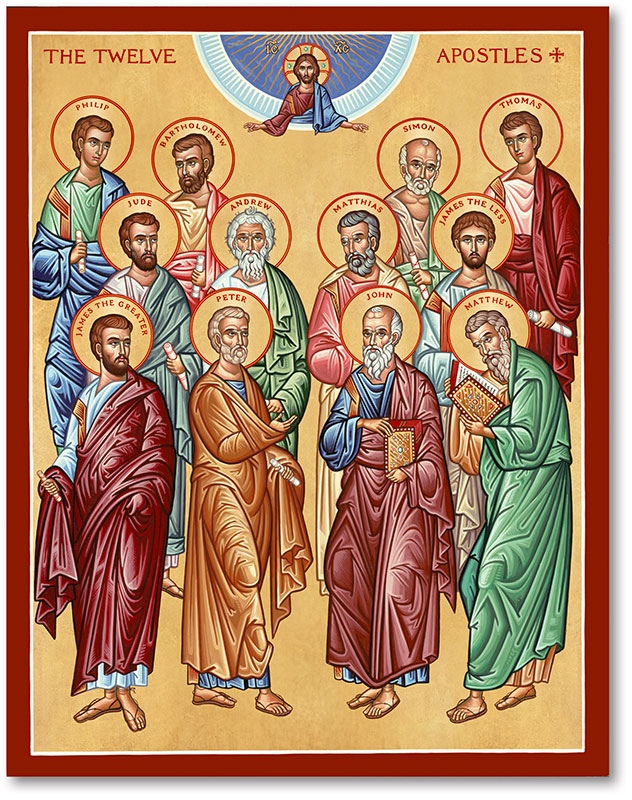
In the Synoptic Gospels, a clear distinction emerges of Jesus calling and empowering followers. The initial twelve apostles each received a call from their respective places in life to “follow” Jesus and implement His mission. Matthew details in his gospel this call first-hand, “‘And He said to them, “Follow Me, and I will make you fishers of men.” Immediately they left their nets and followed Him (Matt. 4:19-20, NASB).[2] Notice the directional nature of the call; it requires something and then produces results. In other words, God does not call people to occupy places of leadership immediately, but He first asks them to learn to be followers; then, he produces His purpose. Stacy states concerning the twelve, “They are Jesus’ followers, his surrogates, his representatives, his proxies if you will. They are not “leaders” in their own right or by their own power. Indeed, they are followers, not “leaders.”[3] In order for the modern to lead effectively, he must first learn to follow consistently.

Following Jesus requires a call and impartation, as exampled by the calling of the original twelve apostles. The person seeking leadership desires something good, but they must wait for the call in order to move appropriately within the timing and purpose of their Creator. Paul, in his letter to his prodigy Timothy, explains that “It is a trustworthy statement: if any man aspires to the office of overseer, it is a fine work he desires to do” (1 Tim. 3:1). The importance of timing and learning to follow provides the leader the skillset necessary for the understanding of the emotional state of those he leads. If a person never follows, the possibility of pride and arrogance to intrude exists.

Leadership Based in Service

A second critical theme of Biblical leadership coursing through New Testament thought is leadership based in service. Paul in his letter to the Philippian church details a beautiful picture of high Christology and servant leadership,

Make your own attitude that of Christ Jesus, who, existing in the form of God, did not consider equality with God as something to be used for His own advantage. Instead He emptied Himself by assuming the form of a slave, taking on the likeness of men. And when He had come as a man in His external form, He humbled Himself by becoming obedient to the point of death — even to death on a cross. For this reason God highly exalted Him and gave Him the name that is above every name, so that at the name of Jesus every knee will bow — of those who are in heaven and on earth and under the earth — and every tongue should confess that Jesus Christ is Lord, to the glory of God the Father (Phil. 2:5-11, HCSB).

The importance of this text for servant leadership at first seems obscure, but with careful exegesis, the reader understands the call for Jesus-followers to imitate Christ as leaders. Joseph H. Hellerman writes of the recognized leadership element, “The reason is that scholars are increasingly recognizing that Paul is concerned in the passage not with the nature of Christ’s “equality with God” but, rather, with what Christ chose to do with it the privileges associated with his divinity.”[4]

The leader surmises the same way Christ chose to subject His divinity to His humanity in service at the cross, so also he submits his talents and abilities in service to those he leads. Another intimate portrait of Christ as servant illustrates with the washing of the disciples’ feet in the upper room. If Christ willingly chose the position of a slave concerning those he led, then how much more the modern Biblically inspired leader. Servant leadership is a deliberate act and never coerced; however, this positional directive from our model Christ allows the leader to minister to those under his care correctly.

Teamwork Leadership Creates Flow

The idea of teamwork-oriented leadership also flows through the pages of the New Testament. From the sending out of the disciples by Jesus in pairs to minister throughout Judea to the evidentiary team basis for Paul’s three missionary journeys, the Scripture examples teamwork as the most effective form of leadership. Paul’s letters confirm his relational approach to ministry and detail the status of those relationships and how crucial community happened within them. Hellerman writes, “Paul’s letters confirm the historical accuracy of the relational approach to ministry portrayed in Acts. Here, moreover, we get a sense of the nature of Paul’s relationships with his companions, as well as some idea of the teammates’ roles and responsibilities.”[5] Sacrificial love and mutual respect permeated the Pauline ministry model that he exampled to the churches he planted. Paul did not institute a hierarchical model of leadership but followed a mutually submissive model. As Hellerman concludes, this created an affective bond, “the time Paul spent traveling and ministering together with his coworkers, often in harsh and challenging settings, generated close affective ties among team members.”[6]

The flow created from this model of teamwork spread the gospel across the known first-century Roman world, reaching the very center of power Rome. This flow resulted from the bonds created with the Pauline ministry team because it impassioned and empowered the early church leaders to fulfill their mutually distinct callings. Paul writes to the Ephesians of this diversity of ministry, “And He gave some as apostles, and some as prophets, and some as evangelists, and some as pastors and teachers” (Eph. 4:11). In Christian leadership, diversity elicits strength within the context of the church.

Conclusion

The church today faces unprecedented challenges and opportunities. As leaders move to operate in a post-modern culture that opposes the solidity of truth, instead opting for the fluidity of relativity. It is paramount for the leader following Jesus to implement ancient, proven God-honoring principles in their leadership contexts. The past paradigms of leading from positions of power and authority no longer adequately produce results in the modern climate. Today’s leader leading from a service-oriented, teamwork-based position fully committed to following Christ will see the same impact that infused the early first-century church.

These principles undergirded the expansion of the gospel in the earliest days and continue to work today, regardless of the cultural context. Leadership firmly planted in these timeless themes guard against harm to the body of Christ and faulty established church foundations. The temptation persists for church leaders to find more accessible paths to facilitate quicker and more impressive growth. The leader, however, must resist this challenge to the Biblical model. Jesus warned in the gospel of Matthew, “the way is broad that leads to destruction, and there are many who enter through it” (Matt. 7:13). This text is not only applicable to salvific issues, but also to how a leader appropriates the call placed on his life. If they seek the easy path or trendiest way, the possibility exists to lead them and their followers to a place of destruction. The carnage of destructive leadership litters the path of the Christian landscape because of the easy way. Leaders can find comfort and hope in the never-changing principles found in the Scriptures for their ministries. The church waits for a new wave of leaders committed to the end in the face of the waves of post-modern thought established in truth.

Bibliography

Forrest, Benjamin K., and Chet Roden. Biblical Leadership: Theology for the Everyday Leader. Grand Rapids, MI: Kregel Publications, 2017.


[1] Benjamin K. Forrest and Chet Roden, Biblical Leadership: Theology for the Everyday Leader (Grand Rapids, MI: Kregel Publications, 2017), 305.

[2] Unless otherwise noted, all biblical passages referenced employ the New American Standard Bible.

[3] Forrest and Roden, Biblical Leadership, 320.

[4] Ibid, 414.

[5] Ibid, 425.

[6] Ibid, 426.

Categories
Biblical Studies Leadership

Leadership Themes from the Torah

Introduction

The topic of leadership etches itself in the mind of the modern person because on the bookshelves in every bookstore; they find leadership knowledge to consume. This inundation leaves the reader’s mind searching for the paramount truth of leadership skill and understanding. How can the source of truth be so distinct yet varied? Is there a source that modern Christians can count on to provide a firm foundation to proceed as a leader?

The source for “true north” leadership posits from the ancient Scriptures and provides a concrete layer for the leader in establishing his journey. The Pentateuch in Genesis sets from the beginning that dominion over Creation is the call of humankind. “Then God said, “Let Us make man in Our image, according to Our likeness; and let them rule over the fish of the sea and over the birds of the sky and over the cattle and over all the earth, and over every creeping thing that creeps on the earth” (Gen. 1:26, NASB).[1] YHWH defines humanity’s purpose establishing a plan to develop the man to fulfill His divine will. Throughout the Torah, God strands together cords of leadership principles resulting in the fulfillment of His dominion story of Creation.

In Biblical Leadership – Theology for the Everyday Leaders, Benjamin Forrest and Chet Roden compiled essays from leading biblical scholars focused on developing a biblical theology of leadership. Though there are various themes and applications found in the compilation, three are critical for the effectiveness of the modern Christian leader – a recognition of and submission to the purpose of YHWH, personal humility and a shepherding-servant approach, and a dedication to training the next generation of leaders.[2]

Recognition and Submission

In the Pentateuch, the writers established the importance of YHWH’s authority and the leader’s acceptance of His call and submission to it for success. The Scriptures relate this implicit calling in Genesis with God’s focus on Abraham and His covenantal relationship with him. The writer declared, “‘For I have chosen him, so that he may command his children and his household after him to keep the way of the Lord by doing righteousness and justice, so that the Lord may bring upon Abraham what He has spoken about him” (Gen. 18:19). Ellis Brotzman, in his essay, Godless vs. Godly: Leadership in the Pentateuch, states, “This passage highlights a number of principles relating to godly leadership. First, and most important, the leader is ultimately chosen by God. While there may be room for a person’s own interest in leading, or for the interests of a group in having a certain person lead, ultimately the choice must be grounded in God’s own will.”[3] The student of Torah understands that the authorization of leadership comes from God by His divine will and choice.

Throughout the Old Testament, the reader finds examples of the importance of God’s divine choice and authority. This authority predicates not on the qualifications of the person chosen but concentrates on the purpose of the Creator God. Gideon is a prime example of divine purpose irrelevant to human quality. Michael J. Smith writes, “In response to Israel’s cries for help, God went about recruiting Gideon to fill the role of deliverer-judge. Exum wrote, “No character in the book receives more divine assurance than Gideon and no one displays more doubt.”[4] YHWH qualifies the modern leader by his willingness to recognize and submit to the providential call answering their doubts and empowering them for divine service.

Personal Humility and Shepherding-Servant

The second predominant theme woven through the Old Testament is the leader’s response to God through personal humility and their engagement with others from a service-oriented posture. Gary Yates states in his essay A Call for Faithful Servants: Leadership in Isaiah, Jeremiah, and Ezekiel, “A proper view of self in relationship to God in the leader produces humility, submission to the authority of God’s commands, and recognition of the superiority of divine wisdom to human wisdom.”[5] The prophets recognized their place concerning the call of God, producing confident humility in their proclamation to the people of Israel. The result of the leader’s humility is prosperity for the people of God.

In his essay, Tremper Longman III declares that “As a result of Solomon’s humility before God and his people, Israel prospers in every way.”[6] When the modern leader understands humility and projects this God-ordained attitude, the people he leads flourish. Solomon’s humility reflected not only in his relationship to YHWH but also in his relationship with the people he led. When a leader correctly positions himself under God, he shepherds the people in his care humbly and effectively. In Kaiser’s essay on Psalm 23, he writes concerning the shepherd model of service. The image of the shepherd as a guide permeates the text. Kaiser states, “Sheep in the Middle East are not driven from behind the flock, as they might be herded in other parts of the world, but are led by the shepherd walking in front of them, to form a path for the flock to follow. That is why all the sheep are guided so well; they follow single-file in the path set by the feet of the shepherd.”[7] The modern leader, like the ancient shepherd, leads the flock from the front, guiding them through the dangerous life-terrain and journey ahead.

Training the Next Generation

The third thematic thread in the Old Testament Scriptures relates to the idea of legacy. The mandate of leadership perpetuates truth or compromise from generation to generation. It is paramount that a biblical leader proactively trains and teaches followers to assume a godly mantle of authority.   

The narrative of Judges reflects the tragedy of the missed opportunity to transmit a godly legacy. The trajectory of a downward moral slide is evident throughout the text. In his essay, Smith states, “We see Israel’s tendency, which is not too uncommon throughout history, to compromise on the spiritual commitment of those who came before them. However, part of this result may lie in a former generation’s inability to faithfully pass the faith on to their children.”[8] According to Smith, if a leader “…fails to do this, it can be expected that the next generation will fill the void with an allegiance of their own finding.

In contrast, Esther modeled effective leadership resulting in a lasting legacy for her people. Debra Reid writes, “She has worked carefully and tirelessly, courageously and creatively. Her rise to effective leadership is complete and now earns for her not personal honor but a lasting legacy, in the form of a joyful community festival that will outlive her.”[9] The courage of Easter and the faithfulness in answering the call of God not only saved her present people but benefited the generations that followed. The Christian leader that positively promotes the transference of faith impacts not only his present but also those who follow after them.

Conclusion

In conclusion, the modern Christian leader, when leading from a consistent, firm biblical foundation of a God honored call, a humble, shepherding attitude, and a proclivity towards a legacy, finds his effectiveness increased. The importance of the leader’s recognition of the divine call and his submission provides clarity and flow for the ministry to others. It properly orients him to serve those in his care with humility and love. The ordered submission to God’s authority leaves no place for prideful and aggressive methodology.

A shepherding stance toward those he leads protects the people from careless and pejorative attitudes. It allows the people to flourish under godly direction, with the leader serving as a guide careful navigating the specific journey of his calling. A shepherding humility is always apropos, no matter the context, location, or cultural dimensions. As detailed in Psalm 23, the Good Shepherd provides and sustains for those he leads proactively in the “valley of the shadow.” The follower is confident that the leader cares for their well-being from a place of humble service.

The final impact for the modern Christian leader results in a lasting generational legacy. As the leader actively trains, models and teaches those who follow, they prepare the groundwork for the continuance of the faithfulness of God in His people. The reward for the leader is permanency in a lineage of truth through those in his care. It requires modeling of character and commitment to the tenets of Scripture and results in lasting impact.

Bibliography

Forrest, Benjamin K., and Chet Roden. Biblical Leadership: Theology for the Everyday Leader. Grand Rapids, MI: Kregel Publications, 2017.


[1] Unless otherwise noted, all biblical passages referenced employ the New American Standard Bible.

[2] Benjamin K. Forrest and Chet Roden, Biblical Leadership: Theology for the Everyday Leader (Grand Rapids, MI: Kregel Publications, 2017), 42.

[3] Ibid.

[4] Ibid, 102.

[5] Ibid, 187.

[6] Ibid, 172.

[7] Ibid, 158.

[8] Ibid, 96.

[9] Ibid. 282.

Categories
Biblical Studies

Hebrews – A Falling Away Prevented

The writer of Hebrews central concern is the possibility of newly established Jewish Christians retracting from their profession and returning to their former practice of Judaism. The argument the writer posits focuses on Jesus and lays an excellent foundation for the continuation of faith. He begins his epistle with a clear statement of the superiority of Christ’s name, as well as His superiority to the angels and the Mosaic law. Elwell and Yarbrough describe the two covenantal interrelationships in that the vehicles of revelation in the Old Testament serve an essential purpose in God’s overarching redemptive plan, but none compare to the Son, who “is the radiance of God’s glory.[1]

Against this backdrop, the writer asserts that the salvation confirmed through Jesus’ words, eyewitnesses, and the Holy Spirit provides a clear position of assurance for their faith. From this strength of faith and basis of superiority, he writes clearly of the concern for these new believers holding firm in their belief and calls them to serious diligence,

For this reason, we must pay much closer attention to what we have heard, so that we do not drift away from it. For if the word spoken through angels proved unalterable, and every transgression and disobedience received a just penalty, how will we escape if we neglect so great a salvation? After it was at the first spoken through the Lord, it was confirmed to us by those who heard, God also testifying with them, both by signs and wonders and by various miracles and by gifts of the Holy Spirit according to His own will. (Heb 2:1-4, NASB)[2]

His concern results from increased persecution of these followers of Christ in the first century, which in the mind of the writer will require persistence in their continued pursuit of this newfound relationship with Jesus. He urges these dispersed Jewish Christians in the final chapters of Hebrews to hold fast to their new faith and to press on despite persecution. He states poignantly in chapter ten, “Therefore, do not throw away your confidence, which has a great reward. For you have need of endurance, so that when you have done the will of God, you may receive what was promised (Heb 10:35-36).

With the rise of postmodernism and the assault on absolute truth, the relevance of Hebrews to the modern reader remains paramount. Though the drawing away is not the same as detailed to first-century Jewish Christians, today’s believers face increased pressure to recant and conform to a reimagined version of their faith. With the rise of historical-criticism and its most extreme form “deconstructionism,” the Scriptures face the possibility of losing all objective meaning for the reader.[3] Against this backdrop of skepticism the believer must guard their faith with diligence and heed the words of Hebrews, “But we are not of those who shrink back to destruction, but of those who have faith to the preserving of the soul” (Heb 10:39). The commitment to the faith for the believer preserves their soul against the persecution of modern philosophy and criticism. Moreover, to that end let the modern believer continue with perseverance and faith until the end.

Bibliography

Elwell, Walter A, and Robert W. Yarbrough. Encountering the New Testament: A Historical and Theological Survey. Grand Rapids: Baker Academic, 2013.


[1] Walter A. Elwell and Robert W. Yarbrough, Encountering the New Testament: A Historical and Theological Survey (Grand Rapids: Baker Academic, 2013), 332.

[2] Unless otherwise noted, all biblical passages referenced employ the New American Standard Bible

[3] Elwell and Yarbrough, Encountering the New Testament, 161.

Categories
Biblical Studies

Freedom from the Law through Grace

When faced with the demanding requirements of the Law juxtaposed with the Grace that Jesus offers, the modern Jesus-follower finds a perplexing dichotomy in the Scriptures. On the one hand, the totality of the Law’s demands leads to a realization of the futility of success against the cosmic forces of Sin and Death.[1] However, presented with the liberty that Grace offers, the temptation to adopt a libertine mindset encroaches. With this challenging backdrop, the modern believer traverses a treacherous path that requires the guiding wisdom of the Holy Spirit to answer the underlying question – are they required to keep the Law?

In his letter to the Romans, Paul clearly states that salvation is by faith alone, not a result of observance of the Law. Paul declares, “But now the righteousness of God has been manifested apart from the law, although the Law and the Prophets bear witness to it— the righteousness of God through faith in Jesus Christ for all who believe” (Rom 3:21-22, ESV).[2] Paul reinforces his “justification by faith” theology in his letter to the Galatians by declaring in chapter 2, “yet we know that a person is not justified by works of the law but through faith in Jesus Christ, so we also have believed in Christ Jesus, in order to be justified by faith in Christ and not by works of the law, because by works of the law no one will be justified” (Gal 2:16). Also, Paul declares emphatically that not only is faith the substance of justification, he definitively rejects the premise that it is even attainable through “works of the law.”

In order to answer the question of law-keeping concerning Paul’s statements in his letters, the reader must first define what Paul meant in his writings concerning the “works of the law” and the challenges he supposed for Gentile believers. Two scholarly approaches to Paul’s view of the law have emerged: the traditional (Reformation) and, in contrast, the New Perspective understanding. In their discussion of the traditionalist view, Bruce W. Longenecker and Todd D. Still state that “Paul imagined that human sinfulness has rendered the law ineffective since the law is incapable of overturning the condition of human sinfulness.”[3] The traditionalist assumed two divergent viewpoints emerging from first-century Judaism that since they could not keep perfectly the law’s statutes, there was little hope of salvation, or that by their works of the law, they could earn their salvation.[4] As a result of the traditional view, the interpretation of Paul’s teaching concerning “justification by faith” informed a “replacement understanding” where the freedom of Grace through the death and resurrection of Jesus Christ superseded the legalism of the “works of the law.”

In contrast, the New Perspective approach allows for as Longenecker and Still unpack an understanding of first-century Judaism outside of the classic legalistic definition and one more defined by “covenantal nomism.” Judaism, in the time of Paul’s writings, was “animated by a robust awareness that God had elected the people of Israel through his gracious mercy.”[5] Furthermore, as a result, the keeping of the law was an outworking of the gracious covenant establish with the Jews. With this understanding, the reader of the Pauline writings surmises that Paul’s concern was more focused on the Jewish “identity markers” that produced division within the Gentile churches he had established.

Paul’s intent in both his writings to the Galatian and Roman Jesus-followers sought to firm up his gospel of Grace and to resist the Judiazers who sought to divide these new believers. As Thomas D. Lea and David Alan Black state, “He [Paul] insisted that those Jews who again introduced law-keeping as essential to salvation were erecting the structure of human achievement.”[6] Paul, after his divine encounter on the Damascus Road, believed that “to return to law-keeping after such a life-transforming discovery would be a declaration that Christ had died for no purpose.”[7] Paul does not mince words “I do not nullify the grace of God, for if righteousness were through the law, then Christ died for no purpose” (Gal 2:21).

In recognition of Paul’s theology concerning the “works of the law,” the modern believer is not required after faith to add on the Jewish identity markers that bring them back into the bondage of separation. This bondage, as Paul declares, would nullify and void the transference of righteousness that Jesus Christ accomplished through His death, burial, and resurrection. The believer can be confident that the work that Christ accomplished is enough to justify and sanctify until the completion of this eschatological age.

Bibliography

Lea, Thomas D., and David Alan Black. The New Testament: Its Background and Message. 2nd ed. Nashville, Tenn.: Broadman & Holman Publishers, 2003.

Longenecker, Bruce W., and Todd D. Still. Thinking through Paul: An Introduction to His Life, Letters, and Theology. Grand Rapids, MI: Zondervan, 2014.

Stacy, Robert Wayne, “The Theological Metanarrative of Paul’s Thoughts,” course video.

[1] Robert Wayne Stacy, “The Theological Metanarrative of Paul’s Thoughts,” course video.

[2] Unless otherwise noted, all biblical passages referenced employ the English Standard Version.

[3]  Bruce W. Longenecker and Todd D. Still, Thinking through Paul: An Introduction to His Life, Letters, and Theology (Grand Rapids, MI: Zondervan, 2014), 326.

[4] Ibid, 327.

[5] Ibid.

[6] Thomas D. Lea and David Alan Black, The New Testament: Its Background and Message, 2nd ed. (Nashville, Tenn.: Broadman & Holman Publishers, 2003), 373.

[7] Ibid.