Categories
Biblical Studies Hermeneutics Historical Criticism

The Song of Songs – the Divine Gift of Intimacy

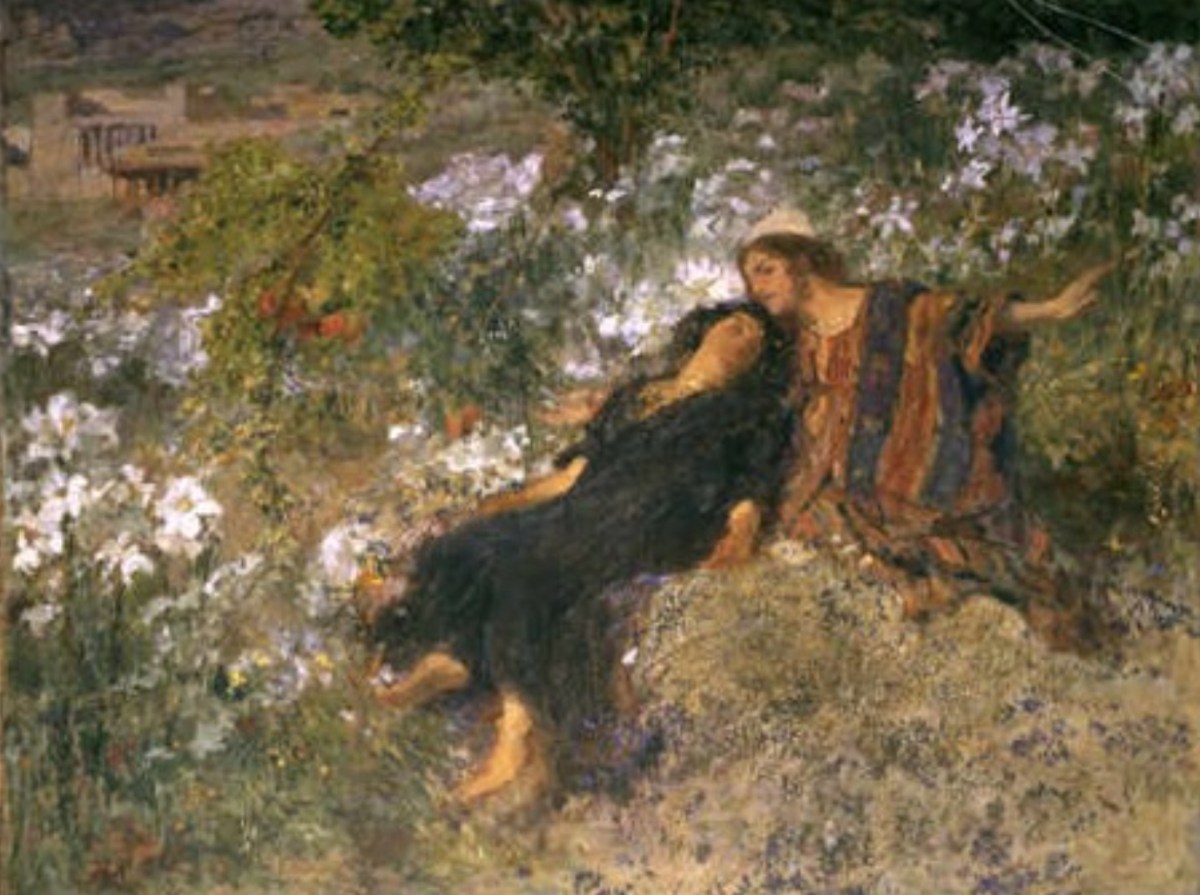
The poetic beauty of the Song of Songs invites the reader into a world of two lovers experiencing the divine gift of human sexuality and intimacy. The author weaves an artistic tapestry that propels the literary imagery to exquisite heights evoking emotional resonance with the characters depicted. In his commentary on Song of Songs, Tremper Longman writes concerning the embedded imagery, “Indeed, the Song presents us with perhaps the largest concentration of imagery anywhere in the Bible, and its images are also among the most suggestive and, at times, enigmatic.”[1] From the opening lines of the Song, the author sets the tone for the expressive artistry to follow, “‘The Song of Songs, which is Solomon’s. Let him kiss me with the kisses of his mouth! For your love is better than wine,” (Song. 1:1-2, NRSV).[2] The Songs imagery evokes an empathic response in the reader intended to immerse them in the sense of the character’s love for each other. Rooted in poetic imagery, a literal understanding emerges of the interplay of male and female love, the author establishes a standard of purity and attainment for those in marital relationships. The wording in chapter four of the Song invites entrance for the lovers into the pleasures of sexual oneness in marriage defined by an undefiled garden of intimate blessing, “‘Awake, O north wind, and come, O south wind! Blow upon my garden that its fragrance may be wafted abroad. Let my beloved come to his garden, and eat its choicest fruits” (Song. 4:16). The ancient Scriptures depicted from the beginning the divine plan for oneness between man and wife. The writer of Genesis details this perfect purity “Therefore a man leaves his father and his mother and clings to his wife, and they become one flesh. And the man and his wife were both naked, and were not ashamed” (Gen. 2:24).

In understanding the literalness of human love as the foundational hermeneutic of Song of Songs, the interpreter extrapolates for the exploratory text evaluation of marital love and the impact on the individual, the couple, and society. When marital love is rooted in mutual respect and affection, as detailed in the Song of Songs, the continuity of the relationship and the impacts on familial continuity bring stability to the surrounding community. We see this societal interaction at several points within the text where relational outsiders react to or engage with the couple to encourage fidelity and continuance. The outsiders’ engagement in the pursuit of Solomon and the endurance of the marriage is detailed in chapter six of the text, “Where has your beloved gone, O fairest among women? Which way has your beloved turned, that we may seek him with you” (Song. 6:1). The inclusion of outsiders in the Song by the author provides an interesting dynamic within a personal love poem. J. Cheryl Exum, in her commentary, posits, “The women of Jerusalem are the audience within the poem whose presence— because it makes the relationship between the lovers less private, less closed— facilitates the reader’s entry into the poem’s world of erotic intimacy.”[3] The inclusion of outsiders permits the reader to peer into the relational dynamics of the couple in their love journey.

The literal, interpretive approach provides a mirror for society to evaluate its interpretation of erotic love compared to the Yahwistic template for humankind. The Song points to a reversal of the curse of sin on the woman concerning her longing for her husband and opens up new dynamics of “mutual longing” and empowerment. The Shullamith demurs, “I am my beloved’s, and his desire is for me.” (Song. 7:10). Estes writes, “This recovery of mutuality in love is, in a sense, a step back toward paradise.”[4] Going even further, Renita J. Weems posits in her essay commentary, “The Song of Songs advocates balance in female and male relationships, urging mutuality not domination, interdependence not enmity, sexual fulfillment not mere procreation, uninhibited love not bigoted emotions.”[5]

To correctly understand the polygamy of Solomon concerning the ideal depicted in the Song of Songs with regards to Shulammith, the reader must appropriate the story as the Divine ideal and the progression described. From the opening, Song 1-3, the reader feels the anticipation of the lovers as their engagement builds and deepens in preparation for the wedding night. The culmination of the wedding establishes a celebratory watermark event in similitude with the modern wedding celebration. After consummation of the lovers, the story delves into the stages of love that provide both exhilaration and despair. Within the chapter five dream sequence, the author peels back the veil to reveal a semblance of sadness that permeates this ideal martial lyric. The poet writes concerning this emotional disconnect, “I opened to my beloved, but my beloved had turned and was gone. My soul failed me when he spoke. I sought him, but did not find him; I called him, but he gave no answer” (Song. 5:6). Daniel Estes writes, “She realizes that she has not communicated to him what she intended to, or what she really feels for him. Her heart goes out to him with a deep emotional surge, but Solomon has departed, and she cannot find him.[6] It is not clear what elicited this disparate dream for Shulammith, but it speaks to the emotional distance that can occur on the journey of marital lovers. Is Solomon’s polygamy in view in this dream sequence as causality for the fears exposed? While not definitive, the fears of emotional distance in this sequence represent the concerns entwined with infidelity and brokenness in marriage. Where is my lover is the common refrain when feelings of distance creep inside. As the woman pursues her lover, a disturbing attack in the night transpires at the hands of the watchmen. (Song. 5:7) Disparate in the context of the “beauty” imagery of the poem, perhaps the author’s intent derives from a place of recognition, a recognition of the perils of love. Exum writes, “Whatever else it may be, the woman’s treatment at the hands of the watchmen is certainly a forceful reminder of the perils of love, if not the willingness of love to suffer…”[7] Shulammith undeterred moves through her emotional valley, returning to what drew her into the depths of love with Solomon and congenial friendship. Estes writes, “Even in their marriage Solomon and Shulammith return to the touchstone of friendship as they endeavor to overcome the painful consequences of insensitivity.”[8]

In view for the reader is the progression of love depicted by the author of the Song of Songs, a passion born in the magical moments of courtship, consummated in the pure sexual oneness of the marriage bed, broken by emotional distance and sin in life, pursued through pain to a lasting endurance until completion. Love overcomes fear and truly conquers all. As the apostle John depicts beautifully, “There is no fear in love, but perfect love casts out fear; for fear has to do with punishment, and whoever fears has not reached perfection in love” (1 John 4:18). In a final depiction of the persistence of Shulammith and Solomon’s love, the author writes, “Many waters cannot quench love, neither can floods drown it. If one offered for love all the wealth of his house, it would be utterly scorned” (Song. 8:7).

Bibliography

Estes, Daniel J. Handbook On the Wisdom Books and Psalms. Grand Rapids, Mich.: Baker Academic, 2005.

Exum, J. Cheryl. Song of Songs (2005): A Commentary. Old Testament Library. Louisville: Presbyterian Publishing Corporation, 2005. Accessed June 4, 2021. ProQuest Ebook Central.

Longman, Tremper. Song of Songs. New International Commentary on the Old Testament. Grand Rapids: Wm. B. Eerdmans Publishing Co., 2001. Accessed June 4, 2021. ProQuest Ebook Central.

Newsom, Carol A., and Sharon H. Ringe. The Women’s Bible Commentary. London: SPCK, 1992.

[1] Tremper Longman, Song of Songs, New International Commentary on the Old Testament (Grand Rapids: Wm. B. Eerdmans Publishing Co, 2001), 22, ProQuest Ebook Central.

[2] Unless otherwise noted, all Biblical passages referenced are in the New Revised Standard Version.

[3] J. Cheryl Exum, Song of Songs (2005): A Commentary, Old Testament Library (Louisville: Presbyterian Publishing Corporation, 2005), 101, ProQuest Ebook Central.

[4] Daniel J. Estes, Handbook On the Wisdom Books and Psalms (Grand Rapids, Mich.: Baker Academic, 2005), 432.

[5] Carol A. Newsom and Sharon H. Ringe, The Women’s Bible Commentary (London: SPCK, 1992), 160.

[6] Estes, Handbook on the Wisdom, 422.

[7] Exum, Song of Songs, 199.

[8] Estes, Handbook on the Wisdom, 424.
Categories
Biblical Studies Historical Criticism Theology

King Solomon – A Mixed Legacy of Yahwistic Devotion

Introduction

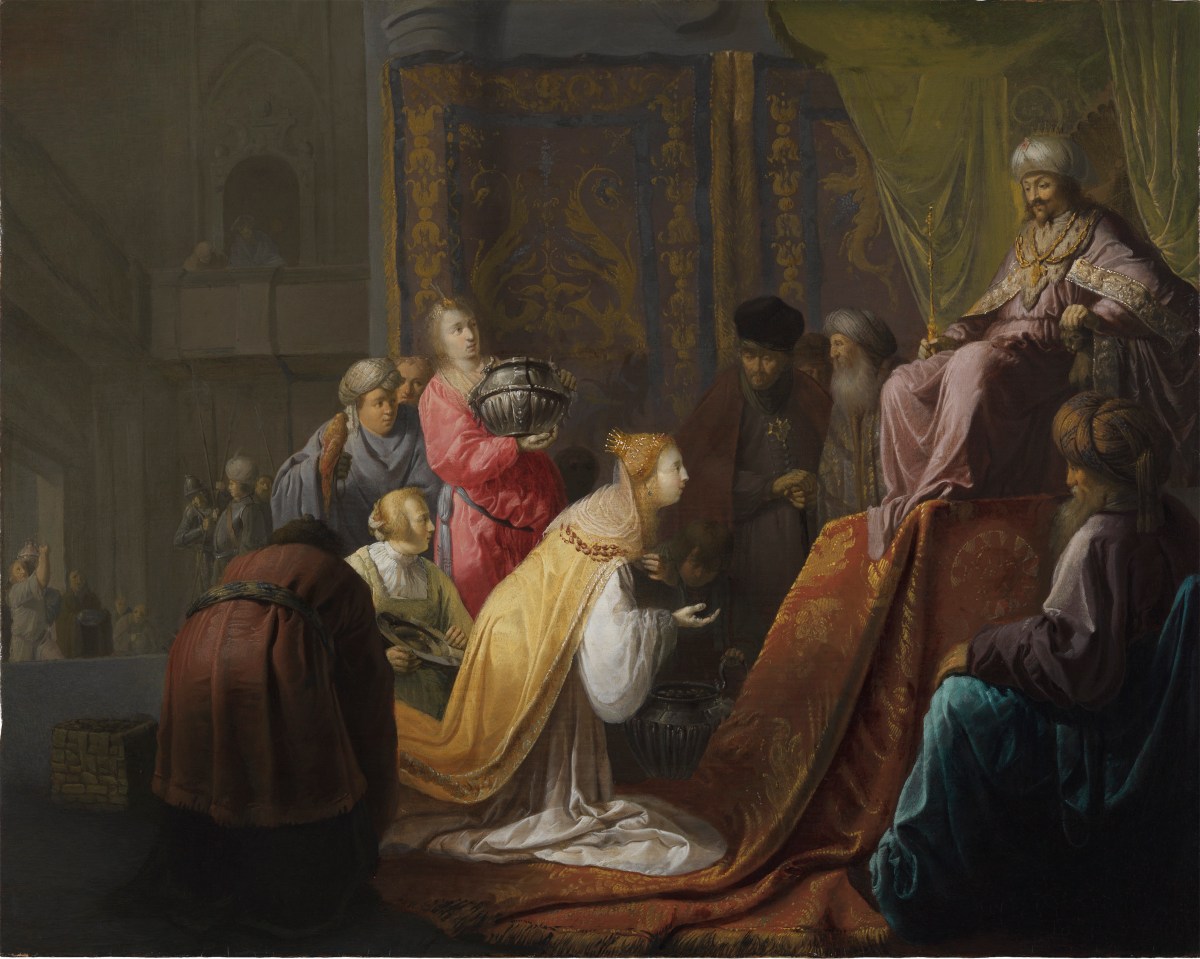
Piquing the reader’s interest with elements of irony and paradox, the narrator of the historical narratives of the Kings recounts the reign of King Solomon. The first eleven chapters of 1 Kings, though painting a picture of a monarchial “golden” age for the nation of Israel, contrastingly hints by the narrator reveal an underlying divergence in this glorious Solomonic exterior. The text focuses the reader on the paradoxes within Solomon’s reign and the eventual leading away of his heart from YHWH. Contextually the writer reflecting on the writing’s deuteronomistic foundation holds up a “mirror” against which Solomon and future Israelite and Judaic kings lack consistent integrity to the covenantal code to varying degrees and increasing dissonance. The Deuteronomic writings established transparent expectations for the future Israelite monarchy consisting of temperance in horse accumulation, haram building, and treasury hoarding restrictions (Deut. 17:14-20). King Solomon represents this paradoxical relationship with Deuteronomy by, on the one hand reflecting divine wisdom in his proverbial writings and engaging, thoughtful liturgical expression in his ecclesiastical writings while on the other hand violating all three of the proscribed royal edicts in Deuteronomy 17:14:20.

Historical and Literary Context

Understanding the impact of the Deuteronomist’s theology derived from the “Solomonic Narrative” requires the reader to develop a foundational knowledge of the text’s historicity and the literary presentation of this ancient writing. According to Victor Hamilton, the structure of the books of 1 Kings and 2 Kings presents in the form of a three-act play. The first eleven chapters of 1 Kings reflecting Act 1 and narrating King Solomon’s reign in what scholars refer to as the “Solomonic Narrative.” [1] Although scholars dispute the authorship of the King’s writings, the consensus of thought maintains a strong “Deuteronomistic” influence on the writers of the ancient text. This school of thought derives primarily from the position espoused by Martin Noth. In his Introduction to the Old Testament as Scripture, Brevard Childs posits that “Martin Noth designated the author of the book of Kings with the name ‘Deuteronomistic’ because he felt that the dominant influence upon him derived from the book of Deuteronomy.” [2]

A crucial literary element utilized in the Solomonic Narrative consists of irony and paradox. A precursory reading of the first ten chapters in the text leaves the reader with a sense of a brilliant rendition of Solomon’s glorious reign with elements of irony seeping through the veneer of hyperbole. Daniel J. Hays writes of this irony within the text glorifying the “spectacular” reign of King Solomon, pointing out that much of the detail within the text works explicitly to prop up this surface rendering of the glorification of Solomon’s reign.[3] Hays posits that “However, below the surface another theme lurks, quietly and ironically pointing out some serious inconsistencies and some serious problems that the surface story glosses over.” [4] By introducing the reader to the paradoxes and irony within the narrative, the writer bridges the divide between textual understanding and the theological underpinnings of blessings with Torah adherence and consequences with Torah violation. Walter Brueggemann writes in his An Introduction to the Old Testament, “By the time we finish the narrative of Solomon, it is clear that the Solomonic account of 1 Kings 1-11 is a quite intentionally shaped theological statement about the conditionality of Torah obedience for success in the world.” [5]

Theological Analysis of the Solomonic Narrative

The theological construct of the “Solomonic Narrative” delves into the idea as posited by Brueggemann of the conditionality of Torah obedience concerning the success of the King described. The narrative surrounding King Solomon’s tenure as sovereign provides a clear example of this conditionality in its presentation of Deuteronomic royal covenantal violations and the resulting impact on the lineage of Solomon and the overall political structure of the kingdom and its devolution into idolatry and away from Yahwistic faithfulness. Early on, the narrator reveals volitional cracks in Solomon’s covenantal devotion. This devolution presents three statutory violations established in Deuteronomy 17 for the future monarchial period in Israelite history. ‘When you have come into the land that the Lord your God is giving you, and have taken possession of it and settled in it, and you say, “I will set a king over me, like all the nations that are around me” (Deut. 17:14, NRSV).[6] Hays writes concerning the monarchial institution and the commitment YHWH expects compared to other pagan nations, “Israel is not to be like the other nations. What is ‘laudable’ in other monarchies is ‘detestable’ to Yahweh when it violates the deuteronomistic decrees.” [7]

The first violation of Solomon derived from his accumulation of horses in an ethereal show of strength and confidence in military power structures for security. “Even so, he must not acquire many horses for himself, or return the people to Egypt in order to acquire more horses, since the Lord has said to you, “You must never return that way again” (Deut. 17:16). The establishment of this royal edict in Deuteronomy prevented a trust deficit within the Yahwistic worshipper. The narrator illustrates for the reader the paradox of a King established by YHWH’s divine hand, yet increasingly relying on human power structures to maintain the present system. Solomon’s father, King David, illustrated an opposite dynamic in his songs of worship. He writes in Psalm 20, “‘Some take pride in chariots, and some in horses, but our pride is in the name of the Lord our God” (Ps. 20:7). This early subtle crack in the veneer of the narrator’s rendering of Solomon points to a bleak future for the people under the Covenant.

A second critical violation flowed from Solomon’s establishing of a voluminous harem of foreign women in direct contradiction to the royal edicts in Deuteronomy. ‘And he must not acquire many wives for himself” (Deut. 17:17a). This second deviation from the Deuteronomic Covenant proved to be the most damaging. Claudia V. Camp, in her commentary, posits that “although Duet. 17:17 states simply that ‘many women’ will ‘turn away’ a king’s heart, 1 Kings 11:1 specifies the problem as one of ‘many foreign women.’ Having ‘clung to those in love’ and built temples for their deities, in his old age Solomon’s heart is finally ‘turned away’ by them to follow after their deities.” [8] The narrator writes tragically in chapter 11 of 1 Kings, “‘For when Solomon was old, his wives turned away his heart after other gods; and his heart was not true to the Lord his God, as was the heart of his father David” (1 Kings 11:14). Unfortunately, allowing or accommodating trespass in one area of statutory code violation results in a spiraling effect on the entirety of the King’s heart and eventually the entire nation. The apostle Paul writing to the Galatians illustrates this perpetual concept of corruption from accommodation, “Such persuasion does not come from the one who calls you. A little yeast leavens the whole batch of dough” (Gal. 5:8-9).

Solomon’s third violation resulted from an accumulation of vast wealth into the treasuries from legitimate means through the blessings of YHWH. These great riches bestowed on Solomon derived directly as a divine gift according to the writer of 1 Kings. He states, “I give you also what you have not asked, both riches and honor all your life; no other king shall compare with you. I now do according to your word. Indeed I give you a wise and discerning mind; no one like you has been before you and no one like you shall arise after you” (1 Kings 3:12-13). The critical component of the wealth theological construct is not the wealth itself but the hoarding that results in corruption and injustice. This connection of wealth to corruption illustrates the injustice perpetrated by the inequality of taxation perpetuated by Solomon heavily on the northern non-Judaich tribes while exempting his familial tribe, Judah. (1 Kings 4) Paul implores his protégé Timothy in his first letter concerning humankind’s relationship to money and its pitfalls, “‘For the love of money is a root of all kinds of evil, and in their eagerness to be rich some have wandered away from the faith and pierced themselves with many pains” (1 Tim. 6:10).

Conclusion

What started so promising in the first of the King’s narrative concerning Solomon tragically devolves into a divided kingdom and the loss of Yahwistic devotion within the royal lines of both realms. Furthermore, though there were moments of revival in Yahwistic worship and reformation, the culminating result produced nations in exile longing for salvation. No amount of positive economic prosperity or peace can replace the need for reliance upon YHWH and adherence to the Covenant. Hays writes concerning the position taken by the narrator posited by David Jobling, “[the narrator] tries to connect the positive picture in 1 Kings 3–10 with idealized economics while connecting the ‘fall’ in 1 Kings 11 to foreign, externally related sexuality, which he notes is symbolically absent from the Golden Age.” [9] The reign of Solomon represents both “the best of times” and ultimately “the worst of times,”

Bibliography

Brueggemann, Walter. An Introduction to the Old Testament: The Canon and Christian Imagination. Louisville, Ky.: Westminster John Knox Press, 2003.

Childs, Brevard S. Introduction to the Old Testament as Scripture. Philadelphia: Fortress Press, 1979.

Hamilton, Victor P. Handbook On the Historical Books: Joshua, Judges, Ruth, Samuel, Kings, Chronicles, Ezra-Nehemiah, Esther. Grand Rapids, Mich.: Baker Academic, 2001.

Hays, J. Daniel. 2003. “Has the Narrator Come to Praise Solomon or to Bury Him? Narrative Subtlety in 1 Kings 1–11.” Journal for the Study of the Old Testament 28 (2): 149–74. doi:10.1177/030908920302800202.

Newsom, Carol A., and Sharon H. Ringe. The Women’s Bible Commentary. London: SPCK, 1992.


  [1] Victor P. Hamilton, Handbook On the Historical Books: Joshua, Judges, Ruth, Samuel, Kings, Chronicles, Ezra-Nehemiah, Esther (Grand Rapids, Mich.: Baker Academic, 2001), 379.

[2] Brevard S. Childs, Introduction to the Old Testament as Scripture, (Philadelphia: Fortress Press, 1979), 290.

[3] Daniel J. Hays, “Has the Narrator Come to Praise Solomon or to Bury Him? Narrative Subtlety in 1 Kings 1-11,” Journal for the Study of the Old Testament 28, no. 2 (2003): 154, doi:10.1177/030908920302800202.

[4] Ibid.

[5] Walter Brueggemann, An Introduction to the Old Testament: The Canon and Christian Imagination (Louisville, Ky.: Westminster John Knox Press, 2003), 151.

[6] Unless otherwise noted, all Biblical passages referenced are in the New Revised Standard Version.

[7] Daniel J. Hays, “Has the Narrator Come” 152.

[8] Carol A. Newsom and Sharon H. Ringe, The Women’s Bible Commentary (London: SPCK, 1992), 102.

[9] Daniel J. Hays, “Has the Narrator Come”, 151.

Categories
Biblical Studies Historical Criticism

The Creation Story: A Historical Analysis

From the very first verse of the intial disclosure of the Divine’s interaction with the void of nothingness in Genesis, the reader finds an active, engaged Creator speaking and forming a cosmic order for His pleasure and purpose. According to the Genesis editors, his creative sequencing begins from this initial verse and promulgates through the remaining verses culminating in a “very good” result. The Creation story denotes a literal/historical context though the timing as understood by the modern reader incurs intense debate concerning a literal seven-day creation. James M. Efird, in his work The Old Testament Writings: History, Literature, and Interpretation, explains the longevity of this debate and offers a way to engage without losing the power of the story. He writes, “If one remembers that these stories were told against a background and knowledge of their own times basically present religious understandings not scientific data, one is more likely to understand the creation account as it was intended.”[1] A literal seven-day understanding aligns with a “priestly tradition of the story structured around a seven day week centering on a Sabbath as God’s special day.”[2] The symbolism of the seven days aligns theologically with Scripture. As Peter denotes in his second letter, time is relative to God and not constrained to the confines of human time, “Dear friends, don’t overlook this one fact: With the Lord one day is like a thousand years, and a thousand years like one day (2 Pet. 3:8, CSB).[3]

From a hermeneutical framework, the text’s intial translation roots it firmly in literal time and provides evidence of its historicity. In the Septuagint (LXX-G) translation of the Hebrew text, this creative beginning’s temporal nature aligns with a literal process of Creation with God as the artistic divine source. Susan Ann Brayford, in her commentary on the LXX-G translation of Genesis, writes, “The opening verse of LXX-G summarizes God’s beginning act of making the heaven and the earth, and represents, as William Brown maintains, an “initial step of the creative process” (1993, 31) that will be described in detail in vv. 3– 31.”[4]  She goes on to disclose that ancient and modern scholars conclude the initial noun though not articulated in the text άρχη is temporal. She writes, “many ancient and modern interpreters presume the word’s temporal definiteness and translate accordingly, i.e., the beginning.”[5] A contrasting viewpoint posited by a historical criticism of the text and based on the argument that the priestly scribes recorded traditions and their understandings rooted in those traditional stories primarily for religious purposes. Lawrence Boadt asserts in his book Reading the Old Testament: An Introduction that the Genesis writers did not understand the geological or the anthropological history of the earth, nor were they concerned with these facts. He writes, “They wished to sketch instead a few highlights about human origins that had particular religious significance for Israel’s view of life.”[6]

However, to understand the text rooted in time and historically significant and not as an analogous rendition of myth or mere oral traditions provides a theological understanding necessary for the redemptive story of Christ to emerge as the second Adam through the revelation of God to a specific people, the Hebrews. Historically, the interpretor sees humankind’s fall from an Edenic state into rebellion with the need for a Divine plan to rescue them from their sinful condition. In his letter to the Ephesians, Paul explains this theological rooting of Christ’s redemptive work from before the creation of humanity, “For he chose us in him, before the foundation of the world, to be holy and blameless in love before him” (Eph. 1:4).

Also, the necessity of Adam and Eve’s historicity as literally created beings provides the beginning substance for redemptive history to unfold and a foundational primer for Christ’s heroic act of salvation on the Cross. Humankind created in the image and likeness of God effaced by a sinfal fall sets the stage perfectly for this unfolding. Victor Hamilton, in his book, Handbook of the Pentateuch: Genesis, Exodus, Leviticus, Numbers, Deuteronomy, posits the critical role of Adam and Eve within the Creation story, “human beings are unique, set apart from everything else God created. They alone bear God’s image, and they alone subdue.”[7] The Imago Dei of their essence emphasized the redemptive work needed to restore humankind back to proper order within God’s cosmic design. In his Acts narrative, Luke sums up this restorative work in Christ, “that seasons of refreshing may come from the presence of the Lord, and that he may send Jesus, who has been appointed for you as the Messiah. Heaven must receive him until the time of the restoration of all things, which God spoke about through his holy prophets from the beginning” (Acts 3:20-21).

Bibliography

Boadt, Lawrence. Reading the Old Testament: An Introduction. New York, N.Y.: Paulist Press, 1984.

Brayford, Susan Ann. Genesis. Boston: BRILL, 2007. Accessed March 25, 2021. ProQuest Ebook Central.

Efird, James M. The Old Testament Writings: History, Literature, and Interpretation. Atlanta: John Knox Press, 1982.

Hamilton, Victor P. Handbook On the Pentateuch: Genesis, Exodus, Leviticus, Numbers, Deuteronomy. 2nd ed. Grand Rapids, Mich.: Baker Academic, 2005.


[1] James M. Efird, The Old Testament Writings: History, Literature, and Interpretation (Atlanta: John Knox Press, 1982), 43-44.

[2] Ibid.

[3] Unless otherwise noted, all Biblical passages referenced are in the Christian Standard Version.

[4] Susan Ann Brayford, Genesis (Boston: BRILL, 2007), 205, ProQuest Ebook Online.

[5] Ibid.

[6] Lawrence Boadt, Reading the Old Testament: An Introduction (New York, N.Y.: Paulist Press, 1984), 109.

[7] Victor P. Hamilton, Handbook On the Pentateuch: Genesis, Exodus, Leviticus, Numbers, Deuteronomy, 2nd ed. (Grand Rapids, Mich.: Baker Academic, 2005), 29.